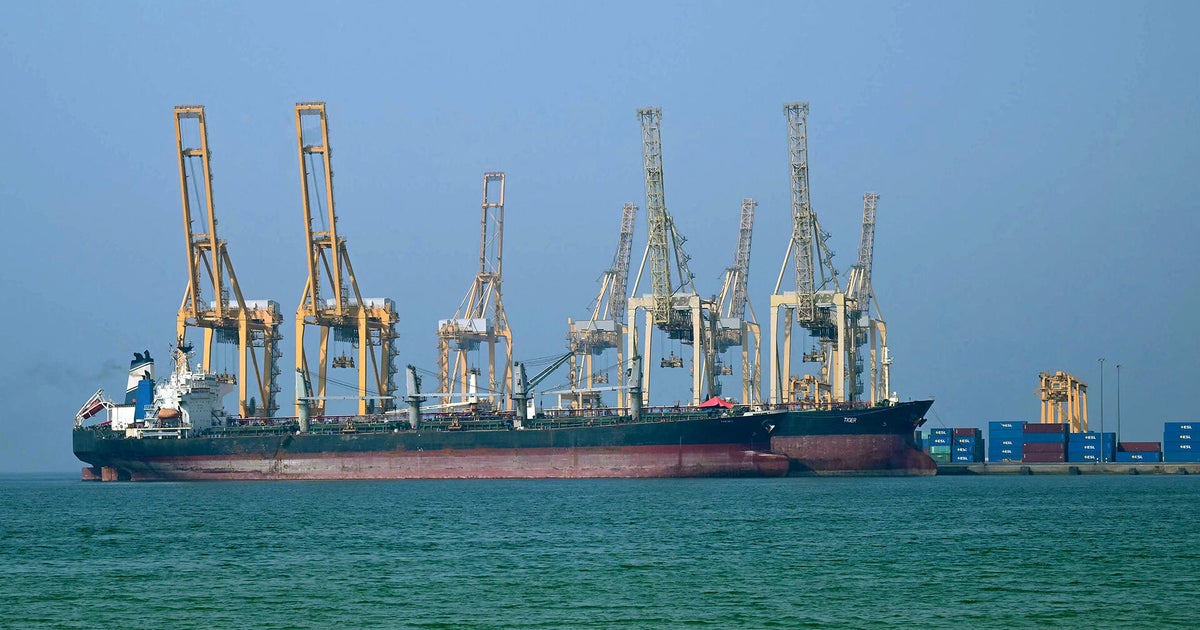
Western analysts love a good ghost story. They stare at the Strait of Hormuz and see a "shadow power play," a mysterious puppet master pulling strings from a darkened room in Tehran. They paint a picture of a fractured Iranian leadership, a chaotic brawl between "moderates" and "hardliners," or a "Deep State" Revolutionary Guard (IRGC) operating entirely outside the law.
It’s a comfortable narrative. It suggests that if we just find the right string to pull, the whole apparatus collapses.
They’re wrong.
The "shadow power" narrative isn't just lazy journalism; it’s a fundamental misunderstanding of how the Islamic Republic functions. There is no shadow. There is no curtain. What you see is exactly what you get: a highly rational, hyper-integrated security state that uses the illusion of internal chaos to paralyze Western diplomacy.
The Strait of Hormuz isn't a flashpoint for a hidden coup. It is a laboratory for a very public, very deliberate form of asymmetric brinkmanship.
The Myth of the Rogue IRGC
The most tired trope in Middle Eastern geopolitical analysis is the "Rogue IRGC." The story goes like this: The diplomats in Tehran want peace and trade, but the "shadowy" Islamic Revolutionary Guard Corps keeps seizing tankers and testing missiles to ruin the deal.
Stop buying it.
In reality, the IRGC is the ultimate expression of the Iranian state's will. It is not a state within a state; it is the state. The idea that the IRGC acts without the explicit or tacit approval of the Supreme Leader’s office is a fantasy. This "rogue" branding is a calculated diplomatic tool. It allows the Iranian foreign ministry to play "good cop" at the negotiating table, claiming their hands are tied by internal radicals, while those same radicals secure leverage through kinetic action in the Persian Gulf.
When a tanker is harassed or a drone is launched near the Strait, it isn't a breakdown in the Iranian hierarchy. It is a synchronized maneuver. The IRGC provides the muscle, and the politicians provide the plausible deniability. By mislabeling this as a "shadow play," Western observers fail to hold the central government accountable for the actions of its most powerful branch.
Hormuz is a Psychological Chokepoint, Not Just a Physical One
Global markets tremble whenever an Iranian speedboat gets too close to a VLCC (Very Large Crude Carrier). We see 21 million barrels of oil per day—roughly 20% of global consumption—passing through a gap only 21 miles wide at its narrowest point.
The conventional wisdom says Iran wants to close the Strait. This is the biggest lie in energy security.
Iran will never close the Strait of Hormuz. Doing so would be an act of national suicide. It would cut off their own remaining lifelines to Asian markets and invite a conventional military response that would erase their navy in forty-eight hours.
Instead, Iran practices Calculated Volatility.
The goal isn't to stop the flow of oil; it's to keep the risk premium on that oil high enough to haunt Western insurance markets and keep the threat of a price spike on the table during every round of sanctions talk. They don't need to sink a ship; they just need to make the world believe they might. The "shadow power" theater serves this perfectly. If the world thinks the people in charge of the missiles are unpredictable "shadow actors," the fear remains potent.
The Sovereignty Trap
We talk about Iran as if it’s a failing state or a chaotic revolutionary cell. In doing so, we ignore its primary export: Legalistic Defiance.
Iran doesn't just seize ships; it seizes them under the guise of maritime law, citing environmental concerns or "technical collisions." This isn't the behavior of a shadow entity. It’s the behavior of a state that has mastered the art of "Grey Zone" warfare.
The IRGC Navy (IRGCN) doesn't use the massive destroyers or carriers favored by the U.S. Fifth Fleet. They use swarms.
$$F_{attrition} \propto \frac{N_{swarms}}{V_{target}}$$
In a narrow chokepoint like Hormuz, the math favors the cheap and the numerous. A swarm of fast-attack craft armed with short-range missiles creates a saturated environment where even the most advanced Aegis combat system faces diminishing returns. This isn't a secret power play. It’s a transparent, low-cost military doctrine designed to offset the massive technological gap between Iran and the West.
The Business of the "Shadow"
The Economic Times and others fixate on the political drama while ignoring the balance sheet. The "shadow power" is actually a massive conglomerate.
The IRGC controls anywhere from 20% to 50% of the Iranian economy through various fronts, engineering firms (like Khatam-al Anbiya), and bonyads (charitable foundations). When the IRGC acts in the Strait, they aren't just fighting for ideology. They are protecting their market share.
Sanctions didn't weaken the IRGC; they handed them a monopoly. When legitimate international firms fled the Iranian market, the "shadow" entities moved in to fill the void. They now run the docks, the telecommunications, and the black-market oil smuggling routes.
If you want to understand who "rules" Iran, look at the port manifests, not the political speeches. The people controlling the flow of goods through the Strait are the same people who benefit from the isolation caused by the tension there. Conflict is their business model. Stability is their biggest competitor.
Why the "Shadow Power" Narrative Fails You
When you believe the "shadow power" myth, you make three critical errors:
- You wait for a "moderate" savior. There is no moderate faction coming to save the day. The Iranian leadership is a unified front with different roles. Expecting the presidency to "reign in" the IRGC is like expecting a corporate PR department to fire the CEO.
- You overestimate the impact of conventional military posturing. Sending another carrier strike group to the region is a 20th-century response to a 21st-century problem. Iran doesn't want a fair fight; they want a messy, expensive, and legally ambiguous headache that lasts forever.
- You ignore the "Eastward Pivot." While we analyze the "shadows" in Tehran, Iran is cementing very public, very sunlit ties with Beijing and Moscow. The Strait of Hormuz is becoming a Chinese energy artery. Iran knows that the more dependent China becomes on that route, the more protected Iran is from Western military intervention.
The Brutal Reality of Iranian Governance
The Islamic Republic is a "Consultative Autocracy." The Supreme Leader, Ali Khamenei, acts as the ultimate arbitrator between competing interests—clerical, military, and commercial. This isn't a power play "behind the curtain." It is a deliberate design to ensure no single point of failure exists.
If the President is assassinated or disgraced, the system survives. If an IRGC general is taken out by a drone, the system survives.
The West views this complexity as a sign of weakness or "shadowy" instability. It’s actually the system's greatest strength. It is a redundant, decentralized power structure that thrives on the very confusion it generates in foreign capitals.
The "Who Rules Iran?" question has a simple, boring, and terrifying answer: The system rules Iran.
Stop Looking for Ghosts
The next time you see a headline about "Shadow Power" in the Persian Gulf, ignore the fluff.
The Iranian leadership isn't hiding. They are standing right in front of you, telling you exactly what they intend to do. They will use the Strait as a lever to break the back of the sanctions regime. They will use their integrated military-industrial complex to ensure that "peace" is always more expensive than "tension."
There are no shadows. There is only a state that has realized that as long as you are looking for a secret puppet master, you will never see the hand that is already around your neck.
The Strait of Hormuz isn't a mystery to be solved. It’s a reality to be managed. Stop trying to "demystify" the Iranian leadership and start recognizing that their "chaos" is more organized than your "order."
The shadow isn't a person or a secret group. The shadow is the hole in Western intelligence where a coherent strategy should be.

:strip_icc()/pic2513216.jpg)