The salt does not care who you are. It cakes in the corners of eyes that have not slept for three days, crusts over lips chapped by the raw northern wind, and settles into the fabric of coats bought cheap in open-air markets thousands of miles away. On the French coast, when the tide recedes, it leaves behind a slick, gray mirror of mud and wet sand. It is a border zone that does not look like a border. There are no grand arches, no customs desks, no brass plaques proclaiming sovereignty. There is only the shingle, the freezing foam of the English Channel, and the dark silhouette of an inflatable boat waiting in the shallow trough of the surf.
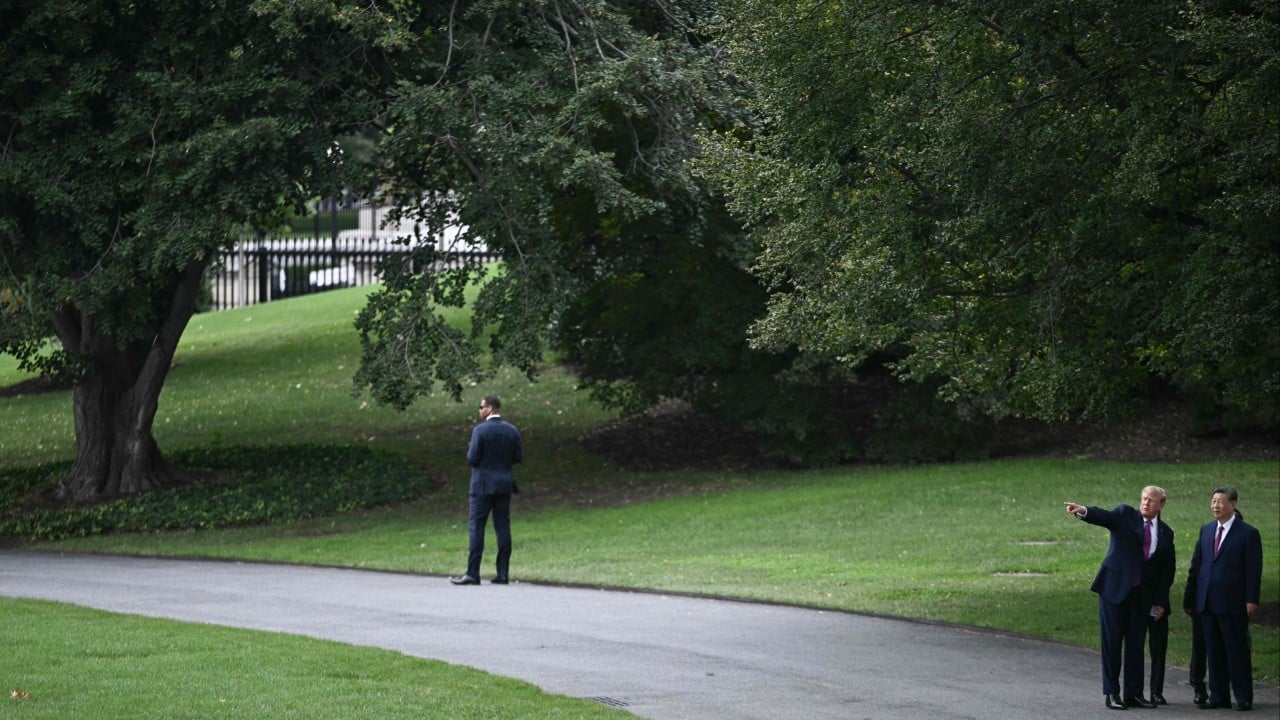
Cold. Recently making headlines in related news: Why Trump and Xi Ended Their Washington Summit at the National Archives.
That is the baseline condition of everything here. It cuts through wool. It numbs fingers until they cannot feel the knot of a zip-tie or the buckle of a life jacket. And in that cold, a quiet desperation turns volatile in a matter of seconds.
Early in the morning, under a sky bruised purple and charcoal, a stretch of beach near Calais became the site of a tragedy that will soon be neatly filed away into quarterly statistics and policy debates. A man is dead. He did not die of old age, or disease, or a traffic accident on a crowded highway. He died because a crush of desperate people, pushed past the breaking point of human endurance, turned on one another in a scramble for rubber, nylon, and a seat on a vessel meant for open water, not survival. Further details into this topic are covered by BBC News.
Dozens of people. One boat. Too many hands reaching out at once.
To understand how a beach in northern France becomes a theater of fatal chaos, you have to strip away the abstractions of modern geopolitics and look at the physics of absolute hopelessness. Imagine standing on that shore. You have sold everything you owned—your mother’s gold ring, the deed to a small patch of land, the family car—to pay men who regard human life as a transactional inconvenience. You have crossed deserts where the wind scours skin from bone. You have survived extortion, detention cells that smell of bleach and unwashed bodies, and nights spent shivering under highway overpasses. You have reached the edge of Europe. Behind you is a country where your name is a death sentence or your future has been systematically erased. Ahead of you is a twenty-one-mile stretch of water patrolled by radar, drones, and the unyielding machinery of state enforcement.
And then, the boat arrives.
It is never what they were promised. It is rarely the sturdy craft depicted in the brochures circulated by smugglers in back-alley coffee shops. It is a fragile tube of rubber, over-inflated, bowing in the middle, designed to hold ten people but loaded with fifty. When it scrapes against the wet stones, something inside the crowd snaps. The collective patience born of months of shared suffering evaporates instantly. Fear is a contagious fire.
Someone pushes. Someone stumbles. A hand grasps a collar, a shoulder, a throat.
What follows is not a riot in the political sense. It is a primal, terrified scramble. In that moment, the man next to you is no longer a fellow traveler who shared your rations of dry bread three days ago; he is an obstacle standing between you and the only remaining exit hatch on earth. Shouts pierce the salt spray. Blows are struck in the dark. Someone falls. The mud swallows the sound. By the time the gray dawn breaks over the dunes, the police arrive to find flashing blue lights reflecting off pools of salt water, a deflated pontoon half-submerged in the wash, and a body lying cold on the pebbles, abandoned by the tide of humanity that rushed past him in the dark.
We read these headlines over morning coffee. We scroll past them on glowing screens between updates on stock markets and local sports scores. We consume them as data points, treating human life as a moving average, a grim tally that ticks upward with every change of season.
Another life lost on the Channel.
The phrase rolls off the tongue with the numbing familiarity of a weather forecast. But behind that sentence lies an entire universe of choices, fears, and institutional failures that we refuse to inspect too closely because looking at them requires us to acknowledge something uncomfortable about the architecture of our world.
Borders are designed to keep people out. That is their primary engineering function. But when the pressure behind a border reaches a certain magnitude, physical barriers cease to act as deterrents and instead become funnels. They compress human movement into narrower, more dangerous corridors. If legal pathways are choked off by miles of bureaucratic red tape and political theater, the market does not vanish; it simply mutates. It goes underground, falling entirely into the hands of criminal networks who trade in human cargo with impunity.
Consider the economics of the crossing. A smuggler does not care if the boat is seaworthy. A smuggler does not care if the engine has been salvaged from a scrap yard or if the life jackets are filled with cheap foam that will waterlog within five minutes. The customer has no leverage. You cannot leave a bad review for a criminal syndicate operating out of a safe house in Dunkirk. You take what is offered, or you stay behind and face whatever horrors you fled from in the first place.
It is a terrible bargain. It is a bargain made by millions of people every single year, walking the invisible fault lines of a fractured planet.
Down on the French coast, the local mayors and police chiefs walk the beaches with hands thrust deep into their coat pockets, staring out at the horizon with expressions carved from exhaustion. They have lived this cycle for years. They watch the tents go up in the dunes; they watch them get swept away by midnight raids; they watch them rise again the next night like stubborn weeds pushing through concrete. They know that every enforcement sweep, every new fence, every million-euro surveillance contract signed in distant capitals does not stop the crossing. It merely shifts the geography of desperation a few miles down the coast. It makes the boats go out later at night, in worse weather, from more remote coves where rescue is impossible.
We treat migration as an immigration problem. It is not. It is a symptom of a deeply unbalanced world order, a manifestation of the vast, unbridgeable chasm between the places where capital flows freely and the places where human beings are treated as surplus to requirements.
Think of the child who was on that beach. Think of the woman who held her infant's hand while the shouting echoed off the cliffs. What drives a mother to step into a frail rubber boat in freezing midnight water? It is not naivety. It is not a desire to exploit welfare systems or break laws for sport. It is the cold, calculated realization that staying still is certain destruction, while the sea offers at least the mathematical possibility of a tomorrow.
When you remove all safe options, you leave only dangerous ones. And when desperation collides with danger, tragedy is not an accident. It is a mathematical certainty.
The sun climbs higher now, burning off the mist over the Channel. The white cliffs of Dover are invisible behind a bank of sea fog, shrouded in white as if they do not wish to look upon what happened on the sand below.
Forensic teams pack up their equipment. The sirens fade. The police tape flutters in the offshore breeze, a bright plastic ribbon against the monotonous gray of the shingle. Soon, the tide will come back in. It will wash over the footprints, the discarded life jackets, and the dark stains on the stones. It will erase the physical evidence of the struggle, smoothing out the beach until it looks pristine and empty once more, ready for the next tide, the next night, and the next boat waiting in the dark.