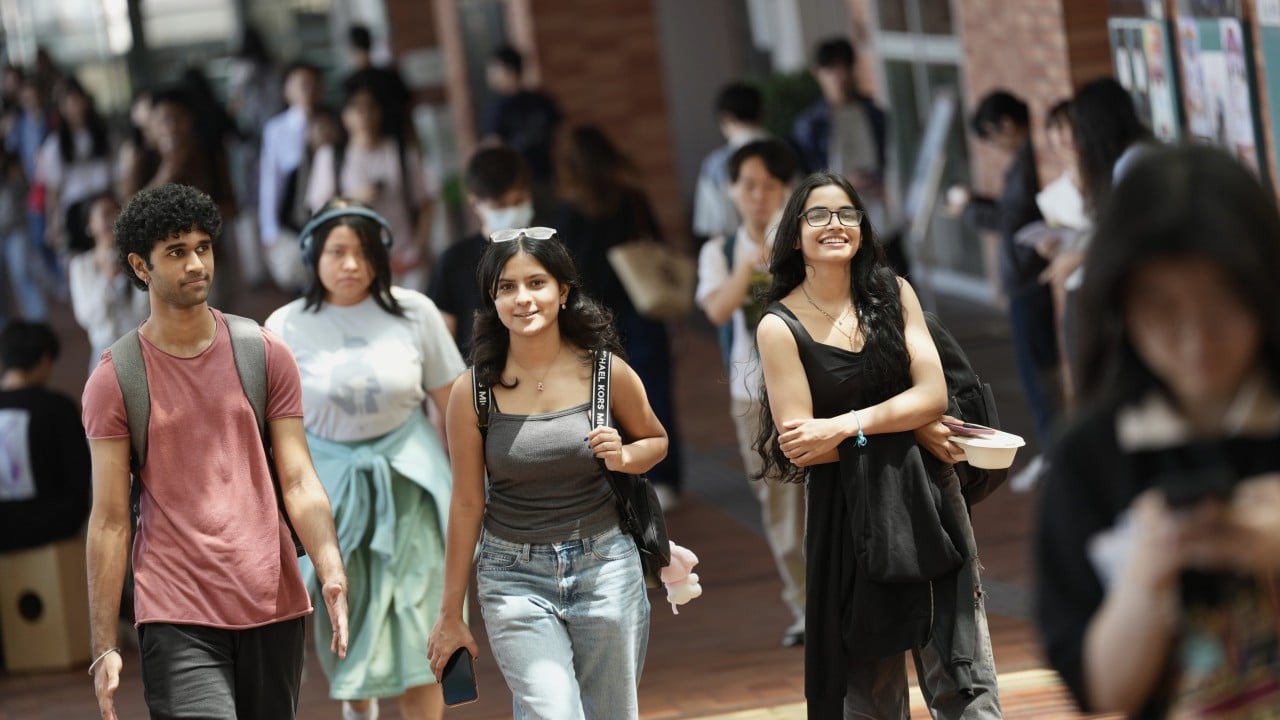
If you walk into a standard classroom in Hong Kong, you see a multicultural city. Walk into a local university lecture hall, and that diversity vanishes. That is a systemic failure.
For years, non-Chinese-speaking students face a massive barrier to higher education. The system relies almost entirely on local Chinese language examinations. If you do not read and write Chinese at a native standard, doors slam shut. Hong Kong constantly pitches itself as a world-class global financial hub. Yet, the local education pipeline shuts out thousands of capable students simply because they lack advanced Chinese writing credentials.
Let's look at the actual reality on the ground.
The Language Trap That Keeps Students Out
The biggest hurdle is not academic capability. It is the language requirement imposed by local universities, specifically the Hong Kong Diploma of Secondary Education Chinese Language exam.
Most universities demand a Level 3 or higher in HKDSE Chinese for standard admission. For a student whose home language is Urdu, Nepalese, English, or Tagalog, reaching a native Chinese literary standard within six years of secondary school is nearly impossible. Alternative qualifications exist, such as the General Certificate of Secondary Education or the International General Certificate of Secondary Education exams. Universities accept these alternative qualifications on paper. In practice, admission officers often prioritize local Chinese qualifications or impose bureaucratic hurdles that make alternative entry paths confusing and unreliable.
Students feel trapped. They work hard in STEM subjects, humanities, and English. They score well. Then university dreams dissolve over a single subject requirement that has little to do with their chosen field of study, such as computer science or international business.
"Language proficiency should open doors, not serve as an arbitrary gatekeeper for students who can excel in English-medium degree programs."
How Schools Fail Non Chinese Speaking Youth Early
The problem starts long before university applications open. It begins in kindergarten and primary school.
Many non-Chinese-speaking children end up in designated schools with fragmented support systems. Teachers often lack specialized training in teaching Chinese as a second language. Instead of adapting the curriculum to bridge the gap, schools often lower academic expectations. Students are tracked into watered-down classes. By the time they reach secondary school, they are years behind their peers in overall academic rigor, not just in language proficiency.
Private tutoring bridges this gap for wealthy families. For working-class minority families living in districts like Yuen Long, Sham Shui Po, or Kwai Chung, private tuition is financially out of reach. Schools must take full responsibility during normal hours instead of passing the burden onto underfunded NGOs.
Policy Changes That Actually Make a Difference
Change requires moving away from bureaucratic half-measures. Educational authorities implemented applied learning Chinese courses as an alternative qualification. While this is a step forward, universities still treat these qualifications with skepticism.
Admissions criteria need an urgent overhaul. Universities should explicitly state alternative pathways for programs taught entirely in English. If a business administration or engineering degree runs in English, demanding high-level Chinese literacy makes zero logical sense. It filters out international talent that is already living right inside the city.
Scholarships dedicated exclusively to minority students help cover tuition fees. Financial aid alone does not solve the entry barrier if the prerequisite exams keep applicants out before selection committees even review their transcripts.
What Educators and Families Can Do Today
If you are a student or a parent navigating this broken pipeline, waiting for systemic reform is not an option. You have to play the current system while pushing for its transformation.
- Target alternative exams early: Secure high grades in GCSE, IGCSE, or General Certificate of Education Advanced Level Chinese qualifications as early as possible in secondary school.
- Target English-first programs: Focus university applications on programs that explicitly use English as the primary medium of instruction and have flexible second-language policies.
- Leverage NGO networks: Connect with community organizations that offer free university guidance counselling, mentoring, and application workshops specifically tailored for minority youth.
- Build a diverse portfolio: Stand out through extracurricular achievements, coding projects, community leadership, and internships that showcase high-value skills beyond standardized test scores.
Hong Kong cannot afford to waste the potential of an entire generation of local youth. Opening university doors to non-Chinese-speaking students is not just about fairness. It is about economic survival for a city that desperately needs diverse global talent.