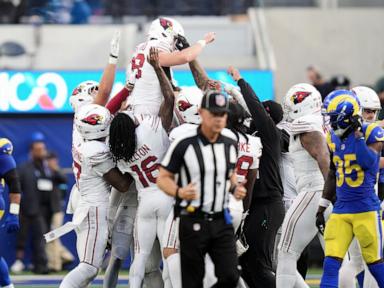
A shared billion-dollar venue in Inglewood was meant to anchor dual championship runs for the Los Angeles Rams and Los Angeles Chargers, yet both franchises opened the 2026 season with a combined 1-5 record at SoFi Stadium. When a visiting opponent like the Arizona Cardinals posts more victories inside that building than both co-tenants combined by mid-October, surface-level explanations about "bad luck" or "rough stretches" miss the structural mechanics driving the slump.
Deconstructing the Standard Narrative
Wire-service recaps of the 1-5 home mark treat the results as a sequence of disconnected misfortune. One loss gets blamed on a late field goal, another on a receiver's hamstring injury, and a third on a kicker tearing his anterior cruciate ligament on a coverage play. That framing has a clear limitation: it treats discrete failure points as independent shocks rather than symptoms of fragile roster depth, special teams volatility, and split-tenant stadium economics.
A rigorous diagnostic separates verified facts from operational hypotheses. Known facts from the October 2026 snapshot include the 1-5 combined home ledger for the Rams and Chargers, the Arizona Cardinals' 18-16 win at SoFi Stadium capped by six field goals from Chad Ryland, kicker Blake Grupe's ACL tear during a kickoff return tackle, and wide receiver Davante Adams's multi-week hamstring absence. By contrast, claiming that stadium design alone caused specific fourth-quarter turnovers or play-calling errors would be an educated hypothesis rather than a proven law.
Three Failure Modes Behind a 1-5 Home Ledger
Rather than viewing every home defeat as an isolated fluke, operational analysis groups the breakdown into three distinct mechanisms: Marginal Margin Compression, Special Teams Fragility, and Shared-Venue Friction.
Marginal Margin Compression
Close NFL games turn on high-leverage possessions where thin depth charts get exposed. In the Rams' 18-16 loss to Arizona, Matthew Stafford completed 25 of 33 passes for 222 yards, while the offense trailed in total yardage (338-286) and lost Davante Adams to a hamstring injury projected to sideline him up to 10 weeks. When top-end pass catchers go down in a salary-cap league, the offense loses separation on third down and red-zone spacing.
Under diminishing marginal returns in roster construction, paying premium dollars for star perimeter talent leaves fewer cap dollars for wide receiver depth or offensive line swing players. A single soft-tissue injury shifts target share toward secondary options, compressing yards per attempt and forcing longer field drives. Over a six-game home sample across two franchises, repeated drive stalls convert one-score leads into one-score losses.
Special Teams Fragility
Special teams operates as a high-variance tax on offensive and defensive efficiency. When a unit lacks kicking stability or depth, field position and scoring leverage swing sharply. During the October 18 game against Arizona, the Rams' kicking situation deteriorated mid-game after signing Blake Grupe following the release of Harrison Mevis, only for Grupe to tear his ACL while tackling kick returner Devin Duvernay on a 40-yard return. Meanwhile, Arizona converted six field goals from 22 to 43 yards to win by two points.
Replacing kickers mid-season carries real operational risk. Unfamiliar timing on snaps and holds, combined with roster spots taken up by emergency specialists or injured coverage players, degrades expected points added on third units. Even when a defense holds an opponent out of the end zone, steady field-goal production from the opposing kicker compounds small yardage deficits into decisive scorelines.
Shared-Venue Friction
Co-tenancy at a single stadium introduces dynamics that single-tenant markets do not face. Both the Rams and Chargers call SoFi Stadium home, meaning local fan attention, corporate hospitality, and weekend stadium traffic are split across two schedules in the same metro area. Visiting teams with traveling fan bases—or divisional rivals drawing regional transplants—can neutralize crowd noise in ways that traditional single-tenant fortresses resist.
The second limitation of a shared venue involves field and facility wear across heavy event calendars. High-utilization stadiums host back-to-back football dates, concerts, and major showcases, creating subtle wear on turf surfaces and tight turnaround windows for operations crews. While stadium acoustics or crowd mix do not throw interceptions by themselves, they reduce the baseline home-field advantage that franchises count on to offset roster injuries.
How Causes Compound Across a Season
Why do two high-profile rosters end up 1-5 at home with Super Bowl 61 looming in February at the same building? The answer lies in causal compounding rather than a single villain.
Consider how one injury triggers a chain reaction:
- A starting receiver pulls a hamstring early in a game, narrowing offensive play-calling options.
- Stalled drives force longer punts or lower-percentage field goals, giving the opponent better starting field position.
- A special teams coverage tackle results in a severe knee injury to a kicker, removing kicking consistency for the rest of the afternoon and future weeks.
- Late-game variance—such as a walk-off kick or a one-possession deficit—decides the outcome against a team that otherwise looks competitive on paper.
When fans or analysts ask why a home record looks so lopsided despite recognizable star names and seasoned coaching staffs, they often overlook how these micro-failures interact. A team can survive one subpar unit for a week. Surviving simultaneous attrition at skill positions and kicking while playing in a contested home environment is far harder.
What This Means for Home Advantage and Playoffs
Can a team recover from a poor home start to contend late in the season? Yes, provided the underlying efficiency metrics remain competitive and key starters return healthy. A 1-5 combined home mark across two teams reflects an early-season sample where close losses and injuries piled up, not a permanent mathematical lock on the rest of the calendar—especially as divisional games and late-season matchups reshape standings.
Does playing in a shared stadium permanently erase home-field advantage? No. Home-field advantage in the NFL is a statistical tendency rather than an automatic point bonus; roster health, turnover margin, and situational execution carry far more weight than venue novelty. A shared building can make crowd leverage less predictable, yet disciplined execution still wins games.
Why do kicking and injury news loom so large in one-score losses? Because NFL scoring is quantized into three-point field goals and seven-point touchdowns. When offenses stall in scoring territory, a reliable kicker turns drives into points; when a kicker goes down or misses, every possession carries higher stakes.
Operational Risks and Limits of Quick Fixes
Front offices and coaching staffs face strict constraints when trying to patch a 1-5 home slide mid-season:
- Roster churn limits chemistry: Cycling through kickers or depth receivers mid-year solves immediate availability gaps, but timing between long snapper, holder, and kicker takes repetitions to stabilize.
- Injury timelines cannot be rushed: Soft-tissue strains and ACL tears operate on biological recovery schedules; pushing players back early raises re-injury risk.
- Free-agent pools are thin in-season: Proven starters rarely sit available in October, meaning teams rely on practice-squad call-ups or trades that require rapid scheme adjustment.
Strategic Play for Both Tenants
Both franchises must treat home games as high-leverage resource allocation problems rather than relying on brand prestige or stadium showcase status. Each club should audit its fourth-down and red-zone conversion efficiency alongside special teams net field position, stabilize the kicking operation with clear contingency roles so a coverage injury never leaves the team without a reliable leg, and shorten offensive scripts when top receivers are out so the defense is not defending short fields.



