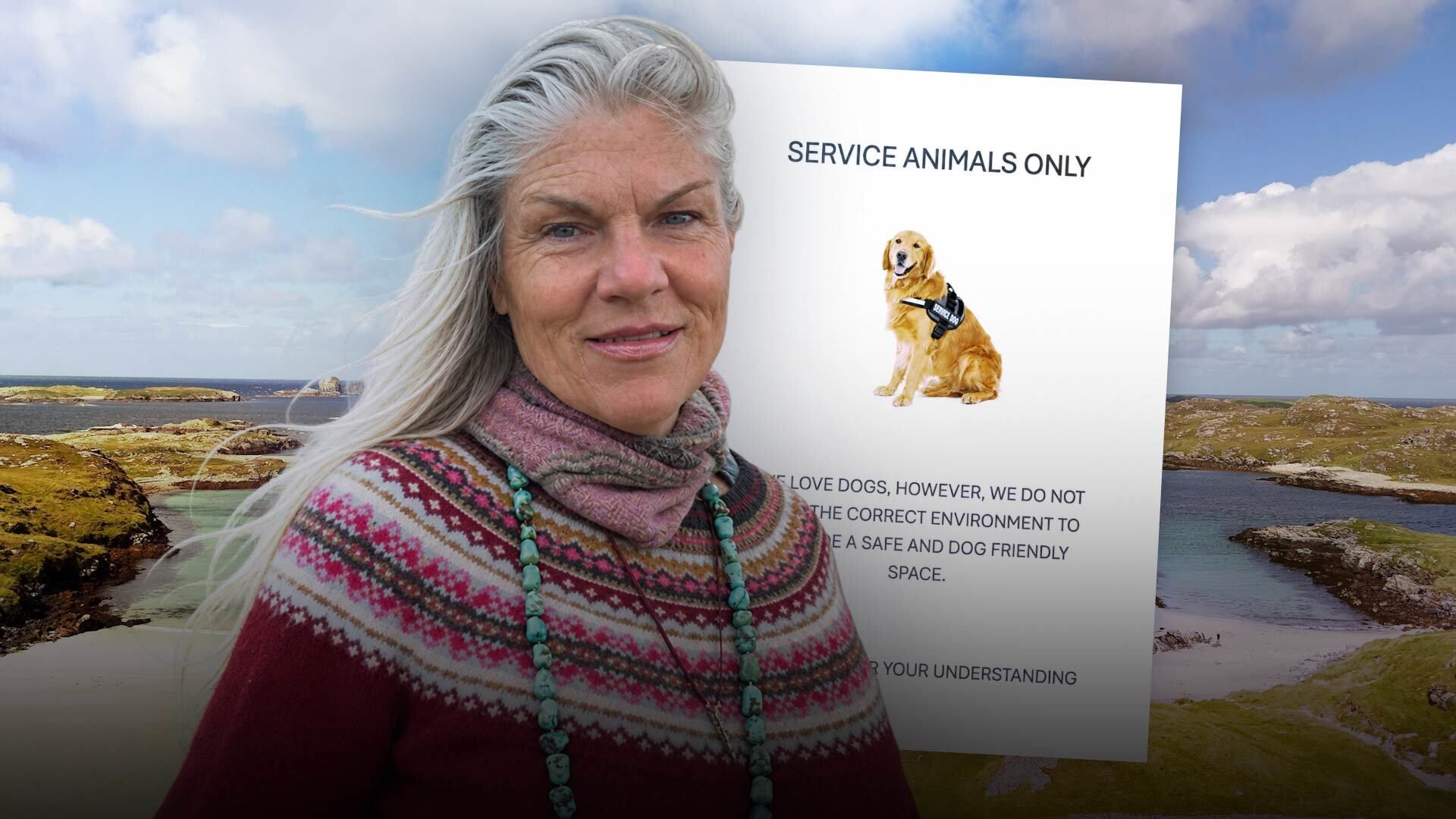
The lazy media narrative writes itself. Drop a famous last name into a windswept Scottish archipelago, add a barred terrier, sprinkle in a dash of local obstinacy, and watch the metropolitan commentariat froth at the mouth over rural backwardness. The standard script paints the Outer Hebrides as provincial, petty, and stubbornly closed to the modern world.
That script is garbage.
The recent legal hullabaloo involving a Hollywood star's daughter suing an island cafe over dog access policy is not a clash between enlightenment and backwardness. It is a masterclass in entitlement colliding with community self-determination. And frankly, the cafe owners deserve a medal, not a writ.
Let us dismantle the comfortable urban delusion that public accommodation means absolute surrender to individual whim.
The Myth of Universal Access
We live in an era poisoned by the gospel of frictionless consumerism. The underlying assumption of modern urban life is simple: if you possess purchasing power, your specific lifestyle choice must be accommodated anywhere, by anyone, at any time. Bring your emotional support peacock to the supermarket, push your oversized stroller down the aisle of a micro-brewery, or demand dog seating in a cramped kitchen handling raw food.
When a small business pushes back, the urban hive-mind shrieks about discrimination.
I have spent two decades advising hospitality operators across remote markets. I have watched owners hemorrhage margin trying to appease tourists who treat local establishments like extensions of their own living rooms. The assumption that a cafe in a tight-knit island community owes service to every stray doodle or terrier, regardless of operational constraints or local norms, stems from profound economic illiteracy.
Let us define terms clearly. Hospitality is a commercial contract, not a civil rights charter. A business owner sets the parameters of service based on space, hygiene, safety, and community ethos. When a visitor waltzes into a tiny island cafe and expects the rules of West London or Los Angeles to apply, they are not practicing open-minded travel. They are engaging in geographic colonisation.
The Real Economics of Island Life
Let us look at the operational reality that the mainstream reports conveniently ignore.
Operating a food service business in the Outer Hebrides is an exercise in logistical gymnastics. Supply chains cross treacherous waters and unpredictable weather patterns. Margins are razor-thin. Kitchen footprints are often microscopic, designed to maximize human seating rather than accommodate furry appendages scurrying around floorboards where hot grease and sharp knives are in constant motion.
Imagine a scenario where a cafe owner yields to every tourist demanding pet entry. Now factor in the insurance liabilities, the mandatory deep-cleaning protocols required by environmental health standards for animal dander in enclosed spaces, and the inevitable friction with local regulars who value a quiet, hair-free environment.
The math does not work. The economics of remote micro-businesses dictate rigid efficiency. If a cafe chooses to remain dog-free, it is rarely out of malice. It is an operational decision designed to protect the business's survival against the whimsical demands of transient visitors who will be back in a penthouse by next Tuesday.
"Hospitality is a commercial contract, not a civil rights charter. A business owner sets the parameters based on space, hygiene, safety, and community ethos."
The Privilege of Compliance
What makes the Hollywood offspring's lawsuit particularly grating is the weaponization of the legal system to enforce cultural submission. Litigation has become the default luxury-goods tantrum. When you cannot charm your way through a polite refusal, you pull out a subpoena.
This behavior exposes a fundamental asymmetry in modern power dynamics. A multi-connected individual with inherited clout can drag a hardworking family business into a legal battle that threatens their livelihood with exorbitant defense costs, simply because a terrier was told to wait outside.
It is cultural imperialism wrapped in animal rights rhetoric.
The media frames this as a quirky local dispute. It is nothing of the sort. It is a stress test for whether local communities retain the right to govern their own spaces, or whether globalized elites can bulldozer local norms whenever their personal comfort is mildly inconvenienced.
If you travel to the Hebrides, you are stepping into a landscape shaped by harsh weather, deep traditions, and a fierce, earned independence. The locals do not care who your father was. They care about their community, their rules, and their peace.
Stop trying to civilize places that do not need your version of civilization. Leave the dog at home, buy a scone, and learn how to take no for an answer.