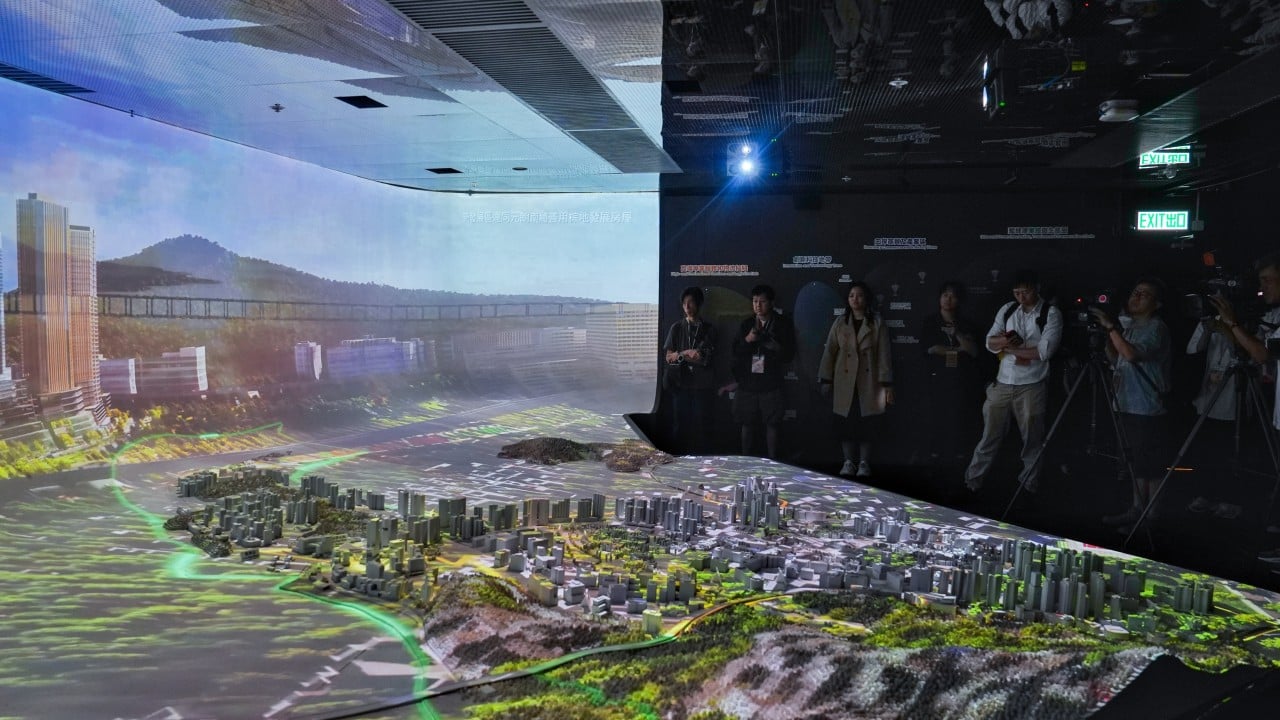
The Hong Kong Science and Technology Parks Corporation is preparing a major financial pivot to bankroll the Hung Shui Kiu development, shifting from government reliance toward private debt markets. This move involves a multi-billion dollar bond issuance and aggressive lobbying for corporate tax concessions, signaling a desperate need to accelerate the Northern Metropolis vision before capital flight becomes permanent. While the official narrative frames this as a "strategic expansion," the reality is a high-pressure race to prove that Hong Kong can still compete with Shenzhen's lightning-fast industrial cycles.
Hung Shui Kiu is not just another plot of land. It is the designated bridgehead for modern logistics and data-driven manufacturing. However, the sheer scale of the infrastructure required has forced the statutory body to look beyond the public purse. By issuing bonds, the operator is betting that international and local investors still have an appetite for Hong Kong’s long-term sovereign-backed projects, even as interest rates and regional tensions create a volatile backdrop for long-term debt.
The Financing Gap Behind the Infrastructure Push
For decades, Hong Kong’s innovation hubs were built on a simple foundation: government grants and land premiums. That model is breaking under the weight of the Northern Metropolis. The projected costs for the Hung Shui Kiu project are immense, and the Science Park is essentially being told to find its own way to the finish line.
Issuing bonds is a double-edged sword. On one hand, it provides immediate liquidity to begin the site formation and specialized facility construction that high-tech tenants require. On the other hand, it introduces a level of fiscal discipline and scrutiny that the corporation hasn't faced in the same way before. Institutional investors will demand transparency on occupancy rates and ROI timelines that are notoriously difficult to predict in the industrial sector.
This financial shift coincides with a broader push for tax incentives. The operator is currently pressuring the government to slash taxes for firms that settle in the new park. The logic is straightforward: land alone is no longer a differentiator. When a tech firm can set up across the border in the Qianhai special zone for a fraction of the cost, Hong Kong must use its tax code as a weapon.
Why Land is No Longer the Ultimate Asset
In the old Hong Kong economy, owning the dirt was enough. If you built a warehouse or a factory shell, the tenants would fight for the keys. That era is dead. Modern industrial tenants in sectors like microelectronics or high-end medical devices require highly specific power grids, vibration-sensitive floors, and massive cooling systems.
The Hung Shui Kiu project aims to provide this "plug-and-play" environment, but building it is significantly more expensive than traditional commercial real estate. If the bond yields are too high, the corporation will have to pass those costs onto the tenants through higher rents, which directly contradicts the goal of attracting startups and mid-sized tech firms.
The Shenzhen Shadow
Every brick laid in Hung Shui Kiu is measured against what is happening five miles north. Shenzhen has perfected the art of the industrial ecosystem. They don't just offer land; they offer a complete supply chain and a massive pool of engineering talent.
Hong Kong's pitch relies on the "One Country, Two Systems" framework—specifically the free flow of capital and data. But data doesn't pay the rent. Companies need to see a path to profitability. If the proposed tax cuts are not deep enough, the bond-funded facilities might end up as white elephants. The operator is essentially asking the government to trade short-term tax revenue for long-term industrial relevance. It is a gamble that assumes the global tech sector still sees value in the Hong Kong legal system as a buffer.
The Logistics Crisis and the Multi Storey Solution
A core component of the Hung Shui Kiu plan involves consolidating the brownfield sites currently used by the logistics industry. These are the sprawling, unorganized open-air storage yards that dot the New Territories. The plan is to move these operators into "multi-storey industrial buildings."
This sounds efficient on paper, but it is a logistical nightmare for the companies involved. Heavy machinery and container storage do not easily transition to vertical spaces. The cost of operating in a modern HSK facility will be significantly higher than a dusty lot in the New Territories. This is where the bond money becomes critical—the corporation needs to subsidize the transition of these traditional businesses to prevent a total collapse of the local logistics backbone.
Without these subsidies, the "modernization" of Hung Shui Kiu could inadvertently kill the very industry it aims to house. The tension here is palpable. You have a statutory body trying to act like a private developer while carrying the social responsibility of urban planning.
The Investor Perspective on Industrial Bonds
When a statutory body enters the bond market, it is selling stability. Investors are looking at the credit rating of the Science Park and, by extension, the financial health of the Hong Kong government.
- Duration Risk: These bonds will likely have long maturities. In a world of shifting geopolitical alliances, a 10-year or 20-year bet on a Hong Kong industrial park requires a certain level of optimism.
- Interest Rate Sensitivity: If the Federal Reserve keeps rates higher for longer, the cost of servicing this debt will eat into the Science Park’s operational budget.
- The Competition for Capital: These bonds aren't just competing with other corporate debt; they are competing with green bonds and other infrastructure plays across Asia.
The corporation has to prove that Hung Shui Kiu is more than just a real estate play. They have to prove it is a vital organ of the new economy. If the bond issuance is undersubscribed, it will be a major blow to the credibility of the entire Northern Metropolis project.
Tax Cuts as a Survival Strategy
The lobbying for tax concessions is perhaps the most telling part of this saga. It suggests that the Science Park leadership knows that infrastructure and bonds are not enough.
The current proposal involves a tiered tax system where companies hitting specific R&D benchmarks or employment targets would pay a significantly lower corporate tax rate. This is a departure from Hong Kong’s traditional "simple and low" tax philosophy. It is a move toward a more interventionist, "picking winners" style of governance common in Singapore or South Korea.
The Risk of Over Engineering the Future
There is a real danger that the Hung Shui Kiu project becomes too rigid. Industrial trends move faster than construction cycles. By the time a bond-funded, specialized facility is completed, the specific technology it was built for might have moved on.
We have seen this before in various "cyberports" and "tech hubs" around the world that became glorified office parks. To avoid this, the HSK operator needs to ensure that the buildings are modular and the financial obligations are flexible. But flexibility is hard to achieve when you have bondholders to pay every six months.
The pressure to fill the space and generate cash flow to service the debt could lead to a lowering of standards. We might see "innovation" parks filled with standard logistics firms and back-office operations that contribute little to the stated goal of re-industrialization.
The Breaking Point for Local Firms
While the headlines focus on the multi-billion dollar numbers, the small and medium-sized enterprises (SMEs) are the ones feeling the heat. For a local manufacturer, the move to Hung Shui Kiu is a massive capital expenditure. They are being asked to upgrade their equipment and their workflows to fit into a modern, high-cost environment.
The tax cuts are designed to help, but they only apply if you are already making a profit. For a firm in the middle of a costly relocation, tax breaks are a distant reward. They need immediate grants or low-interest loans, which puts even more pressure on the Science Park’s balance sheet.
The operator is essentially trying to manage a massive migration of industry. If they push too hard, the companies leave for Southeast Asia or the Mainland. If they don't push hard enough, the New Territories remain a patchwork of inefficient brownfield sites.
Hard Truths for the Northern Metropolis
The success of Hung Shui Kiu depends on a perfect alignment of market appetite, government bravery, and industrial timing. The bond issuance will be the first real "market test" for the Northern Metropolis. If the big banks and institutional investors don't buy in, the project will be forced back to the Legislative Council for more public funding, which will spark a political firestorm regarding the city’s depleting reserves.
The operator is currently walking a tightrope. They are projecting confidence to the bond market while pleading for help from the tax department. It is a dual-track strategy born out of necessity, not choice.
The real metric of success won't be the total amount of money raised or the number of buildings completed. It will be the number of high-value patents and specialized products that actually come out of those facilities. Hong Kong has spent decades talking about "innovation and technology." The Hung Shui Kiu bond issuance is the moment where the talk ends and the debt begins. From this point on, the city is financially committed to an industrial future that it must now build, whether the market is ready or not.
The corporation must now execute with a level of precision that has arguably been missing from previous large-scale infrastructure projects. The margin for error has evaporated, and the bondholders will be watching every floor of every building for a sign that their investment is more than just a bet on expensive dirt.