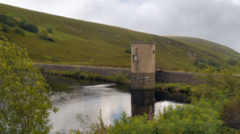
The tragic recovery of a 15-year-old boy's body from a regional reservoir highlights a critical, systemic vulnerability in public water safety infrastructure. Emergency crews pulled the teenager from the water following an extensive search operation, marking yet another preventable drowning in an artificial basin. While initial reports frame these incidents as isolated recreational accidents, a deeper investigation into municipal water management reveals a different reality. The true crisis lies in the outdated security protocols, deceptive calm of artificial currents, and glaring lack of physical barriers surrounding deep-water reservoirs near residential zones.
Most municipalities treat reservoirs purely as utility assets rather than high-risk public safety hazards. This distinction creates a dangerous gap in how these areas are managed and secured.
The Illusion of Calm in Artificial Basins
An artificial reservoir is not a natural lake. It looks peaceful on the surface. Beneath that still water lies a highly engineered environment designed to move massive volumes of water rapidly and unpredictably.
Natural bodies of water generally feature gradual shelves and predictable thermal layers. Reservoirs operate on entirely different mechanics. Submerged intake valves can activate without warning, creating powerful down-drafts and localized currents that can overpower even competitive swimmers. When a utility company opens an underwater gate to meet peak water demand or manage flood control, thousands of gallons of water shift instantly. A swimmer caught near these zones faces sudden suction that is completely invisible from the shoreline.
Furthermore, thermal stratification in deep reservoirs presents an immediate physical threat. The top few inches of water might feel warm under the summer sun. Step off a submerged ledge, and the temperature drops instantly by twenty or thirty degrees. This sudden plunge triggers the mammalian dive reflex or acute cold shock. The body's involuntary reaction is to gasp deeply. If the swimmer's head is underwater during that gasp, drowning happens in seconds.
The Failure of Signage as a Security Strategy
Walk along the perimeter of almost any municipal reservoir and you will find the exact same approach to public safety. A rusted chain-link fence. A faded metal sign that reads "No Swimming" or "Danger: Deep Water."
This is security by liability waiver, not security by design. It exists to protect the municipality from lawsuits, not to protect teenagers from entering the water.
Physical security at these sites is notoriously underfunded. Budgets go toward water treatment chemicals and pipe maintenance, while perimeter security remains an afterthought. Fences are frequently left unrepaired, leaving gaps that are easily bypassed. Remote monitoring via thermal cameras or motion sensors is rarely implemented outside of high-security drinking water facilities. For a teenager looking for a place to cool off on a hot afternoon, an unmonitored fence is an invitation rather than a deterrent.
We must examine how urban planning intersects with public recreation. When cities expand outward, residential developments often creep right up to the edges of utility land. If a community lacks accessible, affordable public pools or safe recreational splash pads, natural and artificial water features become default gathering points. Expecting signs to counteract the natural pull of an open body of water in a crowded neighborhood is a proven failure of policy.
Redesigning the Perimeter for Real Protection
Fixing this systemic vulnerability requires moving past the outdated mentality of simply putting up bigger signs. Municipalities must invest in physical infrastructure changes that actively prevent entry and improve emergency response times.
Structural Barrier Upgrades
Standard chain-link fencing is easily scaled or cut. Modern public safety infrastructure requires anti-climb rigid mesh fencing that extends into the ground to prevent tunneling or lifting. Crucially, these barriers must be positioned far enough back from the water's edge to create a buffer zone, preventing accidental falls down steep, concrete-lined banks.
Automated Public Address and Detection Systems
Fencing alone is passive. Smart infrastructure utilizes AI-driven optical sensors and thermal imaging along high-risk perimeters. When a person crosses into a restricted zone, the system automatically triggers localized audio warnings and alerts local monitoring stations before the individual even reaches the water. This shifts the emergency response from a body recovery operation to a proactive intervention.
Structural Escape Mechanisms
Many reservoirs feature steep, concrete banks covered in algae. Once a person slips into the water, these banks become impossible to climb. The wet concrete offers zero traction. Installing recessed ladders, safety ledges just below the waterline, or high-visibility grab lines along the perimeter walls provides a literal lifeline for someone struggling to get out.
| Safety Measure | Current Implementation | Proposed Standard |
|---|---|---|
| Perimeter Fencing | Standard 6-foot chain-link, easily cut or climbed | 8-foot anti-climb rigid mesh with concrete footing |
| Monitoring | Periodic manual patrols by utility staff | Continuous thermal imaging with automated alerts |
| Bank Accessibility | Slick, steep concrete with no handholds | Recessed safety ladders and continuous grab lines |
Relying on public education campaigns and parental supervision is a cop-out for poor engineering. The design of public utility sites must account for human behavior, including the impulsivity of youth. Until municipal budgets balance the cost of water delivery with the cost of securing the infrastructure used to hold it, the quiet danger of the local reservoir will continue to claim lives. Cities must mandate strict infrastructure audits of all open-water utilities within three miles of residential areas, replacing liability-dodging signage with unyielding physical barriers.