Thread.
It starts with a single, almost invisible filament of polyester-cotton blend, pulled taut across a steel needle moving at four thousand revolutions per minute. The sound is not a hum. It is a relentless, metallic roar that vibrates in your teeth, settles into the marrow of your wrists, and follows you home when the factory gates finally clang shut at dusk.
I have stood on the concrete floors of export zones in South Asia, watching the dust motes dance in the harsh fluorescent glare while row after row of women bend over Juki sewing machines. If you spend enough time in those rooms, you stop seeing garments. You start seeing minutes. Every seam is measured in seconds; every sleeve attached is a fraction of a cent tallied against an impossible daily quota. When the machines finally stop—not for a holiday, not for a power outage, but because the people operating them have walked out into the streets to face tear gas and rubber bullets—the silence is terrifying.
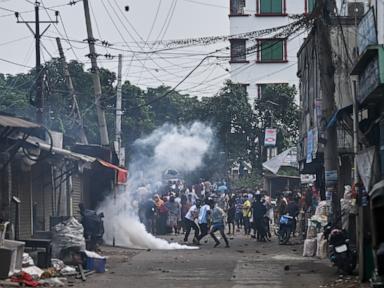
Recently, hundreds of garment factories across Bangladesh shuttered their doors as tens of thousands of workers clashed with police over wages. To the casual observer scrolling past a three-paragraph wire report over morning coffee, it reads like a distant supply chain hiccup. A brief flare-up in Gazipur or Ashulia. A minor delay in the autumn shipping schedule.
That detachment is an illusion. What is happening on the asphalt outside Dhaka is not a localized labor dispute; it is the breaking point of a global economic bargain that has quietly subsidized Western wardrobes for four decades.
The Arithmetic of Survival
To understand why a quiet, soft-spoken seamstress picks up a brick to throw at a riot shield, you have to do the math she does at the end of every month. Let us look at a composite character—we will call her Farida, though her reality mirrors that of millions of real women working in the industrial belts of Savar and Narayanganj.
Farida is twenty-six. She shares a ten-by-ten-foot tin-roofed room with her husband and their young daughter, sharing a single communal kitchen and a bank of toilets with twelve other families. Before the protests erupted, the statutory minimum wage for entry-level garment workers in Bangladesh stood at 8,000 taka a month—roughly $73. Even with grueling overtime, pushing sixty or seventy hours a week, a seasoned operator might scrape together $100 to $115.
Now, look at the ledger of her life.
Inflation in Bangladesh has hovered near ten percent, driven by a weakening currency and soaring global commodity prices. The cost of coarse rice, lentils, cooking oil, and onions—the absolute bedrock of a working-class diet—has surged by thirty to fifty percent over the past two years. Rent in the peri-urban slums surrounding the factories eats nearly half her base pay before she buys a single grain of salt.
When the government-appointed wage board announced a hike to 12,500 taka (about $113) in late 2023—the first adjustment in five years—it was framed by factory owners as a generous concession that would push margins to the brink. To Farida, standing in a market where eggs had become a luxury item, it was a death sentence signed in ink. Workers and independent unions had demanded 23,000 taka (around $208), a figure calculated not for comfort, but for basic caloric survival.
Think of the global apparel supply chain like a massive, high-pressure hydraulic system. At the top, multinational fashion brands demand faster turnarounds and lower wholesale prices to protect their quarterly earnings. In the middle, local factory owners face rising energy costs and razor-thin margins, terrified that raising prices by ten cents a unit will send buyers fleeing to Vietnam, Cambodia, or Ethiopia. At the very bottom of that pipe—welded shut with nowhere to vent—sit four million Bangladeshi workers.
When you keep pumping pressure into a sealed pipe without giving it a release valve, it does not politely negotiate. It explodes.
Smoke Over Gazipur
The explosion did not happen overnight. It built through whispered conversations over lunch boxes of cold rice, through skipped meals so children could drink milk, and through the quiet humiliation of borrowing money from local loan sharks at predatory interest rates just to pay a doctor.
When the strikes began in earnest, the geography of the industrial zones transformed within hours. In Gazipur, Ashulia, and Mirpur, workers poured out of multi-story concrete compounds, blocking highways with burning tires and debris. They chanted a single, unmistakable demand: “We want wages to live, not to die.”
The response was swift and brutal. Industrial police, reinforced by border guards, moved in with baton charges, sound grenades, tear gas, and live ammunition. Factory owners, citing safety concerns and vandalism, invoked Section 13(1) of the Bangladesh Labor Act—a legal mechanism that allows employers to shut down operations indefinitely without paying workers a single taka for the days lost. Hundreds of plants locked their steel gates. Workers were killed in the crossfire; dozens more were injured; thousands faced criminal charges that could blacklist them from the industry forever.
I remember the smell of tear gas clinging to damp cotton clothes during an earlier wave of unrest in Dhaka—that sharp, peppery burn that blinds you instantly and makes your lungs feel like they are filling with broken glass. You see young women in colorful salwar kameez running barefoot over gravel, clutching their throats, not because they are political radicals, but because they simply cannot feed their children on what they are paid.
It is easy to feel confused—even paralyzed—when confronted with this kind of violence. On one hand, factory owners point to genuine economic headwinds: global retail demand has softened, interest rates on business loans in Bangladesh have climbed, and electricity shortages have forced plants to run on expensive diesel generators. Many mid-sized suppliers truly are operating on the edge of bankruptcy. If they raise wages overnight without higher payments from Western brands, they will close, and millions of jobs will vanish into thin air.
On the other hand, how do you ask a human being to accept starvation today so that a factory might remain solvent tomorrow? That is the moral trap at the heart of fast fashion.
The Ghost of Rana Plaza
You cannot look at a locked factory gate in Bangladesh without seeing the shadow of April 24, 2013.
That was the morning the eight-story Rana Plaza commercial building collapsed in Savar, crushing 1,134 garment workers to death and injuring more than 2,500 others. The tragedy forced a brief, horrified reckoning across the globe. Brands signed safety accords. Engineers inspected wiring and load-bearing columns. Fire exits were unlocked.
Safety improved dramatically. In many ways, Bangladesh’s top-tier export factories became cleaner, brighter, and structurally sounder than ever before.
Yet while the buildings were reinforced, the economic architecture remained untouched. The industry continued to sell one thing above all else: the