The tropical sun in East Java does not merely warm the earth; it bakes it. By mid-afternoon, the air turns into a thick, suffocating blanket, the kind that makes a simple breath feel like swallowing steam. For decades, young Indonesians chasing a life of stable, quiet dignity have clawed their way through fierce competition to secure a spot in the civil service. They expected long hours behind desks, piles of manila folders, and the rhythmic clicking of keyboards. They expected the slow, predictable grind of bureaucracy.
They did not expect to die in the dirt, wearing combat boots.
When news filtered out about the collapse and subsequent deaths of civil trainees during mandatory military-style induction drills, it felt to many families like a sudden, violent tearing of reality. These were not elite soldiers volunteering for special forces selection. These were accountants, administrative assistants, and regional planners. Yet, under the shifting political winds of Jakarta, they found themselves subjected to grueling physical trials designed for the battlefield.
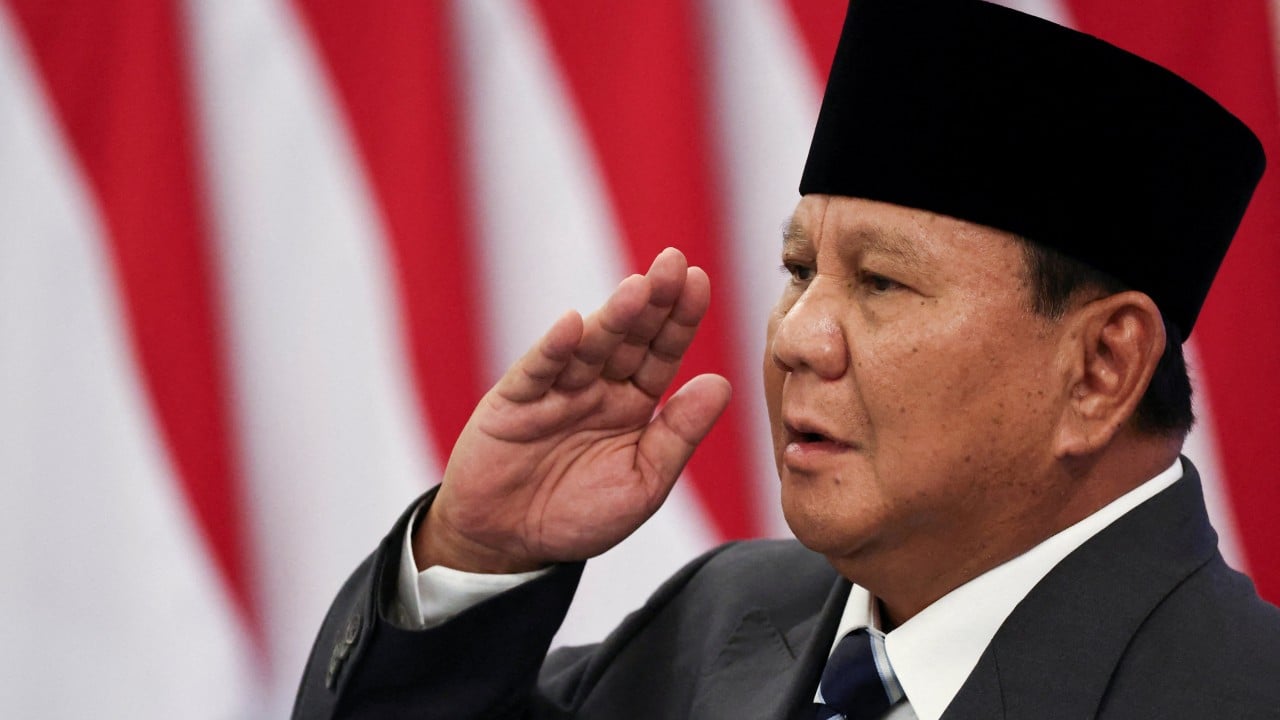
The tragedy has done more than devastate a handful of households. It has forced a sudden, painful confrontation with the governing philosophy of President Prabowo Subianto, whose long-held belief in military discipline as the ultimate cure for civilian inefficiency is now facing its darkest critique.
The Mirage of the Iron March
To understand how a desk job turned fatal, one must understand the allure of the uniform in the Indonesian political imagination. For a long time, the civilian bureaucracy has been caricatured as slow, bloated, and prone to inertia. The perceived antidote? Order. Precision. Command.
Consider a young trainee—let us call him Adit, a composite of the eager young professionals who enter the system each year. Adit spent his twenties studying public policy, mastering spreadsheet formulas, and learning the intricate legal frameworks of local governance. His weapon was the pen; his shield was the regulation book. When he passed the notoriously difficult civil service exam, his family celebrated. He had secured a ticket to the middle class.
But the orientation program he stepped into looked less like a corporate onboarding and more like a penal colony. Wake-up calls at dawn. Forced marches under a punishing sun. Senior officers shouting orders at exhausted citizens who had never run a mile in their adult lives.
The logic behind this approach is simple, if deeply flawed: break the individual to build the collective. Proponents argue that military drills instill patriotism, eradicate laziness, and forge an unshakeable work ethic. But when applied carelessly to a civilian populace, this logic breaks down with terrifying speed. Human bodies are not uniform machinery. A heart valve that functions perfectly well during a walk to the office can fail spectacularly under a forced three-mile run in dehydration conditions.
The recent fatalities among trainees were not freak accidents. They were the mathematical certainty of pushing unconditioned civilian bodies past their breaking points, wrapped in a culture that treats complaints of exhaustion as a sign of moral weakness.
Echoes of an Old Playbook
The reliance on military discipline to fix civilian institutions is not a new experiment in Jakarta. It is a ghost from the past, freshly dusted off and given a modern coat of paint.
President Prabowo, a former special forces general, has never hidden his admiration for military efficiency. His early presidency has been defined by high-profile retreats at military academies, where cabinet ministers were famously clad in camouflage and made to sleep in tents. While that display was largely viewed as a quirky, nationalistic team-building exercise, the trickle-down effect on lower-level civil service training has turned out to be far more hazardous.
When leadership signals that patriotism is measured by one's ability to endure physical hardship, middle managers down the chain of command take note. They push harder. They make the drills longer. They ignore the trainee who stumbles, assuming they are just soft.
This creates a dangerous disconnect. A nation cannot drill its way out of bureaucratic corruption or inefficiency. Typing a policy document faster or processing a land permit more cleanly has nothing to do with how many push-ups an employee can perform. By conflating physical stamina with professional competence, the current administration risks building an institution based on blind obedience rather than critical intellect.
But the real problem lies elsewhere, rooted deeply in the trauma of Indonesia's historical memory. For over three decades under the New Order regime, the military’s hand was visible in every aspect of civilian life. The slow, painful transition to democracy in 1998 was supposed to draw a clear line between the defenders of the nation and the administrators of the state. Critics argue that the current militarization of the civil service threatens to blur that line once again, conditioning a new generation of public servants to take orders without question, rather than serving the public with empathy and independent judgment.
The Human Breakage
It is easy to get lost in the macro-politics of Jakarta, to debate the administrative theories of Prabowo’s inner circle while sitting in air-conditioned offices. But the true weight of this policy is borne in modest living rooms across the archipelago, where parents look at empty bedrooms.
Imagine the phone call a mother receives. Her child, who went away to learn how to serve the public, is in a regional hospital. Heatstroke. Organ failure. Dead.
Medical experts have repeatedly pointed out that heat-related illnesses are entirely preventable. They occur when the body’s internal cooling mechanisms are overwhelmed by extreme physical exertion in high temperatures. In a professional military setting, medics monitor wet-bulb temperatures, enforce mandatory hydration schedules, and recognize the early signs of confusion and ataxia that signal impending collapse.
In a civilian training camp run by bureaucratic supervisors trying to play soldier, those guardrails often do not exist. There is a toxic mix of amateurism and machismo at play. If a trainee asks for water, they are told to toughen up. If they ask to sit down, they are shamed in front of their peers.
This is where the tragedy transforms from a logistical failure into a moral one. The state owes a duty of care to its citizens, especially those who have stepped forward to keep its wheels turning. To subject them to conditions that risk their lives for no tangible professional benefit is a profound betrayal of that duty.
Reimagining Strength
The backlash from human rights groups, civil society organizations, and grieving families has placed the administration at a crossroads. The current trajectory is unsustainable.
Fixing a complex bureaucracy requires structural reform, digital transformation, better wages, and transparent accountability measures. It requires modern management techniques that encourage innovation and protect whistleblowers. These are difficult, unglamorous tasks that take years of patient policy work.
A military boot camp, by contrast, is a seductive shortcut. It offers the illusion of reform. It produces neat photographs of disciplined rows of workers in identical uniforms, looking focused and efficient. But it is a theater of productivity, masks covering a broken interior.
Consider what happens next if this system remains unchecked. The civil service will not become more efficient; it will simply become more fearful. The brightest minds—the tech-savvy innovators, the brilliant analysts, the empathetic social thinkers—will look at the prospect of mandatory military drills and choose the private sector instead. The state will be left with those who are merely good at surviving the march, not those who are good at solving the nation's problems.
True institutional strength does not look like a line of exhausted civilians marching in lockstep through the dust. It looks like an office where a junior clerk feels safe enough to point out an error in a multi-million-dollar budget. It looks like a system that values the brains of its workers over their ability to withstand heat exhaustion.
The young lives lost in these camps cannot be brought back. Their families are left to navigate a profound, permanent grief, wondering how a desk job in the civil service carried a death sentence. The choice ahead for Indonesia is stark: continue down the path of performative discipline that treats human beings as expendable cogs, or build a modern, civilian-led state that respects both the minds and the lives of those who serve it.
The dust on the training grounds will eventually settle, but the stains left by this policy will not wash away easily.