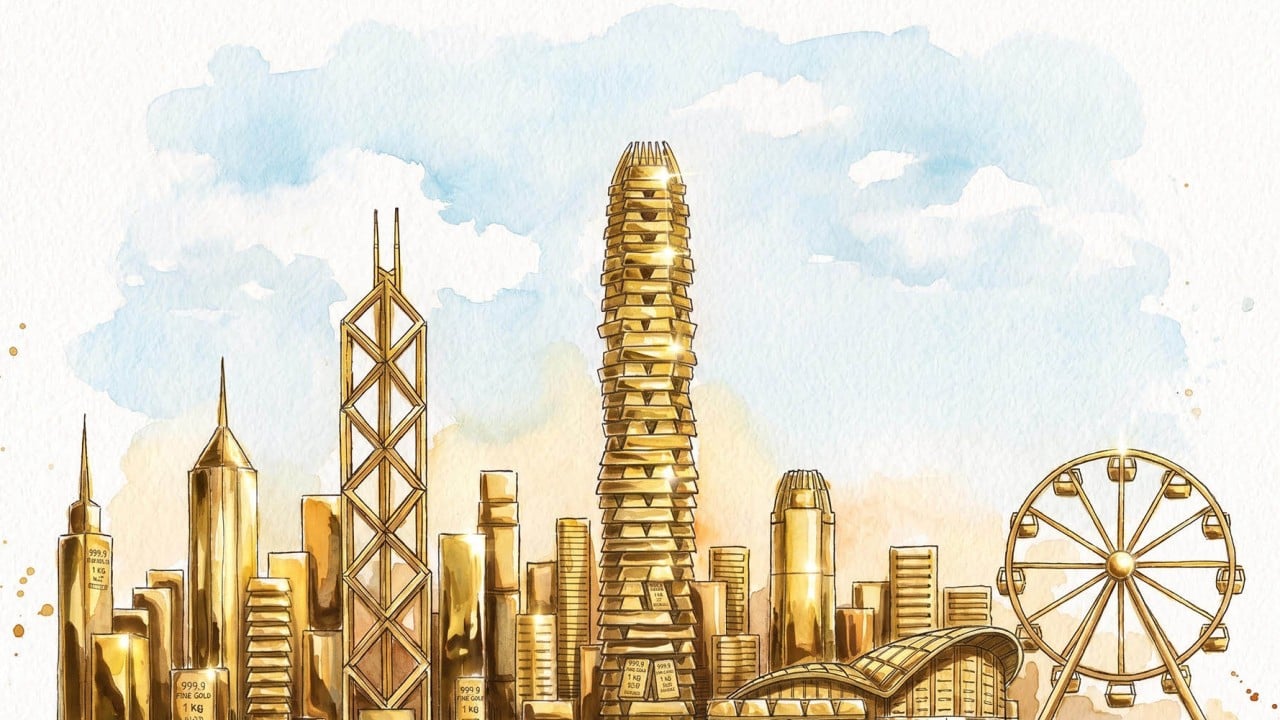
The vault smells like cold concrete, polished steel, and absolute silence.
If you press your palm against the door of a high-security storage facility tucked into the industrial belly of the New Territories, you feel nothing. No vibration from the bustling highway outside. No hum from the neon-drenched canyons of Central. Just a dead, heavy stillness that belongs to another century. Inside these chambers, stacked in neat, unyielding rows, sit the bricks. Each one is a little heavier than you expect, roughly the size of a paperback novel, stamped with a serial number and a purity mark of 999.9. Gold.
For decades, the story of wealth in Asia was told in motion. Capital slipped through the fingers of governments and corporations, chasing higher yields in London, parking itself in Swiss accounts, or finding a temporary home in New York real estate. Hong Kong was the glittering turnstile of this movement—a place where fortunes were made at dizzying speed, traded on the stock exchange, and immediately sent elsewhere to sleep. Money here was a verb. It moved, it multiplied, it vanished.
Now, something strange is happening to the metal. It is staying.
To understand why this city on the edge of the South China Sea is quietly transforming into the world’s primary physical bullion trading hub, you have to look past the spreadsheets and watch the shifting weight of global gravity. For years, Western financial centers held a monopoly on where gold lived. London set the daily price over tea and telephone lines; New York traded the paper promises of it. Asia bought the actual stuff—melting down bars into intricate bangles in the crowded gold shops of Nathan Road, or tucking small wafers into family safes across Guangdong—but it always felt like an end destination. The metal arrived, people wore it or hoarded it, and the financial architecture remained anchored in the West.
Then the plumbing broke.
Sanctions froze central bank reserves. Geopolitical fault lines cracked wide open across Eastern Europe and the Middle East. Suddenly, holding your wealth in a vault three thousand miles away, subject to the political whims of a foreign capital, looked less like smart diversification and more like a massive vulnerability.
Meet Arthur Chen. (This is a hypothetical composite character based on real-world wealth managers operating in the region, designed to illustrate a very real shift.) Arthur spends his mornings pacing a glass-walled office overlooking Victoria Harbour, watching container ships crawl through the chop. His clients are not local speculators looking to make a quick profit on a Tuesday morning. They are family office directors from Singapore, industrialists from Jakarta, and tech founders from Shenzhen who have quietly generated generational wealth and are now asking one terrifying question: If the world breaks tomorrow, where is my money actually safe?
Arthur’s answer used to be complicated. Today, he points out the window toward the airport’s cargo terminals.
"They want physical delivery," Arthur says, leaning against the mullion. "Not a PDF. Not a digital claim check issued by a clearinghouse in a timezone where everyone is asleep while my market is panicking. They want to be able to drive a truck to the vault, look at the bar, and know it is theirs."
Hong Kong realized this hunger before almost anyone else in the institutional establishment. The city already possessed the financial DNA—deep liquidity, a rock-solid legal system rooted in common law, and a workforce that speaks the language of global capital fluently. But it lacked the physical capacity to scale up into a global titan that could rival London or Zurich on storage alone.
So they built the boxes. Massive, state-of-the-art secure storage facilities capable of holding thousands of metric tonnes of precious metals sprang up near the international airport. These weren't just glorified bank basements. They were logistical fortresses designed for speed. A buyer in Shanghai could purchase a hundred kilos of gold, have it landed at the airport, transferred directly airside into a bonded warehouse, and logged onto an institutional ledger without a single customs delay or bureaucratic headache.
The strategy worked because it solved an ancient friction point. Moving gold across borders has historically been a logistical nightmare involving armed guards, armored cars, complex insurance riders, and endless customs paperwork. By streamlining the transit lanes between mainland China—the world's single largest consumer and producer of gold—and international markets, Hong Kong positioned itself as the literal tollbooth for the planet's most ancient asset.
Consider what happens next on a macro scale.
When a trade hub captures the physical metal, it captures the pricing power. For decades, Asian buyers suffered from the "Asian discount"—buying gold at a premium during times of high regional demand because the inventory had to be physically flown in from London vaults. By building massive local stockpiles, Hong Kong is leveling the playing field. The benchmark is shifting. When the physical metal is already sitting in the harbor, you don't wait for London to tell you what it’s worth. You look at the buyers standing right in front of you.
Skeptics point to the shifting political winds. They argue that international capital is fickle, that the shadow of Beijing's regulatory reach makes foreign investors nervous about parking multi-billion-dollar hoards on Chinese soil. It is a fair critique. Trust is hard to build and frighteningly easy to lose.
Yet money is ultimately pragmatic. It flows where it is treated best, and more importantly, where it is accessible. While regulatory compliance has tightened, the financial machinery inside the city remains aggressively efficient. The Hong Kong government has poured institutional weight behind the initiative, offering tax incentives, expanding bonded warehouse spaces, and actively courting bullion banks from the Middle East and Europe. They are rolling out the red carpet for gold, treating every inbound tonne as a vote of confidence in the city's enduring relevance.
Walk down Des Voeux Road West today, past the traditional dried seafood shops where grandfathers once traded silver taels over wooden counters, and you will see the modern iteration of this ancient trade. The storefronts might be sleek, corporate offices now, but the fundamental human impulse hasn't changed by a single atom.
We crave certainty. In a digital age where trillions of dollars vanish into algorithmic ether with the blink of an LED screen, there is a profound, psychological comfort in things that have mass. You cannot delete a gold bar with a cyberattack. You cannot inflate it away with a central bank decree. It simply sits there, dense, cold, and entirely indifferent to human anxiety, waiting for the world to figure out what it wants to do next.
Hong Kong has bet its future on that very weight.
As the sun dips below the skyline, painting the harbor in streaks of bruised purple and molten orange, the container cranes go quiet. The cargo planes lift off toward Europe and the Americas. But beneath the tarmac and deep within the reinforced concrete cages of the city's newest vaults, the metal stays put. Thousands of tonnes of yellow mass, anchoring a city that refuses to stop spinning.