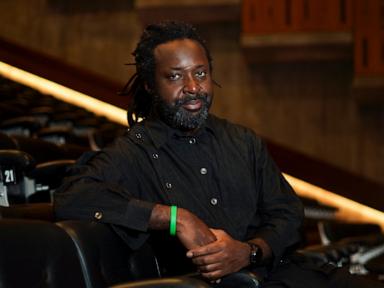
Silence.
That is the specific, suffocating texture of the final ten seconds before a chair of judges steps up to the microphone at Old Billingsgate in London, leaning into the brass and velvet hush of a room packed with editors, agents, and writers whose entire professional lives have been compressed into the spine of a single four-hundred-page book. I have sat in the press overflow rooms during those exact ten seconds, watching the live feed on a jittery monitor while lukewarm white wine sweats in plastic cups on the table beside me, and I can tell you that the air in that building does not feel like a celebration. It feels like a verdict.
When the Booker Prize announces its winner each autumn, the headlines always sound the same: a triumph, a windfall, a fifty-thousand-pound check and an overnight surge in print runs that transforms a quiet literary novel into a staple on every airport bookstore table from Heathrow to JFK. Yet this year, the tension curling around the podium carries a sharp, historical edge that rarely enters the room. Two previous champions—Marlon James and Douglas Stuart—stand within reach of a feat that only four writers in the more than half-century history of the prize have ever pulled off.
A second win.
To understand why that possibility makes publishing insiders lean forward until their elbows knock against the dinner plates, you have to understand what the first Booker actually does to a human being. Winning once is not simply a gold sticker on a paperback cover; it is a violent, irreversible detonation of a writer's private life.
The Ghost in the Room After the Confetti Settles
Consider a hypothetical writer—let us call him Arthur—to trace the quiet psychological physics of the prize. Before his first Booker nomination, Arthur wrote in a cramped spare bedroom with a radiator that clanked like a dropped wrench, answering only to the voice inside his own head and an editor who bought him lunch twice a year. Then he wins. Overnight, forty foreign rights deals land on his agent’s desk. Universities invite him to deliver keynote lectures on subjects he barely understands. Every sentence he types into a blank document for the next five years is no longer just a sentence; it is a draft of the follow-up to the Booker winner.
That invisible weight breaks people. Literary history is littered with brilliant novelists who won a major prize and then vanished into a decade of paralyzed silence, terrified that their next book would prove the judges had made an expensive mistake.
Neither Marlon James nor Douglas Stuart chose safety after their first victories, and that refusal is precisely why their return to the Booker conversation feels less like a victory lap and more like a high-wire act without a net.
When Marlon James won in 2015 for A Brief History of Seven Killings, he became the first Jamaican author to claim the prize, doing so with a sprawling, polyphonic fever dream of a novel built around the 1976 attempted assassination of Bob Marley. He could have spent the rest of his career writing variations on twentieth-century Caribbean political thrillers, feeding a hungry audience the exact meal they had already praised. Instead, he pivoted toward a massive, hallucinatory African fantasy trilogy—Black Leopard, Red Wolf and Moon Witch, Spider King—risking the disdain of literary purists who still turn up their noses at genre fiction.
Douglas Stuart took an equally perilous route after winning in 2020 with Shuggie Bain, his devastating debut about a boy growing up with an alcoholic mother in Thatcher-era Glasgow. Stuart had worked in fashion design in New York for twenty years while writing Shuggie Bain in the margins of his life, enduring more than thirty rejections before a single publisher said yes. When the Booker finally arrived, the entire world wanted him to remain the chronicler of impoverished 1980s Scottish childhoods. He followed it with Young Mungo, plunging even deeper into the brutal, tender fault lines of working-class masculinity and sectarian violence in Glasgow, refusing to sand down the raw edges that made his debut so unbearable and unforgettable.
Both men already own the trophy. Both men already have the financial security and the permanent footnote in literary history that thousands of working novelists would trade their eyeteeth to possess.
So why step back into the arena?
What a Booker Double Actually Means
To grasp the rarity of a two-time winner, look at the ledger since the prize began in 1969. Thousands of novels have been submitted over fifty-seven years. Dozens of titans—Salman Rushdie, Kazuo Ishiguro, Ian McEwan, Julian Barnes, Arundhati Roy—have won once and never again, despite publishing masterpieces long after their victories.
Only four names sit in the double-winner vault:
- J. M. Coetzee, who claimed it for Life & Times of Michael K in 1983 and again for Disgrace in 1999.
- Peter Carey, who won for Oscar and Lucinda in 1988 and True History of the Kelly Gang in 2001.
- Hilary Mantel, who achieved the staggering feat of winning with consecutive installments of the same historical trilogy—Wolf Hall in 2009 and Bring Up the Bodies in 2012.
- Margaret Atwood, who won for The Blind Assassin in 2000 and shared the prize in 2019 for The Testaments, her long-awaited sequel to The Handmaid's Tale.
Notice the company in that room. When a writer wins one Booker, critics call them a major voice of their generation. When a writer wins two, the conversation shifts from contemporary success to literary immortality. It tells future readers, fifty or a hundred years from now, that the first win was no fluke of a sympathetic judging panel or a weak publishing year.
Yet the prize itself has changed dramatically since Coetzee and Carey pulled off their doubles, and those structural shifts make a repeat victory far harder today than it was in the twentieth century.
In 2014, the Booker Foundation tore down its old geographic wall—which had restricted eligibility to citizens of the Commonwealth, Ireland, and Zimbabwe—and opened the doors to any novel written in English and published in the United Kingdom or Ireland. Overnight, the pool of competitors flooded with heavyweights from the United States. American giants like George Saunders, Paul Beatty, and Richard Powers suddenly entered the fray, shrinking the statistical odds for every returning champion.
At the same time, the cultural role of the Booker shifted from an insider British dinner-party debate into a global commercial engine. A win today routinely sends hardcover sales soaring by hundreds of percent within forty-eight hours. Independent bookshops stack pyramids of the winning title by the front door; book clubs across three continents rewrite their autumn reading schedules overnight.
Because the commercial stakes are so colossal, judging panels face fierce, unspoken pressure to discover someone new.
The Unspoken Psychology of the Judging Table
Imagine five people—usually a mix of novelists, critics, actors, and public intellectuals—locked inside a room in central London for months, reading upwards of a hundred and fifty books while trying to keep their day jobs afloat. I have spoken with former judges over coffee months after their non-disclosure agreements cooled down, and they all describe the final deliberation meeting in the exact same way: an exhausting, emotional war of attrition.
Every judge enters that final room with a champion they are willing to bleed for. And every judge brings a quiet, unstated bias toward the miracle of discovery.
Think about the emotional rush of plucking an unknown debut novelist out of obscurity—the way the judges did with Douglas Stuart in 2020—versus handing a second fifty-thousand-pound check to a writer who already sits on the Mount Rushmore of modern fiction. When a debut author wins, the judges feel like alchemists turning lead into gold. When a former winner sits on the shortlist, that writer has to overcome a subtle, entirely human resistance: Haven't we already given them their flowers?
To beat that resistance, a returning champion cannot merely write a very good book. They cannot write a polished, dependable novel that reminds readers of why they loved them the first time. They have to produce something so undeniable, so fierce and formally daring, that the judges feel embarrassed to pass it over.
That is the tightrope Marlon James and Douglas Stuart walk every time their names appear on a Booker longlist or shortlist.
For James, the challenge is stylistic audacity. His prose moves with the cadence of Jamaican patois, biblical prophecy, and street-corner gossip, demanding that the reader surrender their desire for neat, linear comfort. Readers who want a tidy story with polite moral signposts often bounce off his opening chapters; readers who stay inside the current emerge feeling as though they have lived through three centuries of myth and blood.
For Stuart, the challenge is emotional endurance. Nobody writing in English today captures the physical toll of poverty and unrequited love with sharper precision—the greasy smear of cold lard on butcher paper, the stale tang of cheap cider on a mother's breath, the way a frightened boy learns to read the temperature of a room before his mother even speaks. Stuart does not offer easy redemption. He forces the reader to sit inside the ache until the last page turns.
Why Readers Still Care About a Brass Trophy
It is fashionable in certain corners of the internet to scoff at literary awards. Skeptics point out, accurately enough, that art is not a hundred-meter dash, that comparing a sprawling Jamaican mythic epic to an intimate Glaswegian tragedy is like weighing a thunderstorm against a knife wound. They note that Virginia Woolf, James Joyce, and Graham Greene never won a Booker, while plenty of forgotten mid-list novels took home the hardware.
All of that is true. None of it diminishes what happens when the envelope opens.
In an attention economy engineered to chop human focus into fifteen-second vertical video clips, the Booker Prize remains one of the few cultural spectacles left on earth that forces millions of people to talk about serious, difficult, uncompromising books for three months straight. From the longlist announcement in July to the shortlist in September and the black-tie ceremony in November, the prize builds a slow, collective suspense around the quietest human activity imaginable: one person sitting alone in a chair, reading words another person wrote alone in a room.
When a former winner re-enters that spotlight, the story deepens. It stops being a Cinderella tale about a struggling artist getting their big break and becomes something much closer to a heavyweight title defense. We get to watch what happens after the dream comes true. We get to see whether success softened the writer's edge or sharpened their hunger.
Marlon James and Douglas Stuart both know what the morning after a Booker win feels like. They know the surreal disorientation of waking up in a London hotel room to a phone vibrating off the nightstand, realizing that the private world they built in solitude now belongs to strangers on every subway train in the world. They also know the long, quiet years that follow, when the champagne goes flat and the blank page waits without caring a whit about the trophy sitting on the bookshelf across the room.
When the chair of judges steps up to that microphone and the room drops into that ten-second vacuum of breath, nobody knows whose name will break the silence. A newcomer could step forward and watch their life split cleanly into before and after. Or one of two men who have already survived the lightning strike could step up to the podium, reach out a steady hand, and prove that lightning really can hit the exact same spot twice.