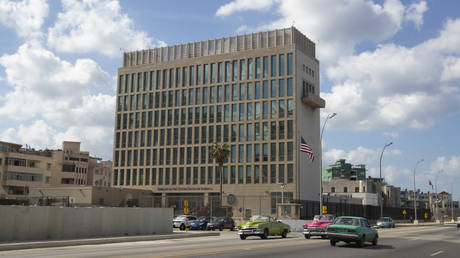
Governments excel at throwing money at mysteries to make them go away. The recent decision to issue the first financial payouts to US diplomats and intelligence officers reporting symptoms of "Havana Syndrome" is being framed across major news outlets as a victory for victim advocacy and a solemn acknowledgment of targeted foreign aggression.
It is neither. It is a massive bureaucratic capitulation.
By cutting checks for an affliction that the highest echelons of the American intelligence community have already concluded is highly unlikely to be the work of a foreign adversary, the state has prioritized optics over empirical reality. We are witnessing the formal institutionalization of a medical ghost.
The Logic of the Lazy Consensus
The prevailing narrative surrounding these payouts relies on a comforting, cinematic premise: American public servants were targeted by a sinister, cloaked technology—likely microwave weapons or acoustic disruptors—wielded by a geopolitical rival. It tracks perfectly with a Cold War thriller mindset.
But look closer at the actual data. In 2023, seven different US intelligence agencies spent years reviewing more than 1,500 cases across 96 countries. Their conclusion was definitive: it is "highly unlikely" a foreign adversary is responsible. Five of those seven agencies determined there was zero evidence of an energy weapon or acoustic device causing the symptoms. Instead, they pointed to a mix of pre-existing medical conditions, conventional illnesses, and environmental factors.
Yet, the payouts are happening anyway under the Havana Act.
This creates an absurd paradox. On one hand, the scientific and intelligence consensus says there is no weapon. On the other hand, the financial ledger treats the weapon as an absolute certainty. The state is essentially funding a concept it has already debunked.
The High Cost of Validation
Medically, the symptoms reported by these personnel—headaches, dizziness, cognitive fatigue—are entirely real. No one is arguing that these individuals are faking their pain. The error lies in the immediate, uncritical attribution of those symptoms to a sci-fi weapon system that defies the laws of known physics.
When you offer substantial financial compensation for a specific, poorly defined syndrome, you create an architectural incentive structure for mass psychogenic illness. I have tracked how institutional panic spreads in high-stress environments. When an organization signals to its workforce that everyday ailments like migraines or vertigo might actually be the result of a covert sonic attack, the baseline anxiety of that workforce skyrockets. Every bout of fatigue becomes an act of war.
Imagine a scenario where a corporate headquarters tells its employees that the office ventilation system might be secretly leaking a microscopic, undetectable toxin that causes mild headaches. Within a week, half the office will report headaches. The human brain is an incredibly powerful engine for translating institutional anxiety into physical symptoms.
By tying financial compensation to the "Havana Syndrome" label rather than treating the underlying, conventional medical issues under standard workers' comp, the government has guaranteed that more cases will emerge. It has validated the panic.
Citing Physics Over Fantasy
Let’s talk about the alleged technology. The popular theory relies on the Frey effect, where microwave pulses cause thermal expansion in the inner ear, creating the perception of sound.
But to scale a microwave weapon to the point where it can penetrate the walls of an embassy or a home and cause traumatic brain injury without cooking the target's skin or setting the room on fire requires an immense power source. You cannot hide a generator of that magnitude in a passing sedan. The physical footprint required to execute these alleged attacks is entirely incompatible with the lack of any physical surveillance or signal detection over the last decade.
The heavy hitters in the scientific community have been yelling this into the void for years. The JASON advisory group, an elite cohort of scientists that advises the US government on defense matters, analyzed the acoustic recordings from the initial incidents in Cuba. Their verdict? The sounds were the mating calls of the Indies short-tailed cricket.
We have replaced a cricket problem with a billion-dollar bureaucratic apparatus.
The Danger of Unintended Precedents
The downside of taking this contrarian, hardline stance on science is obvious: it sounds cold. It feels like turning your back on people who served their country and are genuinely suffering.
But the alternative is far more dangerous. By codifying a medically unproven, geopolitically unverified syndrome into federal law, we are setting a precedent where political pressure can override scientific consensus. We are telling the world that if an idea is scary enough and repeated often enough by the right people, the government will eventually treat it as a fact and pay out accordingly.
This shifts the entire framework of public health and national security away from evidence and toward narrative dominance. It opens the door for any number of unverified, anxiety-driven conditions to demand federal recognition and funding.
Stop treating the Havana Syndrome payouts as an act of justice. It is a masterclass in risk aversion. The government did not find a smoking gun; it simply found a way to buy silence and close a messy chapter, regardless of what the science actually says.