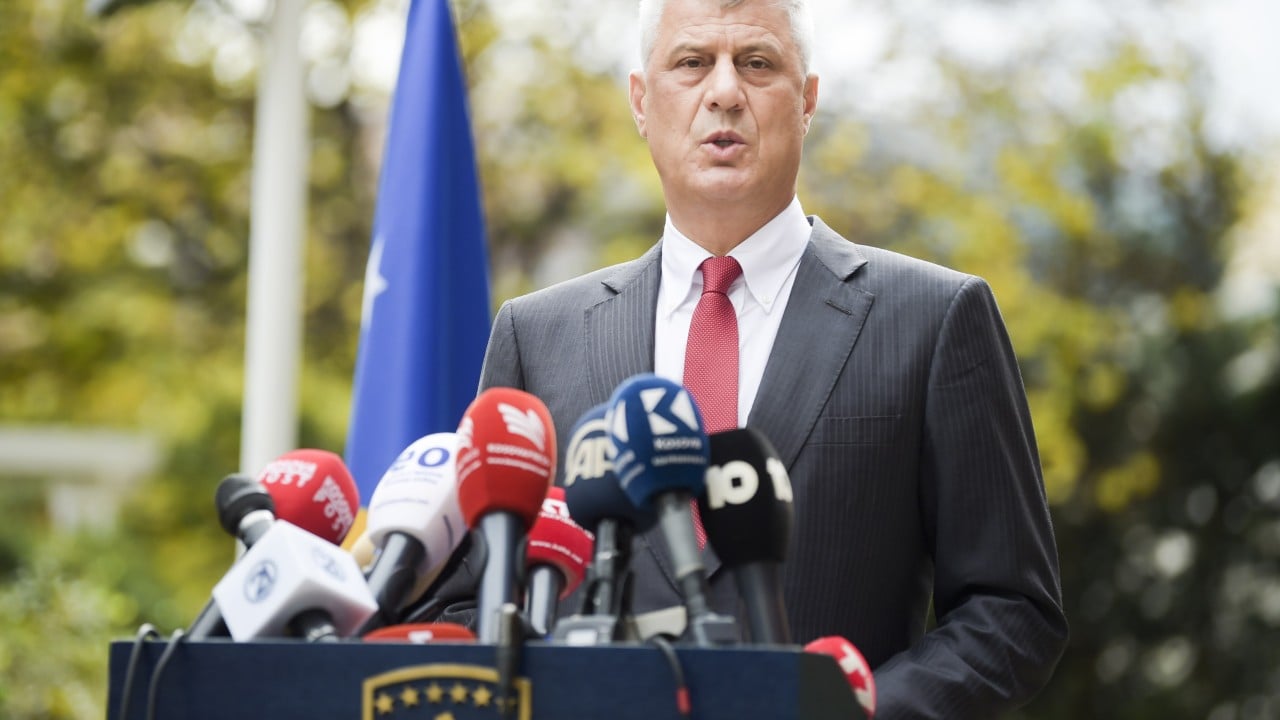
Another gavel drops in The Hague, and the commentariat acts like an objective system of global law has finally triumphed. Hashim Thaci, the former guerrilla commander turned statesman, got twenty-five years behind bars for war crimes. The lazy consensus is predictable: justice arrives slowly, but it arrives surely. Impunity ends. The international order holds.
It is a comforting bedtime story for people who have never had to negotiate a peace treaty at gunpoint.
Strip away the sanitized legal jargon of the Kosovo Specialist Chambers, and you are left with something far more cynical. This verdict is not a victory for human rights. It is a retrospective whitewashing of political expedience, delivered by an international bureaucracy that spent decades coddling the very men it now finds convenient to sacrifice. When Western capitals needed a partner to break away from Serbia, Thaci was their indispensable pragmatist. When those same capitals grew tired of messy Balkan politics and wanted to signal clean governance, Thaci became a liability to be prosecuted.
International criminal tribunals do not operate in a vacuum of pure jurisprudence. They operate at the intersection of diplomatic convenience and institutional self-preservation.
Let us be precise about what the Special Court actually accomplished. It tried a guerrilla leader for asymmetric violence in a brutal ethnic conflict where the lines between civilian and combatant were routinely erased by the reality of survival. War is inherently atrocious. Guerrilla insurgencies against oppressive state apparatuses do not run according to Geneva Convention seminar rules. Pretending that you can isolate individual operational decisions decades later and judge them through the pristine lens of a courtroom in the Netherlands is an exercise in profound intellectual dishonesty.
Nobody is arguing that atrocities did not occur. Thousands died, families were shattered, and crimes were committed across all factions during the collapse of Yugoslavia. But the selective application of accountability reveals the rot at the core of the international justice project. Where are the corresponding tribunals for the structural state violence that preceded the insurgency? Where is the institutional reckoning for the systemic suppression that forced a population into armed rebellion in the first place?
Instead, the court focuses its lens tightly on the insurgent leadership, neatly validating the narrative of the state they fought against, while absolving the international patrons who funded, armed, and diplomatic-shielded these exact actors for twenty years.
For two decades, Western diplomats shook hands with Thaci, invited him to capitals, praised his state-building credentials, and pressured him to make painful territorial compromises. They knew exactly who he was. They knew his background in the Kosovo Liberation Army. They simply decided that his utility outweighed his history—until it didn't. Treating his conviction as a moral awakening rather than a diplomatic disposal operation requires a staggering degree of political naivety.
This verdict also completely misunderstands nation-building in post-conflict zones. You do not build stable democratic institutions by retroactively criminalizing the foundational violence of your statehood. Whether critics like it or not, men like Thaci were the architects of Kosovo's independence. By treating the armed struggle that achieved that independence purely as a criminal enterprise, the court delegitimizes the entire state structure it claims to protect.
The predictable counter-argument is that no one is above the law. It sounds noble on a podcast. In reality, international law is applied unevenly, driven by power dynamics, and executed by prosecutors who need high-profile scalps to justify their bloated budgets and continuing mandates. When powerful nations commit violations of international law, their leaders get memoirs and speaking fees. When leaders of small, dependent protectorates outlive their usefulness, they get twenty-five years in a Dutch prison.
The romanticized view of global courts as neutral arbiters of global morality is dead. It should be buried. Until we admit that international tribunals are tools of realpolitik dressed up in judicial robes, we will keep mistaking political purges for justice.
Stop pretending this trial was about the victims. It was about the exit strategy.