Cold.
That is the first thing you notice when you step out of a truck two hundred miles past the last traffic light in northern Saskatchewan, where black spruce crowds the gravel cutlines and the air smells of resin, wet peat, and diesel exhaust. Even on a crisp autumn morning, the silence up there carries weight. It presses against your eardrums until every snap of a dry twig sounds like a rifle shot.
When a wire report drops a short, brisk item about a contractor getting injured by a wolf in northern Saskatchewan, most people skim it the way they skim a delay at the airport. A man in a high-visibility vest. A flash of gray fur among the jack pines. A bite, a scuffle, a medevac or a long drive back toward La Ronge or Prince Albert. Then the page refreshes and the city keeps humming.
Yet if you have spent enough seasons working survey lines, forestry blocks, or exploration pads in the boreal north, that six-word headline stops you cold. Not because wolves are monsters waiting behind every white birch—they aren't—but because a wolf biting a working man in broad daylight or twilight breaks an ancient, quiet rule of the bush.
Wild predators usually want nothing to do with us. We are loud, upright, smelly, strange creatures carrying steel and light. When a wolf crosses that invisible line and makes contact with a contractor, you are not just reading about an injury. You are looking at a collision between industrial habit and wild calculus, ninety miles from the nearest hospital bay.
(Note: To ground the realities of northern field work and predator encounters in lived detail without inventing real-life victims or specific unverified incidents, the field crew and moment-by-moment scene below are a clearly labeled hypothetical scenario built around documented boreal working conditions and wildlife behavior.)
A Hypothetical Morning on Line Fourteen
Picture a hypothetical crew—let’s call the lead surveyor Owen and his junior technician Maya—working a cutline north of the Churchill River basin in late October. Owen has ten winters of bush work under his belt. His knuckles are scarred from cable winches and briars; his boots are greased every Sunday until the leather turns dark as roasted coffee.
Frost coats the sedge grass like powdered sugar. Breath plumes white in the low sun. Owen is kneeling beside a survey stake, his gloved fingers stiff around a flagging tape dispenser, while Maya checks a handheld GPS unit fifty yards back along the corridor.
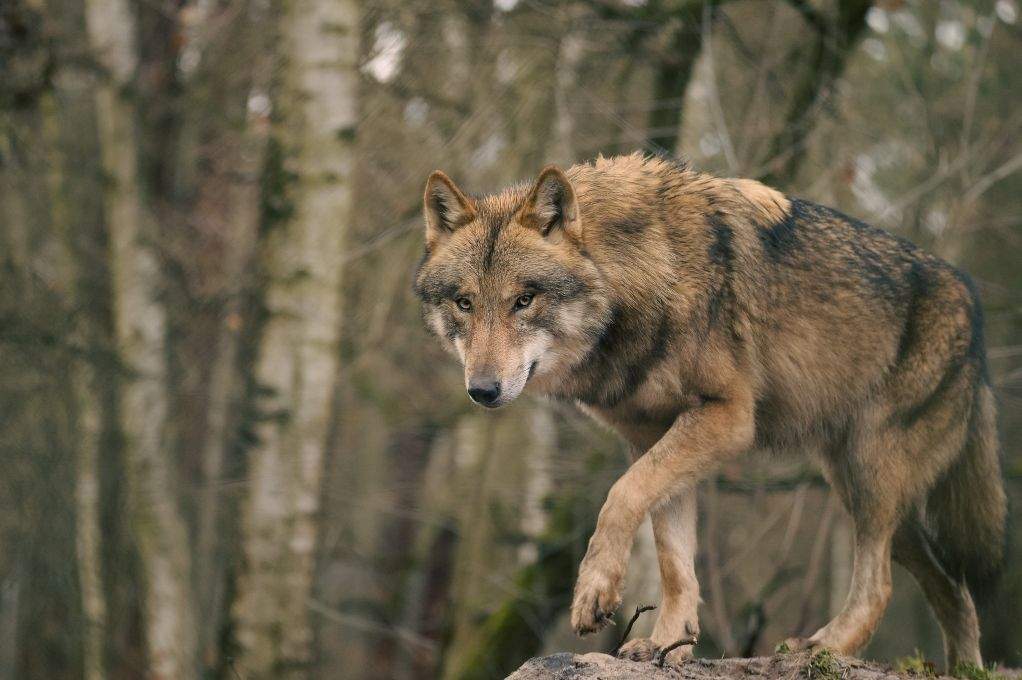
A single gray wolf steps out of the alders.
Not a pack swirling around them in a Hollywood frenzy. Just one lean adult, coat thick with winter underfur, ears tilted forward, eyes fixed not on a fleeing deer, but on the two upright shapes kneeling in the frost.
For a beat, Owen thinks what any experienced bush hand thinks: Keep moving, make yourself big, don't turn your back. He stands slowly, unclipping his bear spray from his hip belt, his voice dropping low and firm. Maya takes a half-step closer, heart hammering against her ribs.
Then the wolf lunges.
It happens in less time than it takes to clear your throat. A snap of jaws at the forearm or thigh, heavy weight thudding against canvas carhartt fabric, the metallic tang of fear and cold air. Owen shoves his forearm across his body, shouting until his throat burns, while Maya blasts the spray into the wind—praying the breeze doesn't curl the capsaicin back into their own eyes. The wolf recoils, circles once through the frost-rimed brush, and vanishes into the spruce shadows.
Owen is bleeding through his sleeve. His hands are shaking—not from cold, though the chill is seeping right into his bones—and the nearest paved road is a punishing bounce over washboard gravel and muskeg.
Why Wolves Rarely Touch People Until They Do
If you have never stood in thick timber wondering whether that shadow thirty yards off the trail is a moose, a black bear, or a wolf, it is easy to swing between two extremes. One camp treats wolves like bloodthirsty ghosts; the other treats them like oversized golden retrievers that simply need space.
Reality is stranger and far more interesting.
Across North America, gray wolves (Canis lupus) generally avoid humans with a consistency that frustrates wildlife photographers and reassures hikers. Biologists have tracked packs for decades across boreal forests and tundra, finding that wolves routinely slip past cabins, seismic crews, and hunters without ever being seen. Their survival depends on reading risk accurately. A human standing tall with a loud voice and unfamiliar scent is a high-risk puzzle.
So why does an attack happen at all?
Think of a wolf’s brain like a ruthless energy accountant. Every calorie costs effort—chasing down a caribou across deep snow, fighting off rival packs, nursing pups through lean springs. When a wolf approaches a person and bites, researchers and wildlife managers typically look at a narrow set of triggers: habituation from food scraps or careless camp waste, defense of a kill site or den, rabies or physical injury/illness that alters normal judgment, or an unusual boldness where a lone animal tests a perceived vulnerability.
In remote northern work zones, the setting itself amplifies the stakes. Contractors are not strolling a manicured park loop at noon with dozens of passersby nearby. They are often working in small pairs or solo, miles from cell service, wearing heavy hearing protection or running noisy equipment, focused on data, timber marks, or drill rigs.
By the time a person notices a silent pair of eyes watching from the timberline, the distance has already shrunk.
The Invisible Stakes Behind a Northern Injury
When a contractor gets hurt in the bush, the story rarely ends at urgent care.
Consider what happens next: an injury out on a remote access road stretches time. A cut that would take twenty minutes to stitch in town becomes a multi-hour extraction over rutted tracks, followed by days or weeks off the job. For independent contractors and small northern outfits, lost days don't just mean a sore arm—they mean missed weather windows before freeze-up or spring breakup, delayed project milestones, and a heavy knot in the stomach of a spouse waiting by a satellite communicator.
There is also a quieter psychological toll that outsiders rarely see.
I remember the first time I walked back to a truck after a close encounter in northern timber—not even a physical strike, just a tense standoff where every instinct screamed that I was out of my depth. For weeks afterward, every rustle in the brush behind me pulled my shoulders up toward my ears. You start second-guessing simple routines: kneeling to tie a bootlace, walking alone to check a line, turning your back to thick cover.
Fear changes how a person moves through the world. And in rugged terrain where distraction causes slips, trips, and equipment accidents, that jittery edge carries its own hazard.
Even local communities feel the ripple. Northern residents—Indigenous trappers, guides, forestry workers, families living along boreal highways—carry a deep, complicated relationship with wolves. To many, the wolf is kin, teacher, and vital regulator of forest balance. When an attack makes headlines, frustration can flare quickly: calls for aggressive culling on one side, warnings against sensationalism and knee-jerk panic on the other.
Both instincts come from real care—one for human safety in harsh country, the other for a creature woven into the identity of the north.
What Standard News Reports Miss
Wire dispatches are built for speed, not depth. They give you the skeleton: who, where, what animal, what general outcome. Necessary? Yes. Complete? Not even close.
A dry report cannot show you the difference between a wolf lingering curiously near a camp at dusk and a wolf closing the gap with intent. It cannot capture the sensory overload of cold wind whipping through spruce boughs while adrenaline floods your bloodstream and turns fine motor skills into clumsy thumb-fumbles.
Nor does a brief news item explain the practical reality of working where wildlife management offices are hundreds of miles away. When an incident happens far north, conservation officers have to piece together tracks, weather, recent sightings, and site conditions in terrain where rain or snow can erase a paw print in an hour.
Staying Sharp Where the Map Thins Out
You cannot eliminate every risk when you step into wild country. Anyone who promises a foolproof formula for northern field work is selling comfort, not truth.
Still, seasoned field workers rely on habits that tilt the odds back toward safety without turning every day into paranoia:
- Keep camps and work sites spotless. Food odors, fish remains, grease, and open trash are invitations. Secure waste in bear- and animal-resistant containers, and never treat scraps casually near where people walk or sleep.
- Work with eyes up, not just screens down. GPS tablets and survey gear pull your gaze downward. Build a rhythm of scanning the tree line every few minutes, especially near dense brush, creek bottoms, or dawn and dusk transitions.
- Carry deterrents where they can actually be reached. Bear spray in the bottom of a backpack does no good during a sudden charge. Keep it holstered on the hip or chest where your hand finds it without looking.
- Never turn your back and sprint. Running triggers pursuit instincts in canids just as it does in dogs. Back away slowly while facing the animal, keep your posture tall, use a firm voice, and group up tightly if you are working with a partner.
- Report sightings and aggressive behavior immediately. Local wildlife authorities and site supervisors need accurate, timely locations to spot patterns—such as a sick animal or a habituated individual lingering near active crews.
None of these steps make you invincible. They simply give you seconds you didn't have before.
Beyond the Headline
A single injury in northern Saskatchewan will likely fade from national feeds within a couple of days. Another story will take its place. Another number will scroll past on a screen.
Out past the gravel and the spruce, though, the forest keeps breathing in the cold. Somewhere along a quiet cutline, a pair of amber eyes watches a yellow vest move between the trees, weighing risk, hunger, and distance in a language older than roads or headlines.
When we pay attention to moments like that—not with panic, and not with indifference—we remember the truth of wild places: we are guests moving through country that belongs to many lives besides our own.
And the woods do not always step aside.