Steel doors have a sound that never leaves your ribs. It is not a slam so much as a heavy, metallic sigh that seals a room off from the rest of the calendar.
Inside a penitentiary in Romania, dozens of inmates walk toward a row of hot spotlights for the fifteenth edition of a prison theater festival. Outwardly, it looks like a neat line on an institutional report: inmates, stage, fifteenth edition, festival. A headline you can skim over coffee in twelve seconds and forget before your mug cools.
Wait.
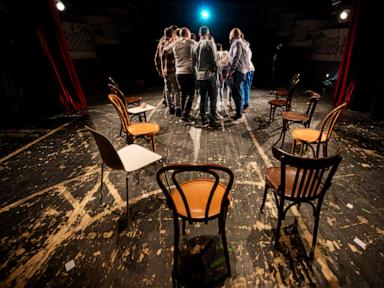
Look closer at what happens in the thirty seconds before a cue is called. A man whose entire daily rhythm has been dictated by roll calls, steel grilles, and strict surveillance stands behind a curtain made of recycled fabric or heavy drape. His palms sweat. His throat feels dry, not from fear of a guard, but from the terrifying exposure of being seen without armor.
For years, prison culture rewards a very specific mask. Show nothing. Flinch never. Keep your eyes level and your guard up, because softness gets read as weakness in close quarters. Theater demands the exact opposite. It asks a person to drop the mask on purpose, listen to another human being on stage, speak lines written by someone else, and risk looking foolish in front of peers, staff, and visiting guests.
That contradiction is where the real story lives. Not in a dry tally of performances, but in what changes inside a room when men and women serving sentences stop performing toughness and start practicing presence.
The Weight of Being Reduced to a Case File
Anyone who has worked in justice reform, social work, or community reentry knows how quickly a human being shrinks on paper. A file lists offenses, sentence lengths, disciplinary notes, and risk scores. Over time, even the person holding the pen can forget that behind every file number sits someone who once had a childhood nickname, a favorite meal, a bad temper, or a quiet talent nobody ever bothered to nurture.
Let us sketch a hypothetical composite character to ground this shift—clearly fictional, though built from patterns documented across rehabilitation programs. Call him Andrei, thirty-four, serving a multi-year stretch in a Romanian correctional facility. For his first two years inside, Andrei speaks in short bursts. Prison slang narrows vocabulary to survival tools: commands, jokes, warnings, silence. When a psychologist or educator asks how he feels about a conflict in the yard, the honest answer is often complicated, layered, or buried under years of reflex anger.
Rehearsal changes the mechanics of that silence.
When Andrei reads a script aloud, he has to say words he would never choose on his own. Maybe the character has to apologize. Maybe the character panics, hesitates, or admits fear. At first, inmates often laugh it off—mocking the lines, playing the clown, hiding behind irony so nobody can touch them. Directors who know correctional spaces expect that armor. They do not rip it off; they wait for the moment a scene hits a nerve that feels strangely familiar.
Consider what happens next: a rehearsal stops feeling like "school" or "therapy" and starts feeling like work that actually matters.
Unlike a lecture where someone talks at you while you stare at the floor, theater requires coordination. If you miss your entrance, the scene stalls. If you mumble your line, your scene partner has to improvise to save you. Suddenly, dozens of inmates who share cramped corridors are learning eye contact, timing, active listening, and emotional restraint. Those are not abstract virtues. Those are de-escalation skills disguised as drama.
Why Fifteen Editions Is No Accident
Festivals do not reach a fifteenth edition in correctional systems by accident. Bureaucracies are cautious. Budgets tighten. Wardens change. Security protocols shift. For a prison theater festival in Romania to endure across fifteen editions means enough people—prison staff, cultural partners, educators, and inmates themselves—kept seeing tangible value after the curtain fell.
Still, skepticism is fair. A critic could ask a sharp question: does putting on a play inside a prison actually reduce recidivism, or is it just a brief distraction from bleak routine?
Honest answer: theater is not a magic wand, and pretending otherwise insults serious criminology. Reoffending depends on housing, employment, addiction recovery, family support, and long-term supervision after release. If a former inmate walks out of prison gates into isolation and poverty, knowing how to deliver a monologue will not pay rent.
Yet dismissing cultural programs as mere distraction misses how human change actually starts. Most people do not overhaul their lives because someone handed them a brochure on consequences. People change when they experience a different version of themselves—and realize that version is real.
In everyday life outside prison walls, we all know how hard it is to break a habit when everyone around you expects the old version of you. Inside prison, that expectation is carved in concrete. Stepping onto a stage for a festival creates a temporary rupture in that script. For an hour or two, the man known in Cell Block B for losing his temper is the tragic lead, the nervous messenger, or the voice of reason holding a scene together.
Once you have stood under warm lights and heard genuine applause—or even just felt a quiet hush fall over a room because a line landed true—it becomes harder to believe you are nothing more than your worst mistake.
What the Audience Sees—and Misses
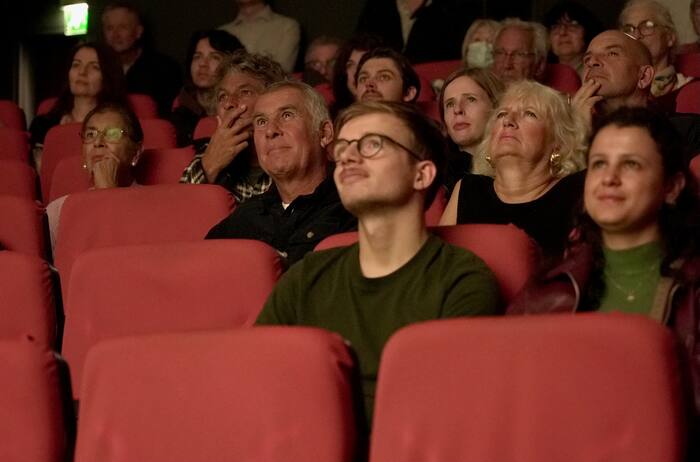
Imagine an outsider sitting in folding chairs near the front row during a festival performance. At first, the visitor watches through a lens of curiosity or caution. Every movement on stage gets filtered through the fact that the performers are inmates.
Then the play moves.
A scene captures grief, family estrangement, pride, or regret. An actor’s voice trembles slightly—not out of stage fright, but because the emotion in the text brushes against something real. Suddenly, the invisible line separating "us" and "them" blurs. You stop watching a correctional statistic and start watching a human nervous system working hard to stay honest in front of strangers.
That is the quiet power of theater in places built to separate people from society.
Society often debates punishment and rehabilitation in loud, abstract slogans. Tough on crime. Second chances. System failure. Hopeless cases. Slogans are easy because they require no eye contact. A stage does the opposite. It puts real faces, real voices, and real vulnerability right in front of you.
And there is another layer that rarely makes headlines: the ripple effect on staff and fellow inmates. Correctional officers and educators spend their days managing tension and rules. Watching inmates collaborate on props, memorize pages of text, or support a nervous teammate shifts the atmosphere in the facility. Even small moments of mutual respect matter in high-stress environments where conflict is cheap and trust is scarce.
The Hardest Part Starts After the Applause
Of course, theater has an end mark. Lights dim. Chairs scrape. Keys jingle.
In a hypothetical scenario—again, a fictional composite rather than a single real case study—Andrei walks back to his cell after the final festival night. The applause is gone. The costume is folded away. Outside that room, his sentence still has months or years left to run, and his record still waits for him on the outside.
Anyone who has lived through difficult transitions knows this post-high crash. Peak moments feel electric while they last, and flat once ordinary routine returns. If nothing carries that momentum forward, a festival becomes a bright island in a gray sea.
That is why consistency over fifteen editions matters so much. One play is a moment. Fifteen editions represent a culture taking root—a recurring reminder that creativity, discipline, and dignity belong inside these walls too, not as a reward for perfection, but as tools for growth.
When inmates prepare for a stage, they practice showing up on time, remembering their lines even when tired, taking notes without exploding, and owning mistakes in front of a group. Those habits travel well. They transfer to job interviews, family conversations, recovery meetings, and tense moments on a city bus long after a sentence ends.
A spotlight does not erase a past. It does something quieter and stranger: it illuminates what else might still be possible.
Under the bright beams of a prison stage, dozens of voices rise into the air, temporary and fragile, insisting that a person's story is not quite finished yet.