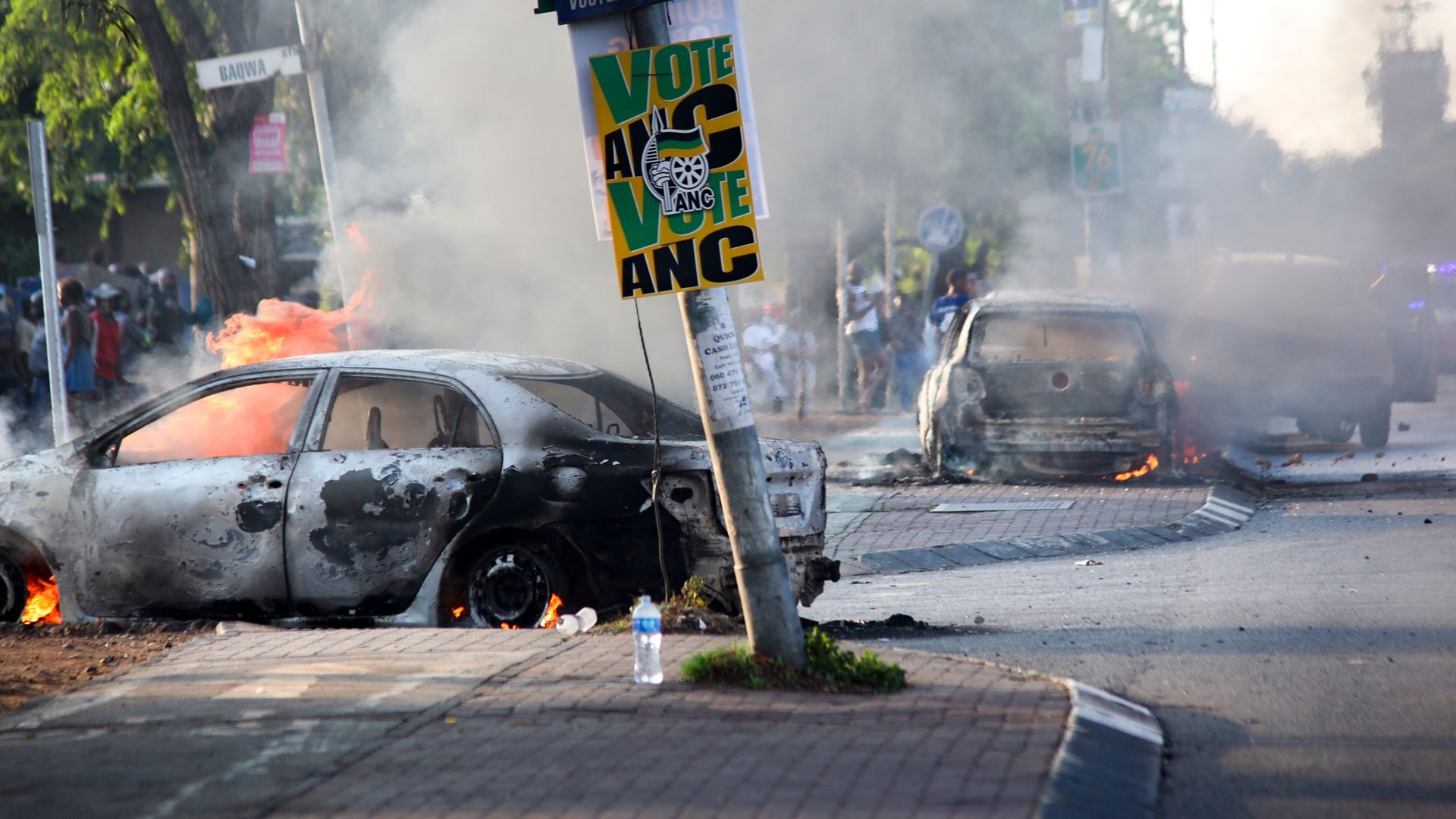
Deploying the military onto domestic streets is supposed to be a last resort. When hundreds of troops are sent to deal with anti-immigration protests, it tells you immediately that local law enforcement has lost—or is about to lose—control of the situation.
It's a heavy political gamble. Governments don't pull soldiers away from defense duties just to stand behind metal barricades unless police departments are completely stretched thin. Honestly, once boots hit the pavement in civilian neighborhoods, the entire dynamic of a protest changes overnight.
Most coverage of these deployments focuses purely on the spectacle. You see the armored vehicles, the riot shields, and the angry crowds screaming at young soldiers who'd rather be anywhere else. What rarely gets explained is how these deployments actually work, why governments pull the trigger on them, and what usually goes wrong when soldiers are asked to do police work.
Why Governments Call in the Military During Civil Unrest
Local police forces are built for day-to-day crime, not sustained, multi-city street battles. When anti-immigration demonstrations boil over into riots, arson, or targeted attacks on asylum hotels and community centers, police budgets and shift rosters collapse fast.
Officers get exhausted. Equipment runs short.
When a prime minister, president, or governor orders hundreds of troops into the mix, they're usually trying to solve three immediate problems at once:
- Manpower deficits: A major protest can easily tie up thousands of officers for days, leaving regular neighborhoods without emergency response.
- Infrastructure protection: Soldiers are often assigned to guard static targets—like government buildings, border facilities, or migrant housing—so trained police officers can go back on active patrol.
- Psychological deterrence: Seeing uniformed military personnel on a street corner makes a lot of opportunistic rioters think twice before throwing a brick.
That's the theory, anyway. In practice, bringing in the army is an admission that standard civil policing has failed to contain the anger.
What Troops Actually Do on the Ground
People hear "hundreds of troops deployed" and immediately picture soldiers conducting mass arrests or clearing streets with bayonets. That's almost never how modern democracies handle domestic unrest.
Soldiers aren't trained in criminal law, de-escalation tactics, or gathering evidence for court. If a soldier detains someone improperly, the whole prosecution can fall apart later. Because of that, military commanders and civilian politicians almost always keep troops in strict support roles.
Logistics and Static Guard Duty
In countries like the UK, the US, and across Western Europe, domestic military deployments during protests usually rely on specific legal frameworks—like the UK's Military Aid to the Civil Authorities (MACA) or the US National Guard operating under state governors' Title 32 orders.
Under these rules, troops typically handle:
- Perimeter security around high-risk buildings, hotels housing asylum seekers, and transport hubs.
- Transport and logistics, driving police units, moving heavy barriers, and supplying food or fuel to exhausted emergency crews.
- Communications and surveillance, operating drones or command centers to track where crowds are moving next.
They rarely carry live ammunition for standard protest duty. Most are equipped with standard riot gear, batons, or non-lethal crowd control tools, operating directly under the command structure of local police chiefs.
The Rare Exceptions
Sometimes, things escalate past static guard duty. During the 2020 unrest in the United States, over 43,000 National Guard troops were activated across more than 30 states—the largest domestic military deployment since the 1968 riots. In those extreme moments, troops did directly enforce curfews and clear streets alongside state troopers.
Similarly, in countries with gendarmerie forces—like France's Gendarmerie Nationale or Italy's Carabinieri—the line between soldier and cop is already blurry. Those units are technically part of the armed forces, yet they handle riot control every single week.
The History Behind Military Deployments at Protests
Using soldiers to quell civil unrest isn't new, and history shows it carries massive risks when the rules of engagement aren't crystal clear.
Take the 1992 Los Angeles riots. Local police were completely overwhelmed within hours. Thousands of California National Guard troops, along with active-duty Army and Marine personnel under the Insurrection Act, had to be sent in to restore order after days of looting and violence. It worked to stop the burning, sure, but it left deep scars in the community.
Compare that to situations where governments hesitated—or where troops overreacted. In Northern Ireland during the late 1960s, British troops were initially deployed to protect Catholic neighborhoods from sectarian violence. Within months, a lack of political solutions turned the army into a target, kicking off decades of conflict.
The lesson from every major historical deployment is simple. Soldiers can hold a line, and they can stop immediate physical destruction. They cannot fix the underlying political grievances driving people into the streets.
What Most People Get Wrong About Military Crackdowns
When anti-immigration protests turn violent, a loud section of the public always demands that the government "send in the army and clear the streets." It sounds tough. It feels decisive.
It also misunderstands how both the military and protest movements operate.
First, military leaders generally hate these deployments. Top brass know that putting armed forces into politically charged domestic disputes destroys public trust in the military. Armed forces rely on broad public support across the political spectrum to recruit and function. The second a soldier is photographed clashing with a citizen—regardless of who threw the first punch—that neutrality evaporates.
Second, heavy-handed deployments often pour gasoline on the fire. Anti-immigration movements frequently feed on a narrative that the political establishment is out of touch and authoritarian. Deploying hundreds of troops plays right into that script, turning fringe agitators into self-styled martyrs fighting a "tyrannical" state.
Third, it doesn't solve the root issue. Whether protests are sparked by housing shortages, economic anxiety, false rumors on social media, or genuine policy failures around border control, riot shields don't make those problems disappear. Once the troops pack up and go back to their barracks, the exact same tensions are still sitting there.
How Media and Social Algorithms Distort What's Happening
If you're watching a deployment unfold on X, TikTok, or cable news, you're getting a heavily distorted view of reality.
A deployment of 500 troops sounds massive in a breaking news banner. Spread across three or four cities, working in eight-hour shifts, that actually means fewer than 150 soldiers are on the street at any given moment. That's barely enough to guard a dozen buildings.
Social media algorithms love chaos, so the 30 seconds of a bottle hitting a shield gets ten million views, while the 14 hours of bored soldiers standing in the rain drinking lukewarm coffee gets zero coverage. Misinformation spreads fast during these moments too—fake claims about martial law, fabricated rumors of live fire, or old footage from completely different countries gets recycled to whip crowds into a frenzy.
How to Read the News Next Time Troops Are Deployed
When you see headlines announcing that hundreds of troops are being sent to deal with protests, don't just react to the dramatic photos. Look past the noise and check three specific details to understand how serious the situation actually is:
- Check the legal status: Are they active-duty federal/national troops, or are they reserves/National Guard? Calling up reserves is standard crowd-control backup; deploying regular infantry means the government believes civil order is genuinely collapsing.
- Look at their rules of engagement: Are they guarding empty buildings and escorting supply trucks, or have they been given arrest powers and curfew enforcement authority?
- Watch the timeline: A 48-to-72-hour deployment is a tactical breather so police can sleep. Anything stretching past two weeks means the government has lost control of the political narrative and doesn't have an exit strategy.
Pay attention to those three markers, and you'll know immediately whether a deployment is a routine logistical backup or a genuine national crisis.