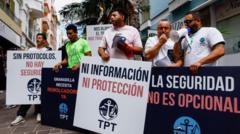
Tenerife is screaming, and the media is feeding the frenzy. The headlines paint a picture of a "plague ship" drifting toward the Canary Islands, carrying a payload of Hantavirus and doom. Residents are protesting. The internet is spiraling into a predictable cycle of resignation and rage.
They are all wrong.
The arrival of this vessel isn't a failure of maritime policy or a threat to public health. It is a masterclass in how modern society has lost its ability to calculate risk. We have traded cold logic for viral panic, and in doing so, we are missing the biggest opportunity for infrastructure reform in a decade.
The Myth of the Floating Bio-Weapon
Let’s dismantle the primary fear: the virus itself. The "lazy consensus" suggests that a ship docked in a harbor is a ticking biological bomb.
Hantavirus is not COVID-19. It does not hang in the air of a crowded plaza waiting to jump from a sailor to a barista. It is primarily transmitted through the aerosolization of rodent excreta. Unless the citizens of Santa Cruz de Tenerife plan on heading into the ship's hold to vacuum up dust without a mask, the transmission risk to the general population is effectively zero.
I have spent years analyzing biosafety protocols in transit hubs. The gap between "pathogen present" and "outbreak imminent" is a canyon that the general public refuses to acknowledge. By treating every localized infection like a global pandemic, we dilute our response capabilities for actual threats. The outrage in Tenerife isn't based on science; it’s a trauma response from 2020 that we haven't outgrown.
Why Resignation is a Policy Failure
The "resignation" mentioned in the headlines is the most dangerous part of this story—but not for the reasons you think. People are resigned because they believe the government is "letting the virus in."
The real reason for resignation should be the total lack of sophisticated maritime quarantine infrastructure. We are still using 14th-century logic—keep the ship away from the pier—because we haven't invested in mid-harbor containment tech.
- Logic Check: If you turn the ship away, where does it go?
- The Reality: It stays in the ecosystem. It fuels a black market of off-shore supplies. It creates a "grey zone" where the virus can actually mutate or spread among a crew that feels abandoned.
The "safe" move is to bring the ship in under controlled conditions. This isn't a surrender; it’s an extraction. By refusing entry, you lose the ability to monitor, test, and contain. You trade control for the illusion of distance.
The Economic Hypocrisy of Tourism Hubs
Tenerife lives and dies by its ports. You cannot demand the economic benefits of being a global shipping and cruise crossroads while simultaneously demanding a "zero-risk" environment.
I’ve watched port authorities flip-flop for years. They want the €100 million in port fees but refuse to spend €5 million on a dedicated infectious disease docking wing. The current anger is a distraction from the fact that the Canary Islands—and most major port cities—have been pocketing "safety" taxes without actually building the safety.
The Real Math of Risk
Consider the probability of a Hantavirus outbreak ($P_o$) versus the economic cost of a total port shutdown ($C_e$).
$P_o \approx 0.0001%$
$C_e \approx \text{Millions of Euros per day}$
When you run the numbers, the "outrage" is a luxury we can't afford. The ship should have been docked, scrubbed, and cleared forty-eight hours ago. Instead, we are burning fuel and political capital to appease people who think a virus can swim through a mile of salt water to find them.
The "Not In My Backyard" Epidemiology
The PAA (People Also Ask) crowd wants to know: "Is Hantavirus the next pandemic?"
The honest, brutal answer is: No.
It kills the host too fast and transmits too poorly. The real "virus" here is NIMBY-ism applied to global health. Everyone wants "the authorities" to handle it, so long as "handling it" means pushing the problem into someone else’s territorial waters.
Imagine a scenario where we treated every medical emergency on a ship this way. A sailor with a suspicious rash? Leave them at sea. A cook with a fever? Let the ship drift to Morocco. This isn't a health strategy; it’s a medieval siege mentality.
The Blueprint for Disruption
If we want to stop the cycle of panic and resignation, we have to stop lying about "safety."
- Abolish the "Wait and See" Protocol: Ships with reported illnesses should be mandated to dock at specific, high-security berths immediately. No lingering. No drifting.
- Monetize the Risk: Charge shipping companies a "Pathogen Premium" that funds permanent, on-site virology labs in every major port.
- Data Transparency over Drama: Publish the real-time air quality and surface swab results from the ship. Don't tell people "it's fine"—show them the negative PCR results.
The current situation in Tenerife is a gift. It has exposed the fragile, reactionary nature of our maritime borders. We can either keep screaming at a boat, or we can use this moment to build the infrastructure that makes the next "ghost ship" a non-event.
The ship isn't the threat. The theater of our response is. Stop being afraid of a rodent virus and start being afraid of a government that manages optics instead of biology.
Dock the ship. Test the crew. Clean the hull. Move on.


