The Soft Power of Hard Iron
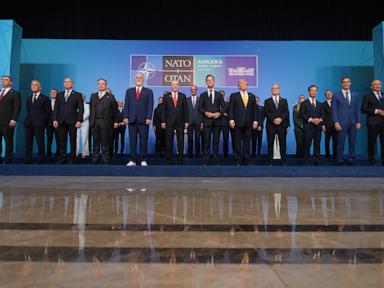
Mainstream media analysis of international summits usually follows a tired, predictable script. Analysts obsess over communiqué wording, seating arrangements, and the subtle geometry of group photos. So, when Turkish President Recep Tayyip Erdogan handed out custom-engraved, Turkish-made Tisas Zigana pistols to fellow NATO leaders, the press corps predictably lost its mind.
The lazy consensus formed instantly. To the left, it was a gaudy display of toxic militarism, an inappropriate gesture in an era of heightened global conflict. To the right and the nationalist factions, it was a masterclass in alpha-male diplomacy—a bold assertion of Turkey's domestic defense capabilities and a literal middle finger to Western arms restrictions.
Both interpretations are completely wrong.
Handing a room full of cautious, bureaucratic heads of state a lethal weapon isn't a show of absolute strength. It is a calculated, deeply anxious performance of a mid-tier power trying to force its way into a conversation it doesn't fully control. When you unpack the actual mechanics of defense procurement, geopolitical leverage, and NATO’s internal friction, Erdogan’s gift looks less like an alpha move and more like a loud, expensive cry for attention from a nation trapped in a strategic paradox.
The Illusion of Domestic Defiance
The core narrative pushed by Ankara—and swallowed whole by defense bloggers—is that these custom revolvers and semi-automatic pistols showcase Turkey’s self-reliance. For the last decade, Turkey has trumpet its growing defense autonomy, aiming to slash its dependence on foreign suppliers.
On paper, the numbers look impressive. The Turkish defense sector now builds its own drones, corvettes, and small arms. But handing Joe Biden or Emmanuel Macron a polished Zigana PX-9 doesn't change the brutal reality of high-end military manufacturing.
Small arms are a commodity. Anyone with a decent CNC machine and some metallurgy expertise can build a reliable 9mm handgun. The real test of modern military sovereignty isn't a sidearm; it’s the high-end, system-of-systems engineering that Turkey still struggles to secure without Western cooperation.
Consider the hypocrisy baked into this gift exchange:
- The F-16 Dilemma: Turkey handed out these pistols while actively begging Washington to clear a multi-billion-dollar modernization package for its aging F-16 fleet.
- The S-400 Hangover: Ankara remains kicked out of the F-35 Joint Strike Fighter program because it purchased Russian S-400 missile systems—a move that fundamentally broken its relationship with NATO’s top-tier tech ecosystem.
- Engine Dependency: Turkey’s ambitious domestic fighter jet, the KAAN, still relies on American-made General Electric F110 engines to get off the ground.
Gifting a pistol while your flagship fifth-generation fighter program relies on American propulsion is the geopolitical equivalent of buying a gold watch while your house is in foreclosure. It’s theater. It’s an attempt to project an aura of total defense independence to a domestic audience while sitting at the negotiation table in Brussels as a subordinate petitioner.
Dismantling the "People Also Ask" Delusions
When this story broke, public curiosity spiked around the etiquette and legality of gifting weapons to heads of state. The internet asked some fundamentally naive questions, and the institutional answers were predictably sanitized. Let's inject some reality into the top queries.
Can a NATO leader actually keep a gifted firearm?
Absolutely not. The immediate assumption by the public is that these leaders take these custom pieces home to add to their private collections. In reality, strict ethics laws govern these interactions. In the United States, any gift from a foreign official exceeding a minimal value (currently a few hundred dollars) belongs to the government, not the individual. Biden’s engraving doesn't mean it goes to Delaware; it means it goes straight into a National Archives storage facility or a presidential library vault. Erdogan didn't arm his peers; he populated Western state storage units with free Turkish marketing material.
Was this an insult to NATO's peaceful mission?
This question assumes NATO is a pacifist book club. NATO is a nuclear-armed military alliance. The issue with the gift isn't that a weapon is offensive to the sensibilities of European leaders. The issue is that the gift highlights the deep, systemic distrust within the alliance. Turkey has repeatedly delayed the accession of new members like Sweden and Finland to extract political concessions. Gifting a weapon to leaders whose security initiatives you were actively sabotaging weeks prior isn't a gesture of solidarity. It's a reminder that Turkey views the alliance through a purely transactional lens.
The Psychology of the Transactional Ally
To understand why this move was actually a strategic misfire, you have to understand the psychology of Turkish foreign policy under the Justice and Development Party (AKP). Turkey operates on an ideological framework of "strategic autonomy." It wants the protection of the NATO umbrella while retaining the freedom to cut deals with Moscow, Beijing, and Tehran whenever it suits Ankara’s immediate interests.
In the boardrooms of Washington, London, and Paris, this isn't viewed as brilliant statecraft. It’s viewed as reliability inflation.
When a reliable ally like Norway or Denmark negotiates within NATO, they use the currency of predictable commitments, shared values, and integrated logistics. When Turkey negotiates, it uses the currency of leverage, veto threats, and public spectacles.
The engraved pistols are a physical manifestation of this transactional philosophy. A handgun is an individual weapon. It is not an integrated defense system. It doesn't require interoperability protocols, shared radar networks, or cross-border data links. By gifting an isolated piece of hardware, Erdogan inadvertently signaled exactly how Turkey views its role in NATO: a self-contained, heavily armed entity that happens to occupy the same room as the rest of the alliance, but doesn't truly integrate with the collective machine.
The True Cost of Symbolism over Substance
I have watched defense ministries spend years and hundreds of millions of dollars trying to spin PR victories out of mediocre procurement realities. It’s a classic misdirection play. When your macroeconomic indicators are cratering—when inflation is rampant and your currency is volatile—you don't talk about your central bank. You talk about your defense exports.
Turkey’s defense sector has made genuine strides, particularly in the unmanned aerial vehicle (UAV) sector with the Bayraktar TB2. That drone actually changed dynamics on battlefields in Nagorno-Karabakh and Ukraine. That was real substance.
But the shift from exporting combat-proven drones to handing out engraved boutique handguns at a diplomatic summit represents a regression into pure kitsch. It is the defense manufacturing equivalent of a company that can't ship its core software update on time, so the CEO starts handing out high-end branded hoodies to the board of directors to distract them.
The Western leaders who accepted those cases did so with polite, practiced diplomatic smiles. They understood the assignment. They knew that thanking Erdogan for a shiny new pistol was a cheap way to let him have his domestic headlines while they continued to squeeze Ankara on the issues that actually matter:
- Enforcing sanctions compliance regarding transshipments to Russia.
- Securing maritime access routes in the Black Sea without Turkish interference.
- Keeping Turkey's erratic regional ambitions in Syria contained.
The Real Lesson of Ankara's Gun Show
Stop looking at international relations as a series of alpha-dog dominance displays. The media fell for the trap, framing the pistol gift as a bold, historic assertion of Turkish power. It wasn't.
Real power in modern geopolitics is quiet, structural, and deeply integrated. It is the power to deny microchip shipments, to control international financial clearing systems, and to dictate the standards of fifth- and sixth-generation warfare.
Turkey possesses none of those structural levers over its Western allies. It has a vital geographic position, a large standing army, and a highly capable secondary defense industry. That's a solid hand to play, but it doesn't make Turkey an equal partner to the economic and technological engines of the G7.
Erdogan’s pistols didn't terrorize or impress the leaders of the Western world. They merely confirmed what the defense establishment already knew: Ankara remains an outsider, locked out of the highest echelons of allied military tech, trying to compensate for its structural isolation with a flashy display of small-arms pageantry.
Next time an international leader pulls a stunt like this, don't look at the craftsmanship of the engraving. Look at what they're trying to hide under the velvet lining of the box.


