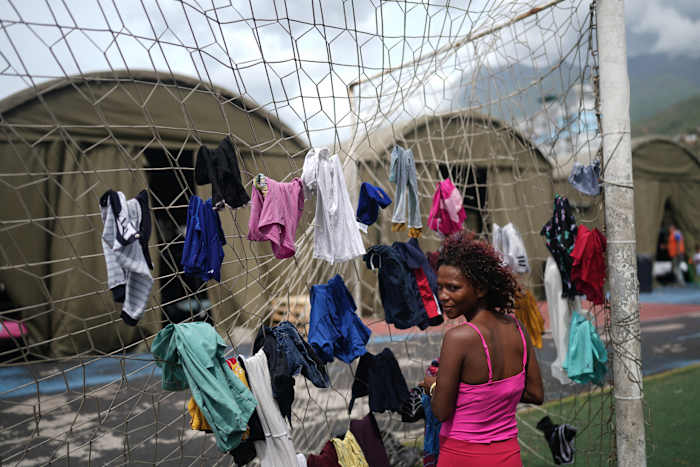
The dust never really settles. Weeks after the earth stops shaking, it hangs in the air, a gritty reminder of everything that used to be a home. In the fractured communities of Sucre and Monagas, the initial terror of the earthquake has faded into a different, much quieter kind of horror. It is the sound of a child crying in the dark from stomach cramps. It is the sight of a mother staring blankly at an empty medicine cabinet.
When the news cycle moves on from a natural disaster, it leaves behind a math problem that real people have to solve with their bodies. Meanwhile, you can read other developments here: The Midnight Accounting of the Western World.
Consider a woman we will call Elena. She is not a statistic, though she will soon be counted in one of the grim reports trickling out of northeastern Venezuela. Elena lives in a small village where the local water main split like an overripe fruit during the tremors. Before the quake, the economic crisis had already worn the infrastructure down to a thread. Now, that thread is snapped.
Elena wakes up at four in the morning. Her immediate task is not rebuilding her cracked walls, but finding water that will not make her toddlers violently ill. She fails. The only available source is a murky well contaminated by ruptured sewage lines nearby. She boils it, but gas is scarce, and the firewood is damp. To understand the bigger picture, we recommend the detailed article by NPR.
Within days, the sickness arrives.
The Secondary Shockwave
We often measure disasters by the immediate body count. We count the rubble, the crushed concrete, the sudden casualties. But the true weight of a humanitarian crisis is a slow-motion event. In post-earthquake Venezuela, the secondary shockwave is bacterial.
Waterborne diseases, specifically severe diarrhea and acute gastroenteritis, are tearing through displaced populations. For an adult in a wealthy nation, a bout of food poisoning or a waterborne bug means a miserable weekend and a couple of days off work. For a Venezuelan child already navigating chronic malnutrition, it is a fast track to severe dehydration and death.
The mechanism is brutal and swift. The human body, when exposed to pathogens like Vibrio cholerae or various strains of E. coli, attempts to flush the invaders out. In doing so, it sheds water and essential electrolytes at a catastrophic rate. Without clean water to replace the loss, the blood volume drops. Organs begin to sputter.
The tragedy is that the remedy is agonizingly simple. A packet of oral rehydration salts costing pennies can save a life. But those pennies do not exist here, and neither do the packets.
Local clinics, already stripped bare by years of hyperinflation and medical shortages, are completely overwhelmed. Doctors who used to treat broken bones from the quake are now spending their twelve-hour shifts setting up makeshift rehydration stations, using whatever clean fluids they can scramble together. The floors of these clinics are crowded with parents holding listless children whose skin has lost its elasticity—the telltale sign of dangerous dehydration.
When the Safety Net Dissolves
It is tempting to look at this situation and blame the earthquake entirely. That would be a mistake. The earthquake was merely the trigger that pulled the pin on a pre-existing grenade.
To understand why a moderate geological event caused a profound medical catastrophe, one must look at the structural decay that preceded it. Venezuela’s healthcare system was already in a state of advanced collapse. Hospitals lacked basic antibiotics, running water, and intermittent electricity long before the ground moved.
When the infrastructure took a literal hit, there was no backup system. No federal reserve of medical supplies to deploy. No emergency water tankers ready to roll into rural sectors.
- Broken Pipes: The seismic activity shattered fragile asbestos and PVC water networks that had not been maintained in decades.
- Stagnant Pools: Displaced families are forced to camp in the open or in crowded temporary shelters, where sanitation is non-existent.
- Power Outages: Without electricity, water treatment plants cannot filter what little water remains in the system.
The result is a perfect environment for contagion. It is a feedback loop of misery. The sick cannot get clean water, and the lack of clean water makes more people sick.
The Hidden Toll of the Long-Term Sick
While the acute surge of diarrheal illness captures immediate, frantic attention in the clinics, another crisis unfolds in the shadows of the broken streets. This is the quiet collapse of the chronically ill.
Imagine needing dialysis three times a week to stay alive. Imagine requiring daily insulin that must be kept refrigerated, or high-blood-pressure medication that keeps a fragile heart from failing. Now, remove the electricity. Shatter the pharmacy windows. Block the roads with boulders from a landslide so the delivery trucks can never arrive.
For thousands of Venezuelans living with diabetes, hypertension, and kidney disease, the earthquake was a death sentence with a delayed execution date.
The stress of the disaster alone causes spikes in cortisol and blood pressure. When combined with a sudden, total absence of maintenance medication, the human body rebels. Stroke rates are quietly climbing. Diabetic ketoacidosis—a life-threatening condition where the blood becomes highly acidic due to a lack of insulin—is appearing in emergency rooms that don't even have the saline required to treat it.
Medical staff are forced to make decisions that no healer should ever have to make. They triage not based on who needs help the most, but on whose life can be extended for a few more hours with the handful of pills remaining in a drawer.
The Invisible Borders of Aid
International aid agencies want to help. The blueprints for disaster relief are well-established: ship in water purification tablets, erect field hospitals, distribute hygiene kits. But execution in this specific landscape is a bureaucratic and logistical nightmare.
The political realities on the ground mean that humanitarian access is often restricted or heavily politicized. Fuel shortages make transporting supplies from the ports to the remote villages of Sucre an exercise in extreme patience and luck. A truck loaded with life-saving intravenous fluids might sit at a checkpoint for days while paperwork is scrutinized, while just forty miles away, a child dies for lack of a sterile drip.
This is the agonizing paradox of modern humanitarian crises. The solutions exist. The medicine sits in warehouses. The money has been allocated by global donors. Yet, the bridge between the supply and the desperate demand is broken by human friction.
The local communities have realized that salvation is not arriving on a helicopter. They are turning inward.
Survival on the Margins
In the absence of functional governance or rapid international intervention, the affected communities are organizing their own survival. It is an imperfect, exhausting effort.
Neighbors are sharing what little boiled water they have. Local leaders are attempting to map out the most vulnerable residents—the bedridden elderly, the newborns—to ensure they receive priority when a rogue water truck happens to pass through. They are using old, traditional methods of filtering water through layers of sand and charcoal, a desperate attempt to catch the heavy sediments, even if it cannot kill the microscopic pathogens.
It is a testament to human resilience, but resilience is a finite resource. You cannot feed a child on resilience. You cannot cure dysentery with community spirit.
The psychological toll is becoming as heavy as the physical illness. The constant anxiety of watching a loved one deteriorate, combined with the daily, grueling physical labor of fetching wood and water, is wearing the population down to the bone. People are sleeping in shifts, terrified that another aftershock will claim what little shelter they have left, or that a thief will steal their precious container of clean water.
The True Measure of the Disaster
The sun sets over Monagas, casting a warm, deceptive glow across a landscape of cracked asphalt and collapsed roofs. In the fading light, smoke rises from hundreds of small fires outside ruined homes. Women are bending over pots, trying once again to boil water that smells faintly of sulfur and sewage.
The true scale of this crisis will never be fully captured by charts or international briefs. It is found in the small, agonizing choices made every hour in these communities. It is a father deciding which of his children looks stronger, and giving that child the last clean cup of water. It is a nurse washing a syringe with contaminated water because there is no other choice, praying she isn't passing a lethal infection to her next patient.
The earth has stopped moving in Venezuela, but the disaster is far from over. The casualties are still mounting, one quiet sip at a time.