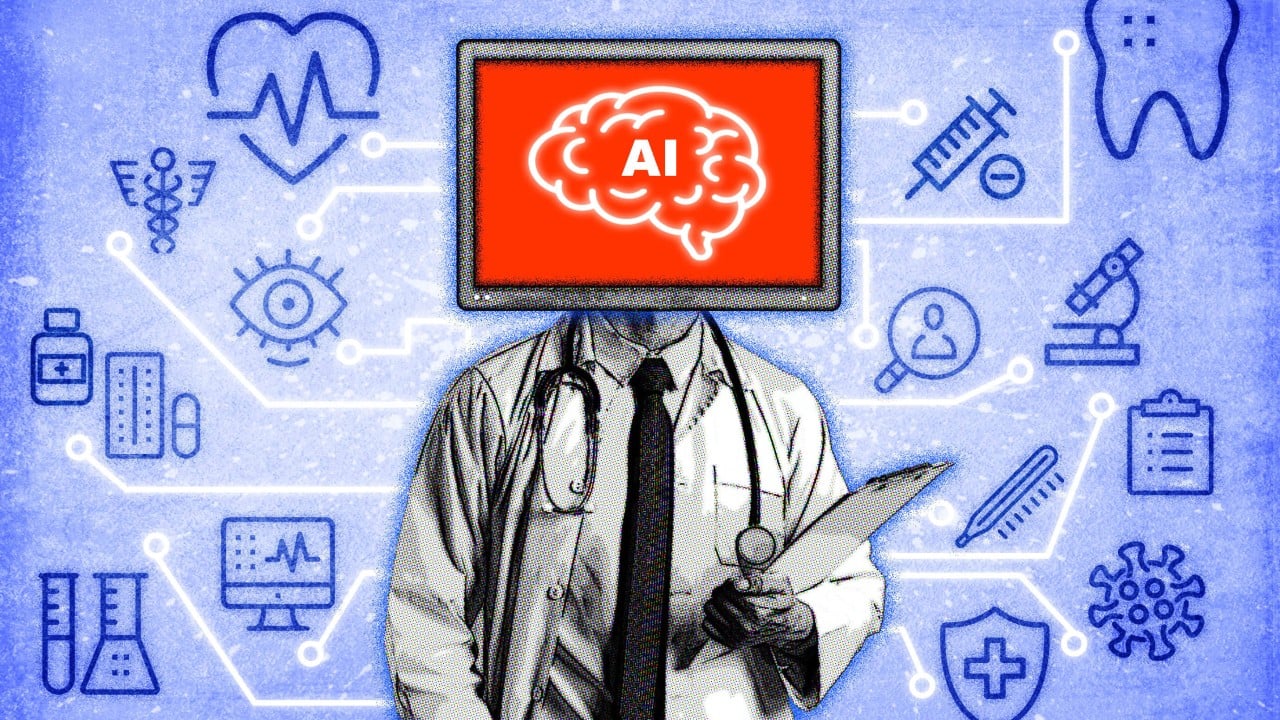
The prevailing narrative on Chinese healthcare is a fairy tale. You’ve read the scripts: a vast, underserved rural population, a crushing shortage of qualified GPs, and a shiny, Silicon Valley-inspired AI "doctor" ready to bridge the gap. It sounds efficient. It sounds inevitable. It is dangerously wrong.
Most analysts looking at China’s medical resource gap treat it as a supply-side problem solvable by digital scale. They assume that if you digitize the expertise of a Grade-A physician in Beijing and beam it to a village in Gansu, the problem vanishes. This logic ignores the brutal reality of clinical outcomes. Throwing more algorithms at a broken system doesn't fix the system; it just accelerates the rate of misdiagnosis at a lower price point.
The obsession with using AI to bridge the gap is actually a white flag. It is an admission that the state has failed to incentivize human talent to leave the Tier 1 cities. By pushing AI as the primary solution for the rural poor, we aren't "democratizing healthcare." We are creating a two-tier biological caste system: human-led precision for the elite, and "good enough" automated triage for everyone else.
The Garbage In Garbage Out Trap
Medical AI is only as good as the data it eats. In the context of China’s healthcare "gap," the data is often radioactive.
I’ve spent years looking at how high-growth tech firms attempt to scrape electronic health records (EHR) in secondary and tertiary markets. In rural clinics, data entry is a nightmare of shorthand, missing variables, and localized dialects that standard Natural Language Processing struggles to parse. When an AI is trained on the pristine, gold-standard datasets of Peking Union Medical College Hospital but deployed in a township clinic where the diagnostic equipment hasn't been calibrated since 2018, the "bridge" collapses.
The math doesn't work. If you have a sensor error at the point of care—say, an aging ultrasound machine or a poorly stored blood sample—the most sophisticated neural network in the world will simply provide a highly confident, highly incorrect answer.
$D_{out} = f(D_{in}, \theta)$
If $D_{in}$ is compromised, the output $D_{out}$ is a liability, not a lifeline. We are currently building a house of cards on the assumption that software can compensate for a lack of physical infrastructure and basic hygiene in data collection.
The Myth of the "Standardized" Patient
The "bridge" argument assumes that rural patients are just urban patients who happen to live further away. This is a fundamental misunderstanding of social determinants of health. Rural populations in China face specific environmental stressors, dietary habits, and genetic predispositions that are often underrepresented in the datasets used to train mainstream AI models.
If an AI is trained primarily on urban middle-class data—where sedentary lifestyles and "rich man's diseases" like Type 2 diabetes dominate—it may struggle to identify the nuances of occupational lung diseases or specific nutritional deficiencies prevalent in farming communities.
When we rely on these models to act as the primary diagnostic layer, we risk systematic erasure. The AI won't say "I don't know." It will map the rural patient onto the closest urban profile it understands. That isn't bridging a gap. That is a diagnostic forced march.
The Liability Vacuum
Who goes to jail when the algorithm misses a pulmonary embolism in a village 500 kilometers from the nearest ICU?
Current regulatory frameworks in China are sprinting to keep up with generative AI, but they remain opaque regarding clinical malpractice in automated systems. In a Tier 1 city, a patient has a lawyer. In a rural village, a patient has a smartphone.
By positioning AI as the solution for the "resource gap," we are shifting the burden of risk onto the most vulnerable. If a human doctor makes a mistake, there is a path for redress. If an AI "recommendation engine" (which is how these tools are often legally classified to avoid strict medical device regulations) suggests the wrong treatment, the blame is diffused into a cloud of "user error" or "statistical anomaly."
We are effectively beta-testing healthcare on a population that lacks the agency to opt-out.
Why Scale is the Enemy of Care
Business logic dictates that scale is good. In medicine, scale is often the enemy of the "clinical intuition" that saves lives in resource-poor environments. A seasoned rural doctor knows which families have a history of certain ailments, who is likely to skip their meds, and which local water source might be contaminated.
AI cannot see the mold on the patient's walls. It cannot smell the alcohol on a caregiver's breath. It cannot sense the hesitation in a mother’s voice that contradicts the "yes" she just gave to a screening question.
By automating the primary care interface, we are stripping away the "human sensor" layer. The "gap" isn't just about the number of doctors; it's about the quality of the relationship. Replacing a mediocre human doctor with a high-speed chatbot doesn't improve the health of the village; it just makes the neglect more efficient.
The Hardware Bottleneck No One Talks About
Let’s talk about the physical reality. Most "AI in healthcare" discussions treat the software as if it exists in a vacuum. It doesn't. To run a meaningful diagnostic AI, you need:
- Reliable High-Speed Connectivity: Edge computing is great, but real-time image processing for oncology or radiology still requires a backbone that many rural clinics lack.
- Modern Diagnostic Hardware: You can't run AI-driven skin cancer checks on a 2-megapixel camera from 2012.
- Power Stability: AI servers and high-end medical tablets don't handle brownouts well.
If the Chinese government really wanted to bridge the gap, they would spend the money on high-quality human training and physical infrastructure. Instead, the focus is on the "digital silk road" because software has a better ROI for the tech giants than building 10,000 clean, well-staffed clinics.
The Incumbency Problem
The biggest players in China’s AI space—Tencent, Alibaba, Baidu—are not medical companies. They are data companies. Their primary incentive is to capture the "health-spend" of 1.4 billion people.
When these companies "help" bridge the medical gap, they are building a moat. They want to be the gatekeeper between the patient and the prescription. This leads to a conflict of interest that no one wants to acknowledge: the AI is incentivized to recommend products and services within its own ecosystem.
Imagine a scenario where an AI diagnostic tool subtly favors medications or follow-up tests provided by its parent company’s logistics arm. In a rural setting where there is no competing second opinion, that isn't healthcare—it's a captive market.
The Dangerous Allure of "Good Enough"
The most insidious part of the AI-as-a-bridge argument is the lowering of expectations. We’ve started to accept that rural patients don't need great care, they just need some care.
This "good enough" philosophy is a death sentence. In medicine, "almost right" is often worse than "I don't know." A false negative on a screening test gives a patient a false sense of security, causing them to ignore symptoms until they are terminal. A human doctor, aware of their own limitations, might refer the patient to a city hospital. An AI, programmed to "solve" the case locally to reduce the burden on urban centers, might keep the patient in a feedback loop of useless, automated advice until it's too late.
The Real Bridge: Radical Decentralization
If we actually want to solve the crisis, we have to stop looking at AI as a replacement for the doctor and start looking at it as a tool for the nurse.
The gap won't be bridged by a central AI in Beijing. It will be bridged by empowering mid-level practitioners with tools that enhance their physical presence, not replace it. We need "Augmented Reality" for local clinicians, not "Artificial Intelligence" for remote patients.
This means:
- Using AI to automate the soul-crushing paperwork that keeps doctors from seeing patients.
- Deploying simple, robust diagnostic hardware that works offline.
- Incentivizing human doctors with Tier 1 salaries to live in Tier 3 cities—something no amount of code can fix.
The tech-optimists are selling a shortcut. But in healthcare, shortcuts are just another word for malpractice. If China continues to chase the "AI bridge" without fixing the physical and social rot at the foundation of rural care, the bridge won't just fail to close the gap—it will become the very mechanism that makes the disparity permanent.
Stop treating rural patients as a data-acquisition problem. They are a human-capital problem. And humans cannot be downloaded.