Marie sits in a cluttered office in Lyon, staring at a shipping manifest that refuses to balance. Her family’s manufacturing business has built precision industrial valves for three generations. Sixty percent of their specialized steel components come from a foundry just outside Shanghai. For twenty years, that supply chain felt as reliable as the sunrise. It was efficient. It was cheap. It kept forty people employed in a French provincial town where the alternative economy died when the coal mines closed.
Now, Marie feels the cold draft of a shifting world.
She doesn't read the trade journals. She doesn't follow the closed-door diplomatic summits where gray-suited technocrats argue over subsidy caps and tariff schedules. But she feels the friction. Her bank calls with stricter compliance checks. Her freight forwarder tacks on surcharges that arrive like sudden squalls. The rules of global trade are being rewritten, and the pen is dipped in suspicion.
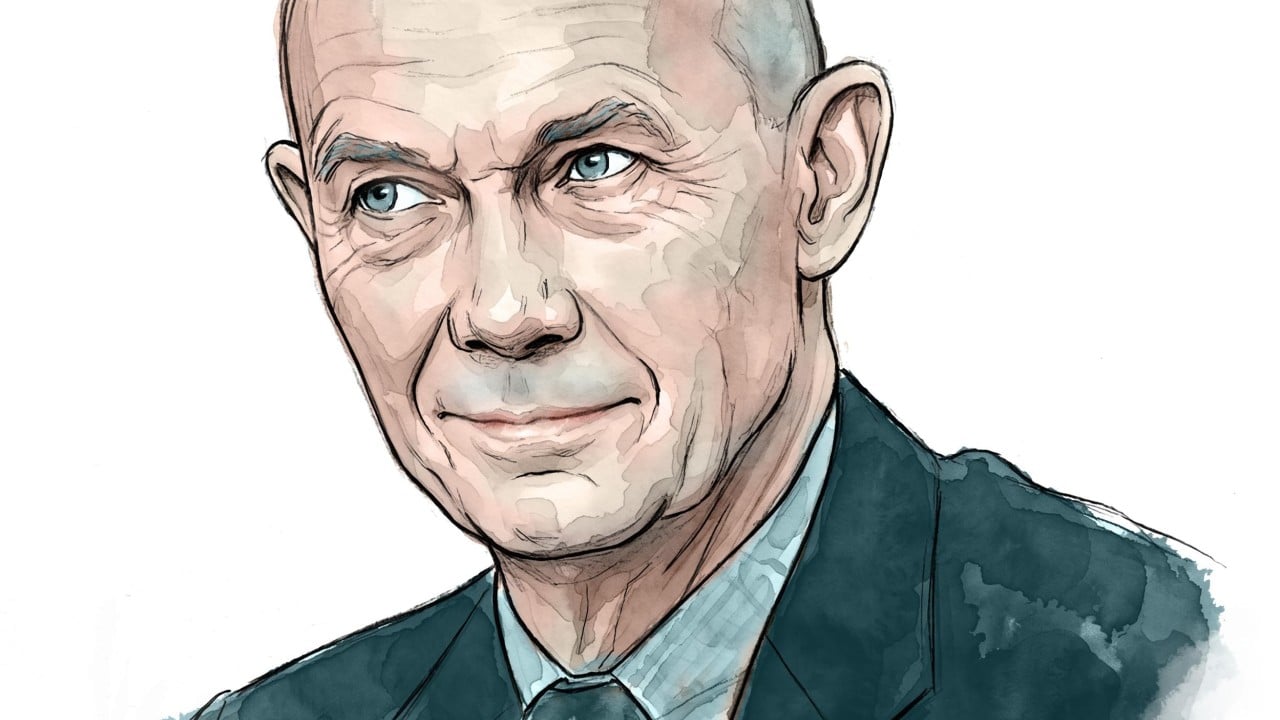
To understand why Marie’s quiet anxiety is about to become the soundtrack of the global economy, we have to look back to a conference room in Brussels, where Pascal Lamy, the former head of the World Trade Organization, recently laid out a stark binary choice for the European Union. Lamy, a man who has spent decades navigating the intricate architecture of international commerce, delivered a warning wrapped in diplomatic velvet. The EU, he argued, faces a historic pivot. It can either forge a painful, structural rebalancing of its economic relationship with Beijing, or it can slam the iron gates shut and slide headfirst into defensive protectionism.
There is no middle ground left. The era of frictionless globalization is over, buried under mountains of excess industrial capacity, strategic rivalry, and a profound crisis of trust.
For decades, the prevailing economic religion was simple: trade brings peace, and efficiency is the ultimate good. If a factory in Shenzhen could make a solar panel or a steel beam twenty percent cheaper than a factory in Duisburg, let them make it. The consumer won. The corporation won. The macroeconomic indicators pointed steadily upward, like a hiker conquering an easy hill.
Yet efficiency has a dark shadow, and its name is fragility.
Consider what happens when a single nation dominates the production of green tech, rare earths, and foundational industrial inputs while running massive trade surpluses. It creates a structural imbalance that other nations can no longer digest without swallowing their own industrial base. Europe watched its solar industry vanish a decade ago. It watched its steel mills struggle against waves of subsidized overproduction. Now, it watches its automotive sector—the crown jewel of European manufacturing—gasp for breath as a tidal wave of electric vehicles approaches from the East.
Lamy’s diagnosis is surgically precise. The European Union cannot simply absorb this shock and pretend it is standard market competition. State capitalism does not play by the same rules as market capitalism. When a foreign government pours billions into targeted industrial sectors to secure global dominance, the playing field isn't tilted; it is standing on a vertical cliff.
So, what is the alternative?
Protectionism is the political opioid of our time. It is seductive, immediate, and ultimately corrosive. Build a wall. Slap a forty percent tariff on imports. Tell voters that home is safe behind the barrier.
Politicians love protectionism because it offers a clean narrative of control. It looks like strength. But history whispers a different warning. When nations retreat behind tariff walls, prices rise, innovation stalls, and retaliation follows with the inevitability of gravity. The consumer pays more for less. The exporter finds foreign markets slammed shut in retaliation. Protectionism does not protect an economy; it mummifies it. It preserves inefficiency in amber until the rest of the world leaves you so far behind that the museum doors lock permanently.
Marie knows this. If her government slaps blunt tariffs on Chinese steel without offering a viable alternative source, her margins evaporate. She cannot compete with local rivals who have deeper pockets, and she cannot absorb a sudden spike in raw material costs. A protectionist wall doesn't protect her; it starves her.
This brings us to Lamy’s harder, braver path: rebalancing.
Rebalancing is not about isolation. It is about recalibration. It is the complex, unglamorous art of rewriting the terms of engagement while keeping the channels open. It means telling Beijing that access to the rich European market requires reciprocity, transparency, and an end to predatory industrial subsidies. It means using defensive trade instruments—anti-dumping duties, foreign subsidy regulations, and targeted screening mechanisms—not as weapons of exclusion, but as surgical tools to enforce fair play.
Imagine a high-stakes poker game where one player has been caught slipping extra chips from their sleeve for years. You don't flip the table over in a rage, nor do you pretend nothing happened. You demand new rules, a transparent deck, and a referee with teeth. That is what European trade policy is attempting to do, however clumsily.
Yet rebalancing requires a domestic sacrifice that European capitals have long avoided. You cannot demand that your industries compete on a fair global stage while hamstringing them with internal regulatory hyper-complexity, crushing energy costs, and fragmented capital markets. Europe wants the green transition and the digital revolution, but it ties one hand behind its industrial back with bureaucracy before telling it to run a marathon.
If the European Union chooses the path of rebalancing, it must also rebuild its own industrial spine. It must pool its resources, accelerate energy reform, and foster a genuine single market for capital and innovation. It must become strong enough that trade with China is an exchange of equals, not a dependency of the weak upon the strong.
The cost of failure is written on the factory floors of towns like Marie’s.
If the EU dithers—caught between the paralysis of consensus and the temptation of lazy populism—it will stumble into accidental protectionism. The choice will be made not by grand design, but by a series of desperate, reactive measures. Tariffs will go up haphazardly. Supply chains will fracture unpredictably. Inflation will become a permanent, gnawing background hum in the European household.
We are standing at the exact intersection where economic theory collides with human reality. Behind us lies a comfortable past that can never be reclaimed. Ahead of us lies a fork in the road where one path leads to a walled garden of stagnation, and the other to a dangerous, demanding negotiation with a rival who refuses to play by our old rules.
Marie locks her office door as the evening rain begins to slick the cobblestones outside. She turns off her computer, leaving the half-balanced shipping manifest glowing faintly in the dark. She does not know what Pascal Lamy said in Brussels, and she does not care about the acronyms of international trade law. She only knows that tomorrow morning, the trucks will arrive, the invoices will land, and the world will expect her to keep the lights on.