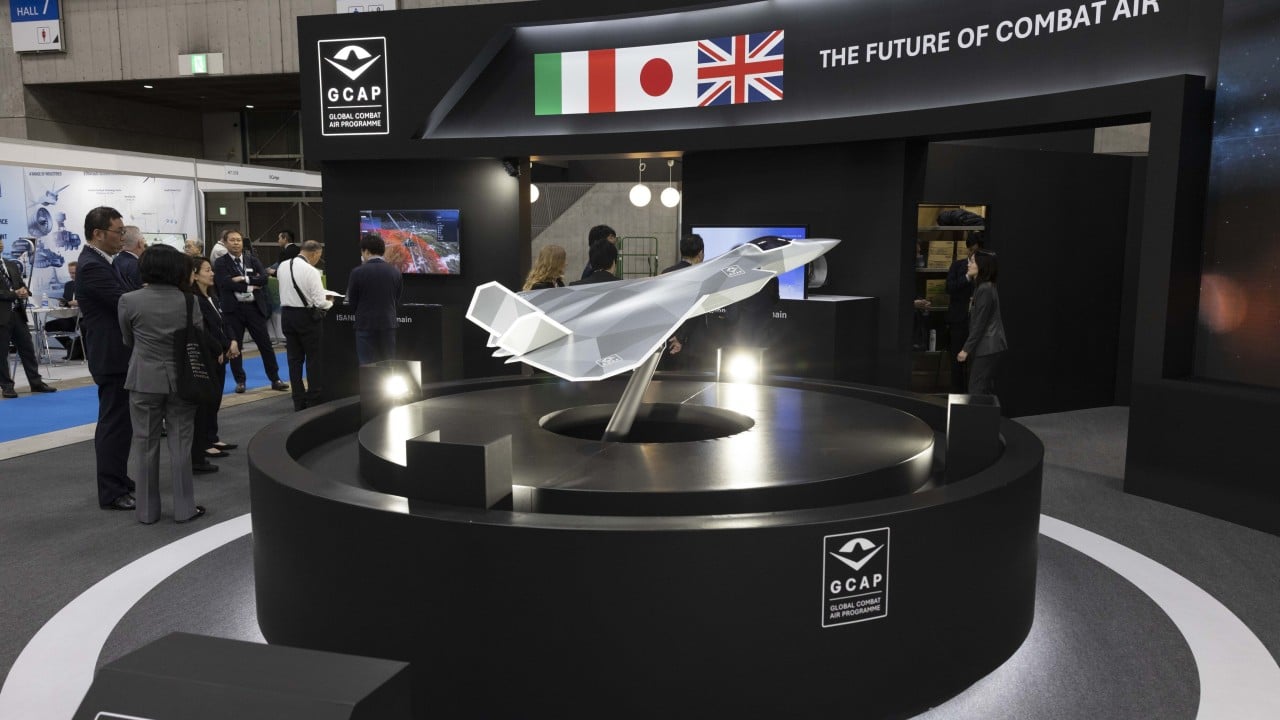
The defense mainstream is panicking over the Global Combat Air Programme (GCAP) because London is short on cash. The media is calling it a "reality check" for Japan. They claim Tokyo's ambitious next-generation fighter jet project is under threat because Britain’s defense budget is cratering.
They have the story completely backward.
The narrative that Japan is the vulnerable junior partner waiting to be saved by British aerospace engineering is a myth built on outdated 20th-century assumptions. The UK is not the savior of this program; it is the financial and industrial liability. If GCAP stalls, it will not be because Japan lacked the vision. It will be because Britain failed to realize that in the modern defense ecosystem, software capability and advanced manufacturing supply chains matter more than legacy aerospace heritage.
The Myth of the British Aerospace Lifeline
For decades, defense analysts have operated under a lazy consensus: Britain brings the elite technical know-how from the Eurofighter Typhoon and Tempest programs, while Japan brings the checkbook. This dynamic is dead.
Let’s look at the actual industrial capabilities. The defining feature of a sixth-generation fighter jet is not its airframe or its stealth coating. It is its sensor fusion, its software architecture, and its ability to act as an airborne data center.
I have watched defense consortia burn through billions trying to patch together legacy avionics systems with modern software. The bottleneck is never the titanium bending; it is the code.
Japan holds the clear advantage in the exact technologies that will define sixth-generation warfare:
- Advanced Semiconductors: Japan controls critical nodes in the global microchip supply chain, specifically in semiconductor manufacturing equipment and materials like photoresists.
- Gallium Nitride (GaN) Technology: Mitsubishi Electric has spent over a decade perfecting GaN sensors, which allow radars to operate at vastly higher powers and efficiencies than the older Gallium Arsenide systems still clogging up Western supply chains.
- High-End Materials Science: Japanese carbon-fiber composites are the global standard.
When the British defense establishment frets about its funding shortfall, it isn't just a Treasury problem. It is a structural decline in industrial capacity. Britain’s defense sector is hyper-consolidated, overly reliant on a single prime contractor, and plagued by decades of procurement delays. Japan’s defense industry, while historically insular due to export restrictions, is backed by diversified industrial giants with massive R&D budgets that dwarf the UK's specialized defense firms.
Why a British Funding Shortfall is Japan’s Greatest Opportunity
The conventional wisdom says that if the UK cannot meet its financial commitments to GCAP, the project faces delays, cost overruns, or death.
That is a fundamental misunderstanding of how international defense partnerships work. A reduction in British capital does not destroy the project; it shifts the intellectual property balance.
Imagine a scenario where the UK formally scales back its financial contribution by 20%. Under standard defense consortium rules, your share of the workshare and your ownership of the core intellectual property (IP) are directly tied to your financial input. If London cannot pay, London cannot dictate terms.
For Tokyo, this is the ultimate escape hatch from American defense hegemony. For half a century, Japan’s air defense has been entirely subservient to US hardware. The F-2 fighter was an F-16 derivative heavily restricted by Washington. The F-35 is a black box; Japan flies it, but the US owns the software source code.
GCAP was designed to give Japan "freedom of modification"—the sovereign right to upgrade its own jets without waiting for permission from Washington. If Britain’s financial weakness forces it to cede leadership, Japan can step into the vacuum, assert control over the system architecture, and ensure the aircraft is optimized for the specific, long-range maritime environment of the Indo-Pacific, rather than the European theater.
Dismantling the "People Also Ask" False Premises
Look at the standard questions dominating defense forums right now. They are entirely focused on the wrong metrics.
Can Japan build a sixth-generation fighter alone?
This question assumes that the alternative to a tri-national partnership (UK, Japan, Italy) is total isolation. It ignores the reality of modern aerospace consortia. Japan does not need to build every bolt. It needs to control the design authority. By taking a larger stake in GCAP due to British fiscal weakness, Japan can utilize British and Italian engineering talent as subcontractors rather than co-equal partners who can veto operational requirements.
Will the UK cancel GCAP to save money?
No. The UK cannot afford to cancel GCAP because doing so would completely liquidate its sovereign combat air capability. If BAE Systems is stripped of a next-generation fighter program, the UK's domestic aerospace engineering pipeline dries up permanently within a generation. London will beg, borrow, and steal from other domestic budgets to stay in the game, even if it means buying fewer hulls or delaying deployment. Japan knows this. Tokyo holds all the leverage.
The Sovereign Risk Nobody Wants to Talk About
To be absolutely fair, a Japan-dominated GCAP has a massive, glaring downside: Tokyo's lack of recent operational export experience.
The UK is an expert at selling weapons to the world. BAE Systems knows how to navigate the complex, often murky waters of international defense sales, particularly in the Middle East and Europe. Japan’s self-imposed arms export ban was only recently relaxed. The country lacks the bureaucratic machinery, the diplomatic muscle, and the shameless salesmanship required to export a $200 million fighter jet to third-party nations.
Without export volume, the unit cost of each aircraft skyrockets. If Japan squeezes Britain out financially, it inherits the entire burden of financing the production line alone, without the built-in export pipelines that London brings to the table.
Stop Measuring Defense Power by Legacy Budgets
The "reality check" isn't for Japan. It is for a Western defense establishment that still thinks a nation's aerospace prowess is measured solely by its historical prestige.
The future of air combat is not defined by who built the Spitfire or the Typhoon. It is defined by who controls the supply chains for raw materials, who can manufacture advanced sensors at scale, and who has the fiscal stability to fund a multi-decade project without a political crisis every election cycle.
Britain is struggling because its economy is structurally weak and its defense priorities are fractured between maintaining a nuclear deterrent, rebuilding a surface fleet, and sustaining land forces. Japan has a singular, laser-focused strategic imperative: securing its airspace against sophisticated regional adversaries.
If London cannot afford to keep up, Tokyo should not compromise on the aircraft’s specifications to accommodate a cash-strapped partner. Japan should buy the project out, relegate the UK to a tier-two supplier, and build the aircraft the Indo-Pacific actually needs.