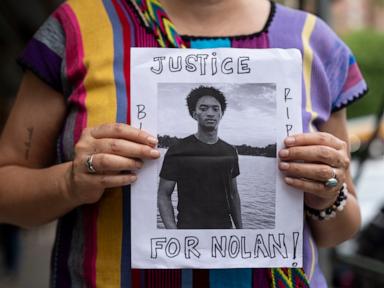
The Mississippi grand jury reviewing the death of Nolan Wells reached a definitive conclusion, but it left a fractured public searching for answers. When Jackson County District Attorney Angel Myers McIlrath announced that the grand jury returned no indictments, it closed a massive chapter of local and national scrutiny, yet it failed to quiet the underlying grief and suspicion. If you've been following the headlines since July 4, when the 18-year-old student-athlete went missing during a boat trip to Horn Island, the lack of criminal charges feels jarring. Let's break down what the grand jury actually reviewed, why they drew this conclusion, and why the controversy isn't fading away.
Inside the Grand Jury Investigation
Grand juries operate behind closed doors, which naturally breeds distrust when high-profile cases collide with racial tensions and social media speculation. To understand how this panel reached its decision, look at the sheer scope of the investigation. Prosecutors didn't just casually review a police file. They issued 132 subpoenas and heard from 43 witnesses through direct testimony, sworn statements, and recorded interviews. They pored over cellphone data, GPS logs, forensic reports, and video footage.
The resulting report directly dismantled several viral narratives that had circulated online for months. Social media users had aggressively pushed theories that Wells was the only Black person on Horn Island, that a violent altercation preceded his death, and that he had dangerous substances in his system. The grand jury found no evidence to support any of those claims. Investigators established that multiple people of color were on the island, that Wells chose to stay behind voluntarily when others took boats back to the mainland, and that it was common practice for visitors to return on vessels they didn't arrive on.
The Autopsy Clash and Unanswered Questions
Despite the grand jury finding no probable cause to charge anyone with a crime, the physical evidence remains a point of bitter contention. The state medical examiner and an independent forensic pathologist hired by the family both classified the cause and manner of Wells' death as "undetermined". Drowning is a diagnosis of exclusion, meaning experts look at what isn't there rather than finding a smoking gun.
Civil rights attorney Ben Crump and the Wells family have repeatedly pointed to bruises and traces of blood found on the back of the teenager's head and body. During press conferences, family members and advocates have asked a blunt question: how did those injuries get there, and why hasn't anyone accounted for them?
Legal experts point out a fundamental misunderstanding of the American legal system here. A grand jury's job is not to write a comprehensive biographical narrative or solve every lingering mystery of a tragedy. Their sole mandate is determining whether sufficient probable cause exists to indict someone for a specific crime. When evidence points toward an unexplained tragedy rather than a provable criminal act, the law ties their hands.
The Fallout of Social Media and Public Pressure
The case became a national flashpoint because it exposed deep wounds regarding race, justice, and accountability in Mississippi. District Attorney McIlrath addressed the community in a lengthy video statement, calling out the intense polarization. She noted that public offices faced harassment, witnesses endured threats, and outside influencers attempted to exploit a family's tragedy for digital chaos. Federal authorities even charged multiple individuals across different states with making death threats against officials and witnesses connected to the case.
When a community is hurting, legal technicalities feel cold. The grand jury's decision means criminal prosecution has hit a brick wall for now, but it doesn't mean the legal road is completely finished. Under Mississippi law, there is no statute of limitations for homicide. If tangible, credible evidence ever surfaces to prove foul play, the case can instantly return to a grand jury. Furthermore, civil courts operate under different rules of evidence and lower burdens of proof than criminal courts, leaving the door open for civil litigation if the family chooses to pursue it.
For now, an Ocean Springs family is left mourning a young man with an outstanding character, while a community tries to heal from a summer of deep division. The legal system has spoken through the voices of 43 witnesses and a sworn grand jury panel, but for anyone looking for absolute closure, the silence left behind is deafening.