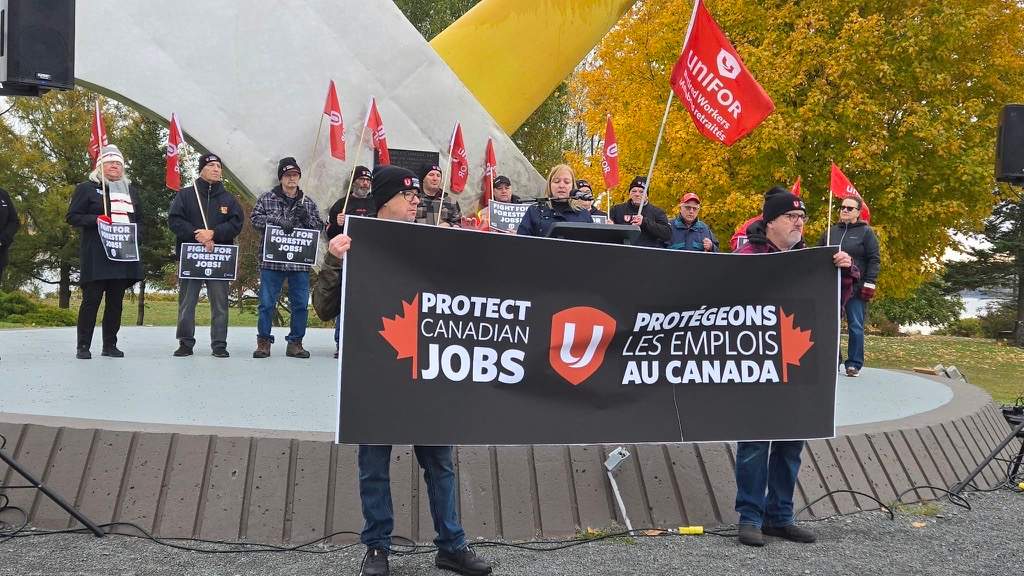
Bailouts feel noble. Saving jobs feels righteous. Marching on legislative halls with union banners makes for great television when a Nackawic mill faces shutdown.
It is also a slow-motion execution of rural forestry. Don't forget to check out our earlier article on this related article.
Whenever a pulp or paper facility teeters on the brink in eastern Canada or across the timber belt, the script is identical. Workers and unions demand government intervention. Politicians promise emergency relief, power subsidies, tax deferrals, or bridge loans. Coverage frames the fight as a moral clash between hardworking people and indifferent markets.
That framing is lazy. Worse, it is economically lethal. To read more about the context of this, Business Insider provides an excellent breakdown.
I have spent years watching industrial operators burn through tens of millions of public and private dollars trying to keep aging, uncompetitive mills breathing on life support. I have seen capital diverted into worn-out digesters, obsolete paper machines, and high-cost fiber supply chains while genuinely viable rural businesses starved for oxygen. When governments step in to rescue a failing mill without fixing the underlying cost structure, they do not save the community. They lock the community inside a burning building and charge extra for the locks.
The Lazy Consensus Around Mill Rescues
The standard playbook assumes a simple equation: mill stays open equals jobs saved, town survives. Mill closes equals ghost town, economic ruin.
That equation confuses a symptom with a cause. A mill does not shut down because workers lack grit or because unions ask for a fair shake. A mill shuts down when its net cash margin turns structurally negative—when the cost of delivered wood fiber, industrial electricity, chemicals, maintenance, and freight exceeds what global buyers will pay for the finished tonnage.
In forestry economics, fiber basket refers to the geographic radius from which a mill sources timber, measured in haul distance and harvesting cost. Marginal cost is the cost of producing one additional ton of pulp, paper, or specialty fiber. When a legacy mill sits on a shrinking or high-cost fiber basket, or runs a high-heat, high-power process that cannot compete with lower-cost global producers or newer, more efficient assets, government subsidies only mask the math.
Public money can buy six months. Sometimes a year. Maybe two if an election cycle lines up nicely.
Then the cash runs out, the global market still clears at the same price, and the same workers face the exact same cliff—except now the town has lost precious time to pivot and the public ledger is lighter by tens of millions.
Asking the Wrong Question About Nackawic
Most coverage around a looming shutdown asks: How can government step in to stop the mill from closing?
That is the wrong question. The right question is: What happens to the regional timber ecosystem and the workforce if capital is trapped in an uncompetitive asset instead of redeployed into higher-value wood use and modern industrial conversion?
People search for answers to predictable questions during every mill crisis:
- Can government subsidies save a struggling mill? Only temporarily, and usually at a steep cost to taxpayers and neighboring operations. Subsidies rarely fix structural feedstock costs or outdated scale.
- Does a mill closure automatically ruin a timber town? No. It creates an acute shock, especially for older workers and local service businesses, but towns that diversify wood processing, value-added manufacturing, and logistics recover far better than towns that cling to a single distressed plant for a decade.
- Are union demands the reason mills shut down? Rarely the sole reason. Labor costs matter on tight margins, yet energy pricing, fiber transport distances, currency shifts, and global oversupply routinely carry heavier weight. Pretending labor is the sole villain is just as dishonest as pretending subsidies are a cure.
The Mechanics of Why Bailouts Backfire
To see why emergency government rescues so often fail, look at how industrial forest products actually trade.
Pulp, paper, and engineered wood products operate in brutal, cyclical commodity markets. Capacity additions in South America, parts of Asia, and the U.S. South have repeatedly reshaped global cost curves. When global supply outpaces demand or when high-cost regions face steep input inflation, the highest-cost mills sit at the top of the cost curve—the ranking of mills from lowest to highest production cost per ton.
When market prices fall below a mill's cash production cost, running the plant loses money on every ton produced.
Imagine a scenario where a provincial or federal government hands a struggling mill a $25 million lifeline to keep lines running through winter. Electricity rates get a temporary break, and a portion of maintenance is deferred. On paper, paychecks keep going out. In reality, every ton shipped out the gate still costs more to make, dry, and haul than the market pays. The subsidy simply transfers losses from the balance sheet onto the taxpayer while delaying tough decisions on wood allocation and mill configuration.
Even worse is the distortion inside the local wood market. A subsidized mill can sometimes bid artificially for fiber or lock up regional harvesting capacity that independent sawmills, pellet plants, or emerging bio-based processors need to survive. Research from forestry economists and institutions like FPInnovations and the USDA Forest Service has long emphasized that regional forest sector resilience depends on balanced utilization across sawtimber, pulpwood, residuals, and emerging bioproducts—not propping up a single bottleneck.
The Downside of My Own Contrarian Stance
Let us be completely honest about the cost of refusing a bailout.
If you tell a community in Nackawic—or any resource town built around a flagship mill—that public money should not simply bankroll continued operations of an unviable plant, you are asking people to absorb immediate pain. Experienced millwrights, operators, tradespeople, and contractors have spent decades mastering complex industrial equipment. A shutdown threatens pensions, household stability, mortgage payments, and local school enrollment.
There is also a real risk in pure market Darwinism. Walk away completely without transitional support, and regions with thin labor markets can suffer long-term scarring. Skilled workers pack up and leave for larger cities or western provinces, taking institutional knowledge with them.
A hard-headed stance against endless mill bailouts is not an argument for cruelty or neglect. It is an argument against throwing good money after bad assets while pretending that is a strategy.
What Actually Works When Shutdown Looms
If unconditioned bailouts are a trap, what should workers, unions, and policymakers actually demand?
1. Tie Every Public Dollar to Hard Restructuring, Never Status Quo
If public funds enter the picture at all, they should fund asset transformation, retraining, or orderly wind-down and site repurposing—not routine operating losses. If a facility has a realistic path to a profitable niche product or lower-cost energy footprint, require binding operational milestones, private co-investment, and clear governance before a dime is released.
2. Audit the Fiber Basket and Logistics Ruthlessly
Before fighting to keep a specific line running, map the real economics of the wood supply. How far is fiber traveling? What are logging and trucking rates? Are harvesting bottlenecks driving up costs? Fixing road access, optimizing haul routes, or realigning stumpage and wood-supply agreements can sometimes unlock real efficiency where a cash handout cannot.
3. Protect the People, Not Just the Smokestack
Unions have massive leverage when they shift from demanding "keep the doors open at any cost" to demanding portable skills transition, wage insurance, relocation support, and early-bridge benefits. A worker with a recognized industrial ticket, safety certifications, and targeted upskilling into modern manufacturing, grid maintenance, or biomass/industrial automation holds real bargaining power. A worker tied to a dying plant holds a shrinking ticket.
4. Push for Industrial Diversification Before the Whistle Blows
Resource towns cannot afford to wait until the week before layoff notices hit to attract secondary wood processors, packaging innovators, or logistics operators. Use regional development agencies to attract businesses that use local wood residuals, regional power, and existing rail or highway corridors—on terms that stand on their own economics.
Stop treating a mill bailout as a victory. A real win is building an industry tough enough to survive without begging for a check every time global prices dip.