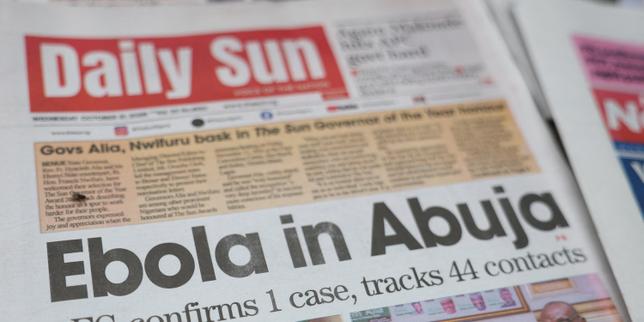
Panic makes good headlines. Nuance does not. When the World Health Organization regional director stepped up to microphones to declare that the arrival of Ebola in Nigeria created a vastly more complex crisis, the global public health establishment nodded along in terrified unison. The narrative was neat, predictable, and fundamentally lazy: densely populated urban centers plus a deadly filovirus equals inevitable apocalypse.
Except that is not what happened.
The lazy consensus treats every outbreak as a monolith, assuming that scale equals catastrophe. It ignores local institutional memory, rapid epidemiological grit, and the hard mechanics of how infectious diseases actually move through modern urban spaces. The alarmism surrounding Nigeria in 2014 missed the defining lesson of that outbreak: administrative speed and aggressive, boots-on-the-ground tracing will always beat parametric panic models.
The Fallacy of the Megacity Panic
The prevailing panic rested on a single, flawed variable: population density. Lagos is a sprawling, hyper-connected economic engine of more than twenty million people. To the global health bureaucracy, dropping a patient infected with Ebola into that environment looked like throwing a match into a dry forest.
The mathematical models painted a grim picture. Thousands of cases. Regional collapse. International isolation.
Those models failed because they treated human networks as passive dominoes rather than active defenders. What the regional directors and remote prognosticators failed to account for was the muscle memory of an existing public health apparatus. Years of battling polio, cholera, and Lassa fever had forced Nigerian health authorities to build localized surveillance networks that were lean, agile, and remarkably cynical about official central directives.
When Patrick Sawyer brought the virus from Liberia into Lagos, he did not walk into a vacuum. He walked into an immediate, aggressive wall of isolation and contact tracing led by Dr. Stella Ameyo Adadevoh and her team at First Consultant Hospital, who literally blocked his exit despite immense pressure. They traded their lives for institutional clarity.
Dismantling the Complexity Myth
Labeling an outbreak "complex" is often a convenient linguistic shield for institutional unpreparedness. The WHO statement framed the geographic spread as an escalation of inherent difficulty. But operational friction is not the same thing as biological impossibility.
Let us look at the mechanics of containment. An outbreak becomes complex when institutional trust is zero and communication channels are broken. In Lagos, the primary challenge was not the intrinsic transmission rate of the virus within a megacity; it was mapping out every secondary contact in a chaotic urban sprawl before symptoms appeared.
The response succeeded not because of sprawling international bureaucratic interventions, but through hyper-local tactical execution:
- Over 18,500 contacts were monitored.
- Emergency Operations Centers were stood up within hours, not weeks.
- Mobile phone location data and traditional tracking were merged on the fly to hunt down missing chains of transmission.
The crisis was solved by refusing to accept the fatalistic parameters handed down by global experts who had never managed a hot zone in an African urban center.
The Cost of Alarmism
When international bodies over-project terror, the collateral damage is immediate. Trade freezes. Travel bans isolate economies that desperately need liquidity during a health crisis. Medical supply chains stutter because foreign staff evacuate at the first sign of a scary headline.
We saw it then, and we see it in every modern health scare: the cure prescribed by distant experts often inflicts more economic and social trauma than the pathogen itself. By framing Nigeria’s situation as an unmanageable vortex of complexity, the international response risked cutting off the very financial and logistical lifelines the local responders were utilizing with surgical precision.
Ebola is terrifying because it kills fast, but it is also biologically fragile in terms of transmission routes. It requires direct contact with bodily fluids. It does not travel on the wind. It does not outsmart an army of thousands of contact tracers checking door-to-door every single morning.
What Real Preparedness Looks Like
Stop waiting for international rescue missions to save local populations from infectious outbreaks. True resilience is decentralized, blunt, and fiercely local.
The next time an agency warns that a localized outbreak has tipped into an unprecedented global nightmare, check the incentives. Fear secures funding. Panic unlocks emergency budgets. But effective containment is boring, grueling work done by local clinicians who know their neighborhoods better than any desk-bound epidemiologist in Geneva.
The lesson of Lagos was never that Africa was fragile. The lesson was that the global health establishment constantly underestimates the capacity of local systems to out-think, out-maneuver, and shut down a crisis while the experts are still busy holding press conferences about how complicated it is.