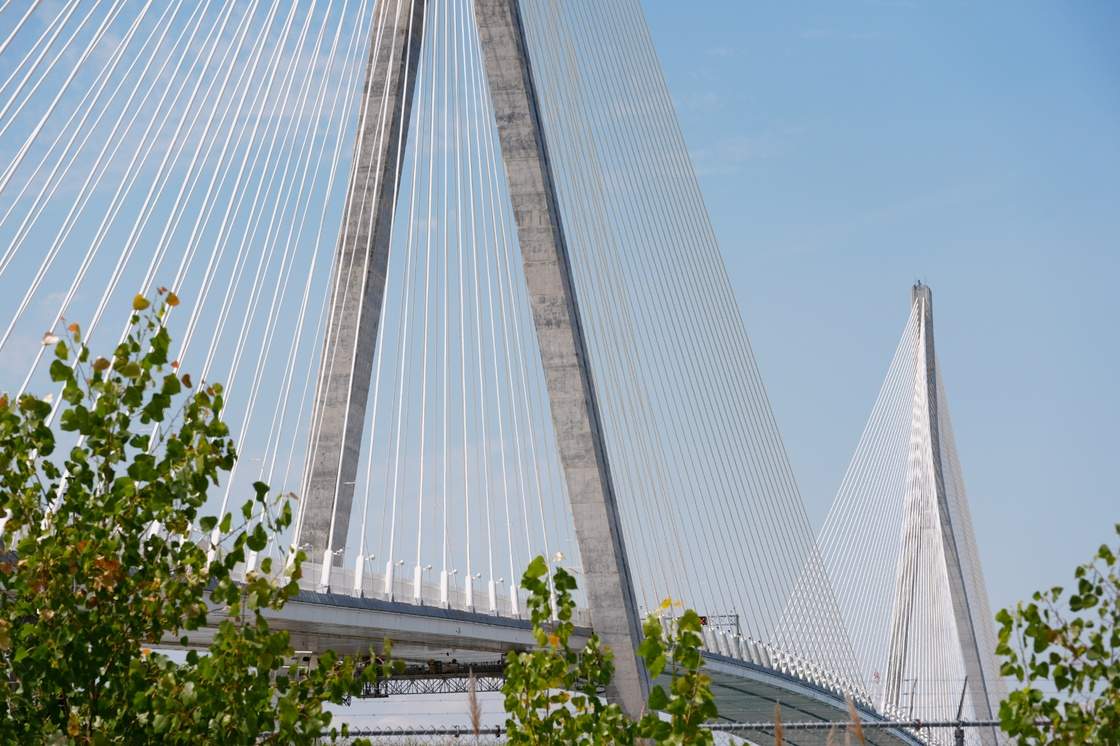
Everyone is popping champagne because the Gordie Howe International Bridge is finally letting cars and trucks pass after months of administrative gridlock and construction hand-wringing. The media is running the standard victory lap. They talk about a monument to engineering, a triumph of cross-border cooperation, and a frictionless artery for the automotive supply chain.
They are dead wrong.
I have spent two decades watching supply chain executives wet themselves over shiny new infrastructure projects while ignoring the rot at the operational core. A six-lane cable-stayed bridge spanning the Detroit River will not fix a broken customs clearance model. It will merely accelerate the rate at which trucks sit in the wrong parking lot.
The Lazy Consensus Of Asphalt Worship
The mainstream narrative goes like this: bottleneck equals lack of pavement. If Windsor-Detroit traffic crawls, you build a bigger concrete pipe. The Ambassador Bridge was a private bottleneck, a century-old choke point controlled by a single family extracting toll rents while modern commerce suffered. Enter the public mega-project, funded by tax dollars and public-private partnerships, promising a glorious era of uninhibited flow.
This is magical thinking disguised as civil engineering.
A bridge is a pipe. If the valve at the end of the pipe is rusted shut, pouring a wider stream of water into it does not create throughput. It creates pressure. The fundamental bottleneck in the Windsor-Detroit corridor has never been the physical capacity of the span. It is the regulatory friction imposed by two federal governments that treat every commercial manifest like a potential state secret.
Imagine a scenario where you double the width of a highway leading directly into a toll booth staffed by a blindfolded clerk who checks each bill of lading by hand. That is the Gordie Howe Bridge on day one. You have spent billions of dollars on steel and cables to move trucks from a 1929 bottleneck to a 2026 administrative bottleneck.
Anatomy Of A Paper Tiger
Let us look at the actual mechanics of cross-border freight movement. The bottleneck in international trade between Ontario and Michigan is not the number of lanes on the Detroit River. It is the handoff between the Canada Border Services Agency and United States Customs and Border Protection.
When a Class 8 truck rolls across the border, the delay happens inside the primary and secondary inspection compounds. It happens when paperwork mismatches, agricultural holds, or random compliance checks trigger a physical offload. Adding a new bridge does not hire more customs officers. It does not rewrite the North American trade compliance protocols. It simply distributes the existing administrative drag across a shinier piece of real estate.
I have watched logistics directors blow millions of dollars on route optimization software and multi-modal facility upgrades while ignoring the bureaucratic choke points staring them in the face. They chase vanity metrics like transit time across a specific bridge segment, completely missing the total dwell time from factory floor to distribution center.
The dirty secret of the new bridge is that the Ambassador Bridge was already expanding its own plaza and cargo processing capacity concurrently. The market was solving the problem through private capital and targeted lane optimization. Instead of letting capital discipline work, politicians hijacked the narrative to build a taxpayer-backed monument that solves yesterday's problem with tomorrow's debt.
The True Cost Of Public Megaprojects
Let us talk about the economics. Publicly funded mega-projects have a predictable lifecycle. They start with a lowball budget, hit unforeseen bureaucratic delays, miss their opening dates by quarters or years, and finish billions over projections. The Gordie Howe project is no exception.
When a project goes 50% over budget, that capital does not materialize out of thin air. It is diverted from regional road maintenance, local rail integration, and actual technological upgrades that could automate customs clearing. Every dollar sunk into concrete monuments is a dollar stolen from digital infrastructure.
We do not need more concrete over the Detroit River. We need automated pre-clearance corridors, biometric driver verification, and blockchain-backed bills of lading that clear customs while the truck is still seventy miles out on the 401 or I-94.
Instead, we got a monument for ribbon-cutters.
What Actually Moves The Needle
If you are running supply chain operations through the Great Lakes corridor, stop celebrating the new bridge. Start changing how you prepare your manifests.
- Audit your customs brokers: If your broker is still relying on manual data entry and email attachments for cross-border filings, the new bridge will only help them lose your paperwork faster.
- Invest in predictive compliance: Use machine learning models to scan your bills of lading for anomalies before the truck leaves the dock. The border agencies are using automated risk-scoring algorithms; if your data looks messy to a computer, you are going to secondary inspection regardless of how many lanes the bridge has.
- Diversify your modal mix: Rail crossings remain chronically underutilized for certain cross-border component flows because logistics managers are addicted to the flexibility of the truck. If you want true resilience, stop routing everything through highway choke points altogether.
The Gordie Howe Bridge is a magnificent piece of architecture. It is an engineering marvel. It is also an expensive distraction from the real work of modernizing North American trade.
Stop looking at the skyline. Look at your compliance queue.