The rain in London doesn’t fall; it seeps. It finds the gaps in the stone of Whitehall and the collars of the men hurrying between the heavy oak doors of the Foreign Office. Inside those rooms, the air is thick with a specific kind of British anxiety. It is the smell of expensive wool meeting damp air and the frantic scratching of pens trying to map out a future that feels increasingly like a moving target.
At the center of this storm stands a King. Not the fairy-tale version, but a man who has spent seven decades preparing for a role that is part diplomat, part symbol, and—increasingly—part bridge-builder. Across the ocean, the lights of Mar-a-Lago burn with a different kind of intensity. There, the rules of old-world decorum are often treated as mere suggestions. This is the stage for a performance that could decide the economic heartbeat of a nation for the next generation.
The narrative often fed to the public is one of "The Midas Touch." We are told that King Charles III possesses a unique, soft-power alchemy that can turn a volatile American president into a steadfast British ally. But as the cameras flash and the champagne pours, a quieter, more desperate question echoes through the pubs of northern England and the boardrooms of the City: what is actually in it for us?
The Architecture of a Handshake
Consider the mechanics of a state visit. It is a carefully choreographed dance of lineage and ego. To the outside world, it looks like a sequence of hats, horses, and heraldry. To the civil servants in the basement of Number 10, it is a high-stakes gamble.
They are betting that the prestige of a royal welcome can insulate the United Kingdom from the "America First" winds howling across the Atlantic. It is a gamble based on the idea that personal chemistry can override protectionist policy.
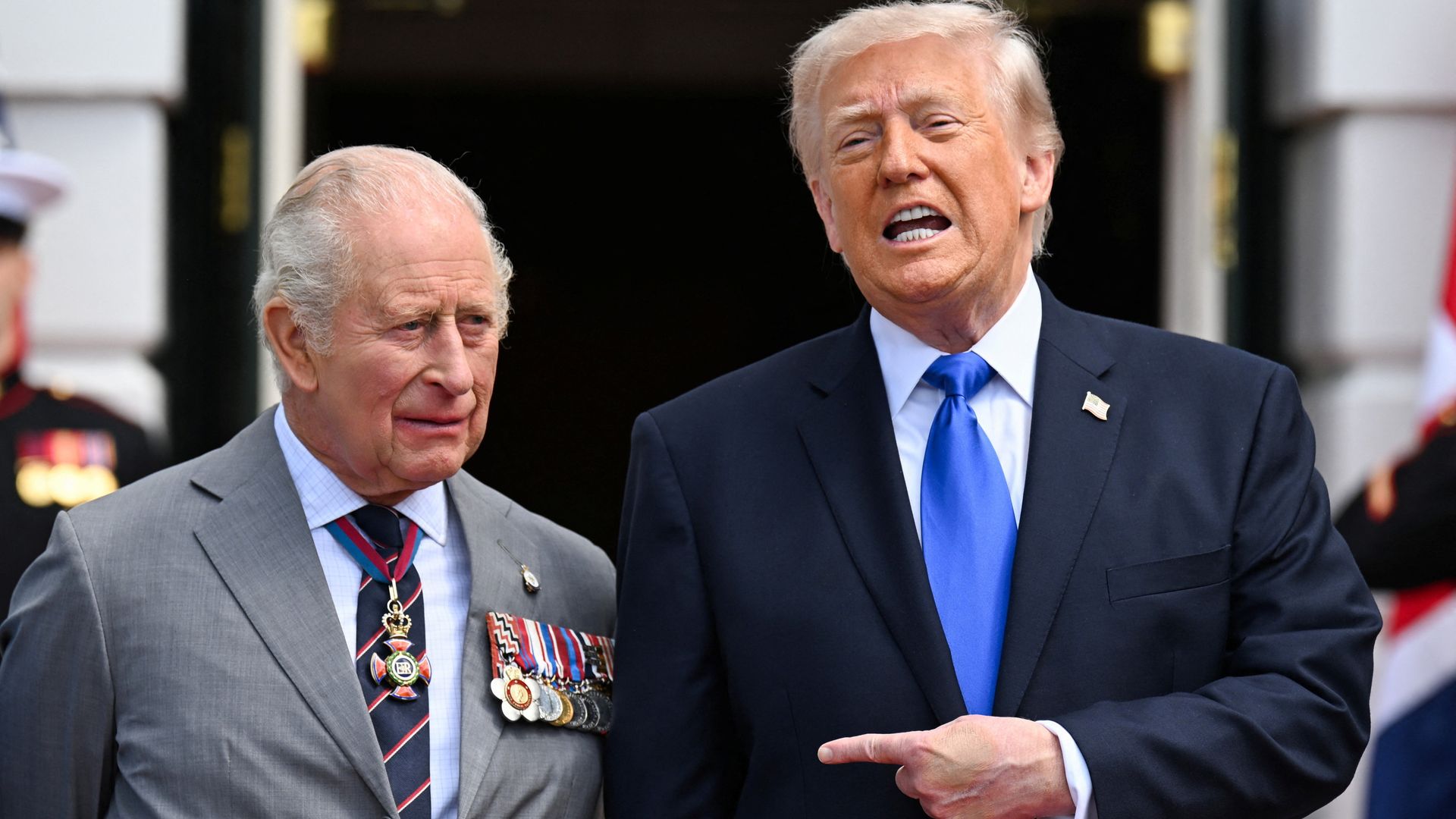
When the King meets Donald Trump, it isn't just two men shaking hands. It is a collision of two vastly different philosophies of power. One is rooted in the deep time of a thousand-year monarchy; the other is rooted in the immediate, transactional reality of the deal. The British strategy is to wrap the deal in the velvet of the monarchy, hoping the President finds the experience so intoxicating that he forgets to mention steel tariffs or agricultural standards.
But velvet is thin protection against a trade war.
The Invisible Stakes at the Kitchen Table
While the headlines focus on the gilded interiors of Buckingham Palace, the real story lives in a small manufacturing firm in the West Midlands.
Let’s look at a hypothetical business owner, someone we’ll call Sarah. Sarah runs a precision engineering firm that exports components to South Carolina. For her, the "Midas Touch" isn't a metaphor. It’s the difference between expanding her workshop and laying off three apprentices. If the relationship between the King and the President fails to yield a concrete trade agreement, Sarah faces a 25% tariff that makes her product irrelevant in the American market.
She doesn't care about the color of the King’s tie or the vintage of the wine served at the banquet. She cares about the fine print of a deal that hasn't happened yet.
The tragedy of the current British position is that the soft power of the monarchy is a one-way street. The King can offer prestige, history, and a seat at the world's most exclusive table. In return, he receives... what? A smile? A favorable post on social media? These are not currencies that pay the bills in a post-Brexit economy.
The Myth of the Special Relationship
We have been told for decades that the UK and the US share a "Special Relationship." It is a phrase used so often it has become a hollow incantation, a verbal charm intended to ward off the reality of being a medium-sized island off the coast of Europe.
In reality, the relationship is often one of a desperate suitor and a distracted giant.
The King's role is to maintain the illusion that the suitor is actually an equal partner. He does this with remarkable grace. He talks of shared values, of the environment, of the deep ties of blood and history. It is a masterful performance. But beneath the surface, the American machine moves according to its own gravity. Washington does not grant trade concessions out of a sense of nostalgia for the British Empire. It grants them when it is in the cold, hard interest of the American voter.
The tension lies in the fact that the King is prohibited from talking about the very things that matter most. He cannot lobby for lower tariffs on Scotch whisky. He cannot negotiate the intricacies of digital services taxes. He is a salesman who is forbidden from mentioning the price of the goods.
The Ghost in the Room
There is a third character in this narrative, one who doesn't appear in the photographs but dominates the conversation: the British public.
There is a growing sense of fatigue. People are tired of hearing that a successful state visit is a "victory" when their energy bills remain high and their local high streets are boarded up. The spectacle of royalty can feel like a distraction from a fundamental lack of leverage.
We see the King hosting world leaders and we want to believe that he is protecting us. We want to believe that the magic of the crown still holds sway in a world of algorithms and populism. It is a comforting thought. It suggests that our history still buys us a seat at the top table, regardless of our GDP or our military reach.
But the world is increasingly uninterested in magic.
The Cost of the Gilded Cage
There is a psychological toll to this kind of diplomacy. The UK finds itself in a position where it must constantly audition for the role of "Best Friend." This requires a level of national ego-stroking that can feel debasing.
We watch as our leaders—ceremonial and political—bend over backward to accommodate the whims of the American administration. We see the King, a man of deep convictions regarding the climate, forced to navigate a relationship with a President who has historically viewed such concerns with skepticism.
This is the invisible cost of the Midas Touch. To keep the relationship "special," the UK must often suppress its own voice. It must wait in the hallway while the big powers decide the fate of the global economy, hoping that its loyal service will be rewarded with a few crumbs from the table.
The Reality of the Deal
Strip away the pageantry and you are left with a stark reality.
The United Kingdom is searching for an anchor in a world that is rapidly decoupling. The King is that anchor's most visible chain. He provides a sense of continuity and stability that no politician can match. But a chain is only as strong as the ground it’s hooked into.
Currently, the ground in Washington is shifting sand. Policies change with the wind. Treaties are discarded. Alliances are questioned. In such an environment, the King’s influence is ornamental. He can set the mood, but he cannot write the law.
Consider the 2024-2025 trade discussions. Despite the warmth of the royal reception, the "comprehensive" trade deal that was promised remains a ghost. Instead, we have a series of "Memorandums of Understanding" with individual states like Indiana or South Carolina. These are fine as far as they go, but they are a far cry from the tectonic shift the British economy needs.
It is like being invited to the most prestigious party in the world, only to find out you’re the entertainment, not a guest.
The Quiet Fear
If you sit in a café in a town like Sunderland or Blackpool and talk to people about the King’s visit to the US, you don’t hear much talk of "soft power." You hear about the cost of living. You hear about the NHS.
There is a quiet, gnawing fear that the country’s leadership is playing a game of 18th-century chess while the rest of the world is playing 21st-century poker. The King is a master of the chess board. He moves with precision and dignity. But the poker players across the Atlantic are playing for the whole pot, and they don't care about the rules of the game.
The British public is beginning to sense this mismatch. They see the Midas Touch for what it is: a desperate attempt to find value in a currency that the rest of the world is slowly devaluing.
The Weight of the Crown
The King knows this.
You can see it in the fleeting moments when the mask slips—the weary set of the shoulders, the way he looks out of a window when he thinks the cameras are off. He carries the weight of a nation that is trying to redefine itself in the wake of a massive identity crisis. He is the guardian of the brand, but the brand is under siege.
He must be the face of a Britain that is "Global," yet he is the head of a nation that has never felt more isolated. He must project strength while the pound fluctuates. He must project unity while the union itself feels frayed at the edges.
It is a lonely task.
The Final Exchange
In the end, the success of the King’s diplomacy won’t be measured in the warmth of a handshake or the length of a standing ovation. It will be measured in the silence of a shipping container moving through the Port of Liverpool without being stopped by a new tax.
It will be measured in the confidence of a young entrepreneur in East London who feels that the American market is an opportunity, not a threat.
The "Midas Touch" is a beautiful story we tell ourselves to feel better about our place in the world. It suggests that we have a secret weapon, a touch of class that no one else can replicate. But gold is a heavy metal. It can be a treasure, or it can be a weight that pulls you under.
As the King returns from his travels and the flags are put away, the rain continues to fall on Whitehall. The meetings will resume. The pens will scratch. And the country will wait to see if the gold is real, or if we are merely holding onto a handful of painted lead.
The Atlantic is wide, and the water is very, very cold.