The Corridor of Waiting
Heavy rain beats against the thick glass of the high-security ward, blurring the distant lights of Islamabad into smudged watercolor streaks. Inside, the air smells of antiseptic, cold steel, and the metallic tang of institutional anxiety.
A digital monitor hums a steady, monotonous rhythm. Every heartbeat recorded on that screen carries the weight of a nation holding its breath.
Outside these sterile walls, millions wonder what happens when a leader who once commanded the streets is reduced to a medical chart and a guarded bed.
Consider the silence that settles over a courtroom when an order is signed. It is not a peaceful silence. It is the quiet before a tremor. The Supreme Court of Pakistan did not issue a routine bureaucratic directive when it commanded that Imran Khan be moved from his cell to a hospital for urgent medical examinations. It cracked open a door that had been welded shut by months of political gravity, legal maneuvers, and high-stakes standoff.
Power in Pakistan has always been a volatile chemistry. It is measured in rallies filling entire avenues, in speeches delivered from container trucks, and in the sharp, sudden clatter of detention orders. But tonight, power is measured in milligrams, blood pressure readings, and the anxious calculations of guards standing watch outside a hospital room.
The Anatomy of an Imprisonment
To understand the urgency of a medical transfer, one must first look at the architecture of modern detention. A prison cell is never just four concrete walls. It is a psychological pressure cooker.
Imran Khan spent months isolated from the roaring crowds that once defined his political identity. For a man whose entire career was built on motion—campaigning across provinces, inciting massive demonstrations, rallying supporters through sheer vocal cadence—confinement is a slow corrosion.
Let us be entirely transparent about the facts here. The former prime minister faced a flurry of legal challenges, disqualifications, and convictions following his ouster in 2022. The state apparatus moved systematically to neutralize his political momentum. Yet, physical bodies do not bow to political decrees indefinitely.
When reports began to surface regarding his declining health, the friction between the judiciary and the executive branches intensified. Whispers turned into formal petitions. Lawyers argued frantically in high courts. Supporters gathered in knots across cities, their faces etched with a familiar mixture of defiance and dread.
A courtroom directive for medical evaluation is rarely just about medicine. It is an admission. It acknowledges that the health of a high-profile prisoner is no longer merely a private matter or a prison administration detail. It is a national flashpoint. If something happens to a figure of such immense gravity behind bars, the shockwaves tear through the fragile stability of the country.
The Weight of a Nation in a Hospital Gown
Imagine standing in that hospital corridor.
The floor is polished to a blinding sheen, reflecting the harsh fluorescent tubes overhead. Armed guards stand at parade rest every ten paces, their expressions unreadable beneath dark visors. They are not just guarding a patient; they are guarding a symbol. And symbols are notoriously difficult to contain.
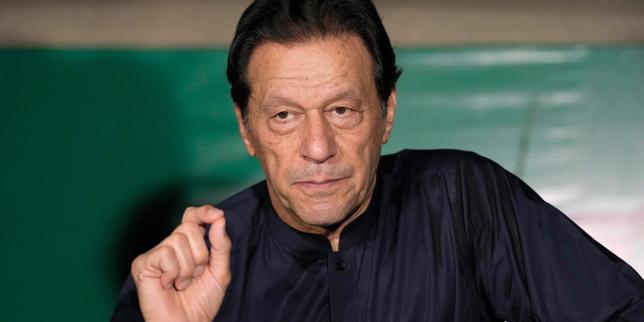
In moments like these, politics strips away its grand rhetoric of manifestos, economic reforms, and constitutional theory. It reduces itself to the fragile biology of a human being. Imran Khan, stripped of his former office, his party insignia, and his freedom, lies beneath a white hospital sheet.
His story is a study in political polarization. To his fervent loyalists, he is a martyr of democracy, a solitary figure standing against an entrenched establishment that refuses to let go of the steering wheel. To his critics and opponents, he is a populist who stretched the country's institutions to their breaking point, reaping the harvest of the very legal systems he now challenges.
Both narratives can exist simultaneously, swirling in the charged atmosphere of the hospital wing. But tonight, ideology takes a backseat to diagnostics. Doctors examine blood counts, check cardiovascular stability, and assess the toll of solitary confinement. Every stethoscope placement is scrutinized by the public eye. Every medical bulletin is parsed by analysts looking for hidden signs of political shifts.
The Threshold of the Unknown
History teaches us a harsh lesson about political detentions. They rarely resolve the tensions that created them; instead, they freeze those tensions in amber, amplifying their emotional resonance.
When a leader is hospitalized under armed guard, the state finds itself in a paradoxical trap. To release him is to risk a resurgence of uncontainable street pressure. To keep him locked away under questionable health conditions is to risk turning him into an enduring symbol of martyrdom that no prison wall can contain.
The medical exam ordered by the Supreme Court is a momentary pause in a much longer, grinding conflict. The doctors will finish their tests. The charts will be filed. The legal teams will return to their briefs, armed with new medical affidavits to file before dawn breaks over the capital.
Inside the room, the monitor continues its steady, rhythmic beep. Outside, the rain refuses to let up, washing over the gates, the streets, and the endless expanse of a country waiting to see what morning will bring.