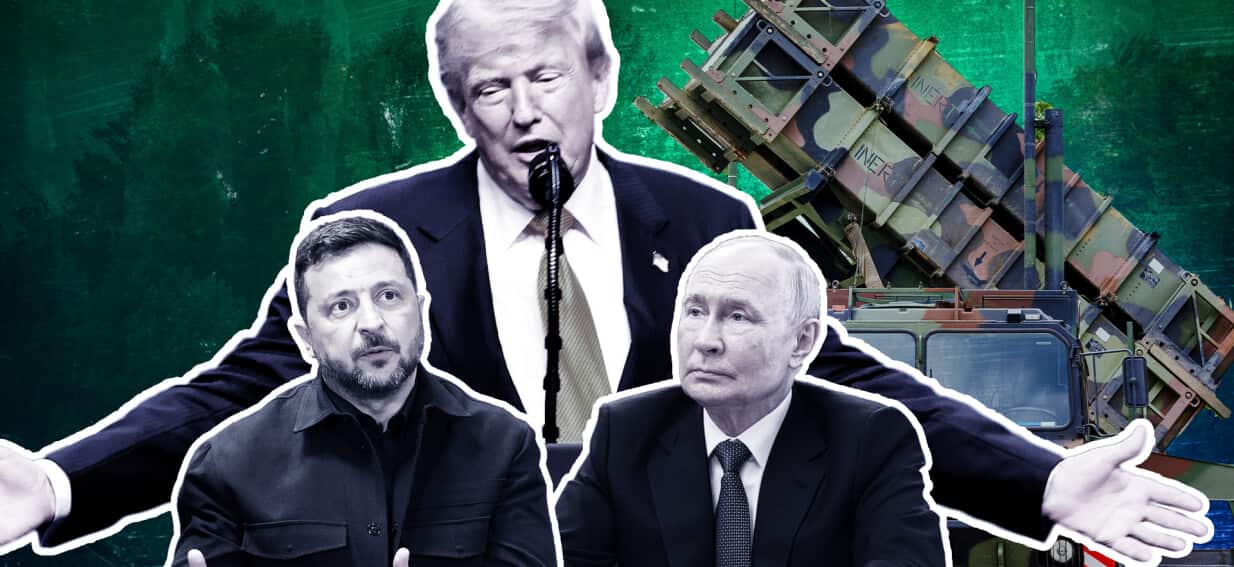
The air inside the arena is always the same. It smells of stale popcorn, ozone from the massive lighting rigs, and the distinct, metallic tang of anticipation. Thousands of people are packed shoulder-to-shoulder, a sea of bright red caps and hand-painted signs. On stage, Donald Trump steps up to the microphone. He glances at the teleprompter, shifts his weight, and leans in.
But lately, the script has changed.
If you listened closely to his rallies during his third bid for the White House, you noticed a new word creeping into the lexicon with metronomic regularity. It was no longer just about "fake news," "the deep state," or "border security." A older, heavier word began to anchor his speeches.
Communism.
To anyone who grew up after the Berlin Wall fell, the word feels like a museum piece. It evokes black-and-white newsreels of Nikita Khrushchev banging his shoe on a table or duck-and-cover drills in elementary school basements. Yet, there it was, repurposed for the smartphone era. The question is not just why he started saying it, but what happens to a political culture when an old ghost is summoned back to the stage.
The Evolution of an Enemy
Political rhetoric relies on a simple human truth: we understand ourselves best by defining who we are not. Every great political movement needs an antagonist, a shadow against which its own light can shine more brightly.
For years, that shadow was "globalism" or "the establishment." Those terms worked well enough, but they lacked a certain emotional gut-punch. They were abstract. They sounded like topics you would debate in a graduate seminar, not threats that would make a voter lose sleep at night.
Consider the mechanics of a political rally. The goal is not intellectual persuasion; it is visceral connection. When Trump began labeling his modern political opponents—people who are, by any traditional definition, center-left capitalists—as "communists" and "marxists," he was tapping into a deeply rooted American muscle memory.
It is a brilliant bit of linguistic recycling. By shifting the label from "liberal" to "communist," the stakes of the election are instantly elevated from a policy disagreement over tax brackets to an existential battle for the soul of Western civilization. It transforms a standard political campaign into a holy war.
The Memory Economy
To understand why this works, you have to look at who is sitting in those arena seats.
Picture a voter named Joe. Joe is sixty-two years old. He remembers the late 1970s and the 1980s. He remembers the tension of the Cold War, the Olympic hockey games that felt like actual warfare, and the genuine, underlying fear that a misunderstanding in the Kremlin could end the world before dinner. For Joe’s generation, "communism" is not a textbook definition about the state ownership of the means of production. It is a feeling. It is the memory of an enemy that was absolute, godless, and completely antithetical to the American dream.
When that word is deployed today, it bypasses the logical brain. It does not matter that the modern Democratic Party platform bears no resemblance to the economic policies of the Soviet Union. The word acts as a psychological shortcut. It triggers the old Cold War alarm bells, instantly transferring forty years of historical anxiety onto contemporary political rivals.
But there is a twist. The word is also being repackaged for a younger audience that has no memory of the Soviet Union at all. For them, the term is detached from history entirely. It becomes a catch-all bucket for everything they dislike about modern culture—corporate diversity initiatives, campus activism, and government mandates. It ceases to be an economic system and becomes a synonym for "tyranny by bureaucracy."
The Danger of Overinflated Currency
Language obeys the laws of economics. When you print too much money, the currency loses its value. When you use the ultimate political smear to describe everyday political opposition, the word itself begins to hollow out.
If a city councilman proposing a bike lane is a communist, and a president proposing a student loan forgiveness program is a communist, then what do we call actual authoritarian regimes? The specificity of language matters because language is the only tool we have to diagnose the health of our democracy.
When we lose the ability to distinguish between a social democrat and a totalitarian dictator, we lose the ability to navigate reality. We break the compass.
The real problem lies in the psychological fallout. When a political movement convinces its followers that their opponents are not just wrong, but are literal agents of a destructive, historical ideology, compromise becomes impossible. You can negotiate with someone who wants a different tax rate. You cannot negotiate with a "marxist destroyer of America." The conversation stops. The gridlock hardens into something much more dangerous: a total refusal to see the opposing side as legitimate participants in the democratic process.
The View from the Stage
The lights on the stage are blinding, making it impossible for the speaker to see past the first few rows. But you don't need to see the faces to know the words are hitting their mark. You can hear it in the roar that ripples through the crowd every time the syllable lands.
It is the sound of an audience recognizing a familiar chord. The strategy is not an accident, nor is it a temporary fixation. It is a calculated recognition that fear is the most efficient fuel in American politics, and sometimes, the oldest fuel burns the brightest.
The speech draws to a close, the music swells, and the crowd begins to filter out into the cool night air of the parking lot. They carry their flags, their signs, and a renewed sense of urgency. The old ghost has done its job once again, leaving behind an electorate that is a little more divided, a little more certain of its own righteousness, and entirely unequipped to talk to one another.