The air inside a grand jury room is thick with a very specific kind of silence. It is the sound of ordinary citizens—teachers, mechanics, retirees—plucked from their daily routines to sit in a windowless room and decide whether the state has enough evidence to ruin someone’s life. They listen to hours of dry statutes, nodding along while trying to keep their eyes from glazing over.
But sometimes, what those citizens don't see matters far more than what they do.
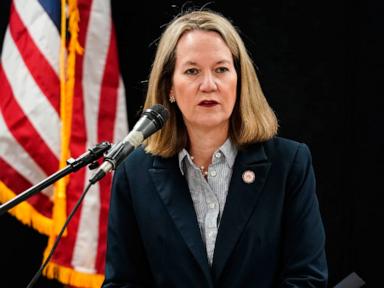
On a Thursday morning in Phoenix, the Arizona Supreme Court handed down a decision that felt less like a standard legal ruling and more like a systemic reset button. The state's highest court flatly rejected an appeal by Democratic Attorney General Kris Mayes. She had fought desperately to keep her high-stakes, 18-defendant conspiracy case moving forward through the trial courts. Instead, the justices told her she had to go back to the very beginning. Back to that windowless room. Back to a brand-new group of everyday Arizonans.
The case itself reads like a political thriller, centering on the infamous "fake electors" who signed a document falsely claiming Donald Trump won the state in 2020. But the reason the prosecution just collapsed like a house of cards isn't a matter of political grandstanding. It comes down to a dusty, nineteenth-century law that a group of prosecutors forgot to show the grand jury.
The Weight of a 10,457-Vote Margin
To understand the emotional exhaustion hanging over the Phoenix courthouse, you have to look back to the winter of 2020. Joe Biden won Arizona by a razor-thin margin of 10,457 votes. In a state of over seven million people, that is a rounding error. It is a packed high school football stadium.
Imagine being one of the 11 local Republican activists who gathered in a conference room that December. In their minds, the election was a cloud of suspicion, an unraveling fabric of trust. They believed they were standard-bearers, a backup plan. They signed a certificate claiming they were the true, lawful electors for the state. They argued that if a court suddenly overturned the results before January 6, their paperwork needed to be ready and waiting in Washington.
To the state, however, those signatures looked like forgery, fraud, and a conspiracy to subvert the American experiment.
When Attorney General Kris Mayes brought the hammer down with indictments in April 2024, it felt like a defining moment of legal reckoning. The state was drawing a hard line in the sand. But indicting political heavyweights like former Chief of Staff Mark Meadows and former New York City Mayor Rudy Giuliani is one thing; dragging them through a shifting legal landscape is another.
Then the world changed.
By late 2024, similar prosecutions in Michigan and Georgia began fracturing. A federal case spearheaded by a special prosecutor evaporated into thin air after Trump secured his second presidential victory. Suddenly, Arizona found itself standing in a shrinking circle, one of the final three states still trying to hold the line alongside Nevada and Wisconsin.
The Hidden Text from 1887
Lawyers often joke that a prosecutor can convince a grand jury to indict a ham sandwich. The threshold of proof is low, the defense isn't in the room to talk back, and the state holds all the cards. But there is a catch. The prosecution has a strict obligation to be fair. They cannot hide the legal basis upon which the targets of the investigation base their defense.
That is where the wheels came off for Mayes' team.
The defendants argued that their actions were protected by the Electoral Count Act of 1887. It is a dense, archaic piece of legislation passed in the wake of the Reconstruction era, designed to handle chaotic, contested election returns. Before Congress finally amended the law in 2022 to clarify that a state can only submit a single slate of electors signed by the governor, the old text was notoriously ambiguous.
The defense lawyers made a simple, devastating point to a lower court judge: Our clients believed the law allowed for multiple slates of electors to be submitted if an election was actively disputed. Why didn't you show the grand jury the text of that law?
The judge agreed. The grand jurors had been left in the dark. The indictment was tainted.
Mayes tried to bypass the setback, appealing all the way to the state Supreme Court to avoid the humiliation and logistical nightmare of starting over.
Denied.
Now, the case has drifted for over a year without a single inch of progress at the trial court level. It has been slowed to a crawl by a dozen dismissal requests and the chaotic recusal of the original judge, who stepped aside after an internal email exposed his personal political biases.
The Promise of the Redo
"In my mind, the whole thing is meritless," remarked Mark L. Williams, an attorney representing Rudy Giuliani, shortly after the Supreme Court's ruling dropped. He questioned whether the attorney general would actually find the resolve to drag the massive, unwieldy case back to square one.
But Mayes isn't backing down. Her office quietly but firmly vowed to present the entire case to a grand jury all over again.
Think about what that actually means. It means calling the witnesses back. Reassembling the mountains of digital evidence, the text messages, the signed certificates. It means asking another group of ordinary citizens to walk into that windowless room, sit under fluorescent lights, and look at the ghost slates of Maricopa County.
Justice is rarely a swift, cinematic strike. More often, it is a grinding, agonizing process of paperwork, procedural errors, and long periods of absolute stillness. The state is betting that the truth is worth the rewind. The defense is betting that the clock, and the political tides, will eventually run out.
Consider what happens next: a prosecutor will stand before a new room of citizens. This time, they will hold up the text of an 1887 law. They will read the fine print. And a group of ordinary people will have to look at the line where partisan loyalty ends and criminal forgery begins, deciding for themselves where Arizona’s history truly went wrong.


:max_bytes(150000):strip_icc()/how-many-types-of-dwarfism-are-there-2860725-v1-8dae2c531b4b47d9ae36ae404d3308a0.png)