Saltwater eats everything. It blisters paint, seizes engine blocks, and clouds the thick glass of bridge windows until the horizon looks like a smear of gray watercolor. Out on the water, nothing stays clean for long. Yet, the vessels that slip quietly from port carry something far heavier than rust or barnacles. They carry politics. They carry ambition. They carry the fragile, terrifying weight of modern sovereignty.
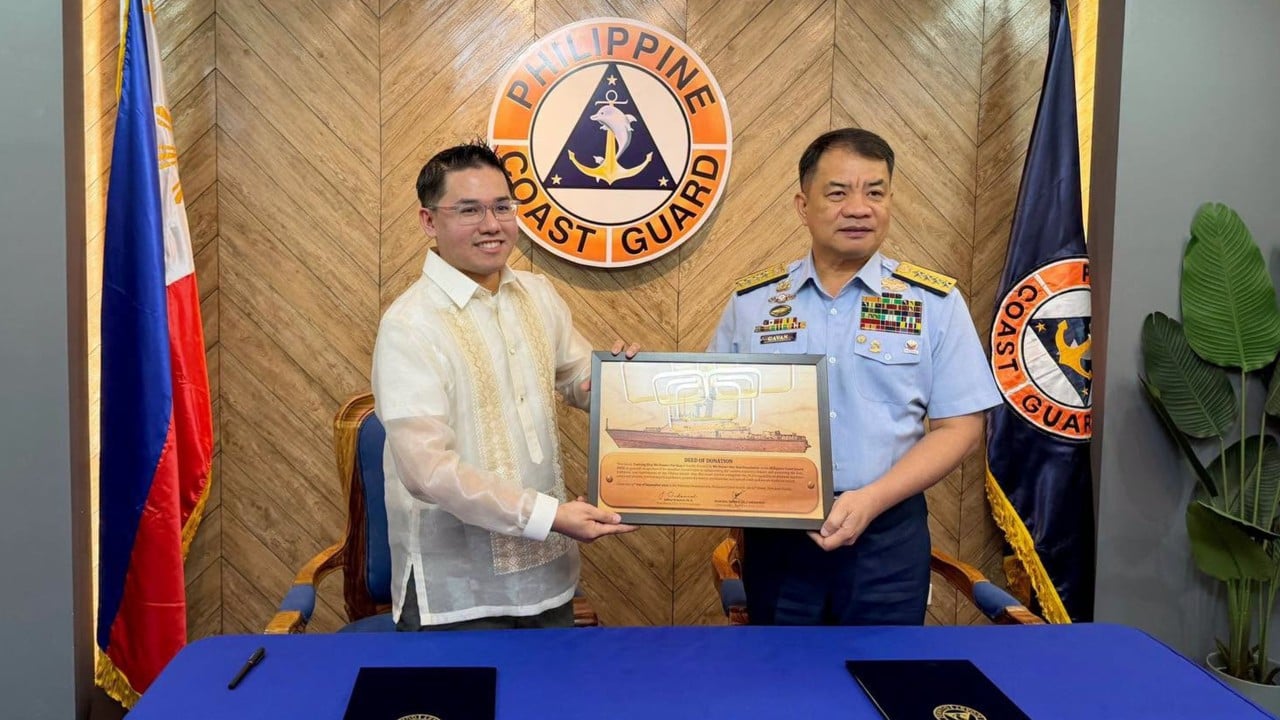
Consider a steel hull. To an engineer, it is a calculation of displacement, tensile strength, and fuel burn. To a diplomat, it is a moving embassy. And when that hull changes hands—passing silently from the docks of Taiwan across the volatile swells of the South China Sea toward the shores of the Philippines—it becomes a lightning rod. For a different perspective, check out: this related article.
A double outcry.
That is what the transfer sparked. On one side, a furious roar from a continental superpower that views every inch of self-governed water as an affront. On the other side, a tangled web of domestic suspicion, strategic anxiety, and geopolitical tightrope walking. But beneath the diplomatic cables and the furious statements broadcast from capital cities lies a much quieter, more human story. It is the story of fishermen whose wooden boats are dwarfed by steel giants. It is the story of sailors standing watch in the damp chill of dawn, wondering whose line they are crossing and who will answer if things go wrong. Further insight regarding this has been shared by USA Today.
To understand why a few secondhand coast guard vessels could rattle the nerves of three governments, you have to look past the maps. You have to look at the gray zone.
The Architecture of Uncertainty
War used to have clear signposts. Declarations were signed. Uniforms matched. Borders were carved with artillery. But the modern maritime frontier does not work like that. It is fought in shades of gray.
In these contested waters, navies are often too loud. Warships invite escalation. They bristle with missiles and radar arrays, making every routine patrol feel like a prelude to catastrophe. That is why coast guard vessels have become the primary instruments of geopolitical leverage. They are painted white instead of navy gray. They fly law enforcement flags instead of battle ensigns. They operate in the legal twilight between domestic policing and international confrontation.
When Taiwan, operating under its own precarious geopolitical reality, moves to transfer or share maritime assets—or even cooperate closer with regional neighbors like the Philippines—the implications ripple outward like shockwaves.
Picture a hypothetical captain standing on the bridge of a patrol cutter. Let us call him Mateo. Mateo has spent thirty years smelling diesel exhaust and watching the horizon for illegal trawlers that strip the reefs bare. To Mateo, a boat is a tool for survival. It protects the fishing grounds that feed his country's coastal villages. It stops smugglers. It rescues sailors when typhoons chew through the Luzon Strait.
To Mateo, the origin of the steel matters less than its capability. If a vessel can withstand a Class Four swell, if its radar can pierce a squall, if it gives his crew a fighting chance against vastly larger maritime militia ships that loom over their fishing banks like floating fortresses, he wants it.
Yet, Mateo does not set foreign policy. Foreign policy is written by men and women sitting in air-conditioned conference rooms thousands of miles away, staring at screens that reduce thousands of square miles of ocean into geopolitical chessboards.
And on those boards, this particular vessel transfer was explosive.
The Wrath of Beijing
You cannot write about the South China Sea without acknowledging the shadow that looms over every wave.
Beijing views Taiwan not as a separate entity, but as a renegade province—a historic anomaly that must, and eventually will, be corrected. Every diplomatic handshake, every trade agreement, and every transfer of equipment that hints at state-to-state relations between Taipei and any other nation is met with swift, predictable fury.
When news of the coast guard cooperation and vessel movement broke, the response from the mainland was fierce. To Beijing, any maritime cooperation between Taiwan and Southeast Asian nations is an intolerable creep toward international legitimacy. It is a backdoor maneuver to secure allies, share intelligence, and normalize Taiwan's presence on the international stage.
The outcry was not merely about the physical boats. It was about the precedent. If Taiwan can act as a security provider—if it can donate or transfer maritime assets to help police regional waters—it begins to look less like an isolated island and more like a sovereign state exercising geopolitical agency.
So the diplomatic notes flew. Threats were issued. Economic levers were subtly tested. The message was clear: step back.
Yet, for the Philippines, the calculus is entirely different. Manila is caught in a grinding geopolitical vise. Its fishermen are routinely harassed, rammed, and driven away from traditional fishing grounds within its own exclusive economic zone by massive foreign coast guard cutters and maritime militia vessels. Its own coast guard is chronically under-resourced, tasked with patrolling an archipelago of over seven thousand islands with a fraction of the fleet it needs.
Desperation breeds pragmatism. When you are being pushed out of your own front yard, you do not ask for pedigree certificates when someone offers you a life jacket. You take it.
The Domestic Tempest
But the outcry was not just external. It came from within as well.
In Manila, foreign policy is a blood sport shaped by fierce nationalist pride and deep historical suspicions. Critics immediately seized on the transfer, turning it into a domestic political cudgel.
Some argued that accepting assistance or engaging in security-adjacent cooperation with Taiwan invited unnecessary provocation from Beijing, risking trade retaliation or military escalation in the vital sea lanes that sustain the Philippine economy. Others questioned the legalities, the maintenance costs, and whether accepting such assets compromised the nation's complex diplomatic balancing act—particularly its adherence to the One China policy.
Consider how ordinary citizens absorb this. A grocery worker in Quezon City reads a headline about coast guard vessels and wonders if the price of rice will go up because of a diplomatic spat. A mother in a coastal village in Palawan looks out at the sea and worries that her son, who joined the coast guard last year, is suddenly caught in a game much bigger than himself.
Fear is a quiet thing. It does not sound like a cannon shot. It sounds like silence over the kitchen table.
And in Taiwan, too, the move stirred internal debate. Critics questioned whether gifting or transferring valuable maritime assets made strategic sense when Taiwan itself faces mounting pressure along its own maritime borders. Every vessel sent outward is a vessel not patrolling the Taiwan Strait. Every diplomatic tremor caused is a calculated risk in an environment where margins for error are razor-thin.
Yet, leaders in both Taipei and Manila chose to absorb the blow. Why? Because the alternative—doing nothing while the status quo is aggressively rewritten by superior force—was deemed worse.
The Human Tide
Step back from the capitals. Step back from the press releases filled with diplomatic euphemisms and furious denials. Go down to the water.
In the predawn darkness of a small Philippine port, the air smells of roasted corn, diesel fumes, and rotting kelp. A wooden outrigger boat—a banca—bobs against the pier. The fishermen aboard are patching nets that look like old spiderwebs.
They do not talk about geopolitical frameworks. They do not debate the legal nuances of the United Nations Convention on the Law of the Sea over morning coffee. They talk about the gray hulls. They talk about the morning three months ago when a foreign coast guard ship twice the size of their entire village sailed between them and their fishing grounds, turning on high-pressure water cannons just for sport.
They remember the cold spray. They remember the humiliation. They remember feeling utterly, hopelessly alone.
When a larger, more capable patrol vessel is stationed nearby—regardless of where the steel was originally forged—it changes the psychological landscape of the sea. It means that when an SOS is sent, someone might actually show up. It means the horizon is not entirely empty.
This is the invisible core of the story. Headlines frame everything as a clash of titans—superpowers sparring for supremacy, diplomats playing high-stakes poker, defense analysts measuring tonnage and radar ranges. But at its heart, maritime security is about human dignity. It is about whether a person has the right to make a living under an open sky without being hunted off the water.
Navigating the Storm
The double outcry will eventually fade from the front pages. New crises will erupt. Another summit will be held, another communique issued, another diplomatic protest filed and promptly ignored.
The boats, however, will remain on the water.
They will ride the swells of the South China Sea, their white hulls gleaming under a brutal tropical sun, their crews scanning the horizon for trouble. They will burn fuel. They will weather monsoons. They will become part of the endless, restless machinery of maritime governance.
Whether this specific transfer proves to be a masterstroke of regional cooperation or a flashpoint that accelerates future conflict depends entirely on how leaders handle the turbulence ahead. But one truth remains immutable. You cannot solve a crisis on the water by pretending the people on the boats do not exist.
The horizon is vast. The water is deep. And somewhere out there, past the reach of radar and the noise of politics, an engine hums through the dark, cutting a white wake through the gray.


