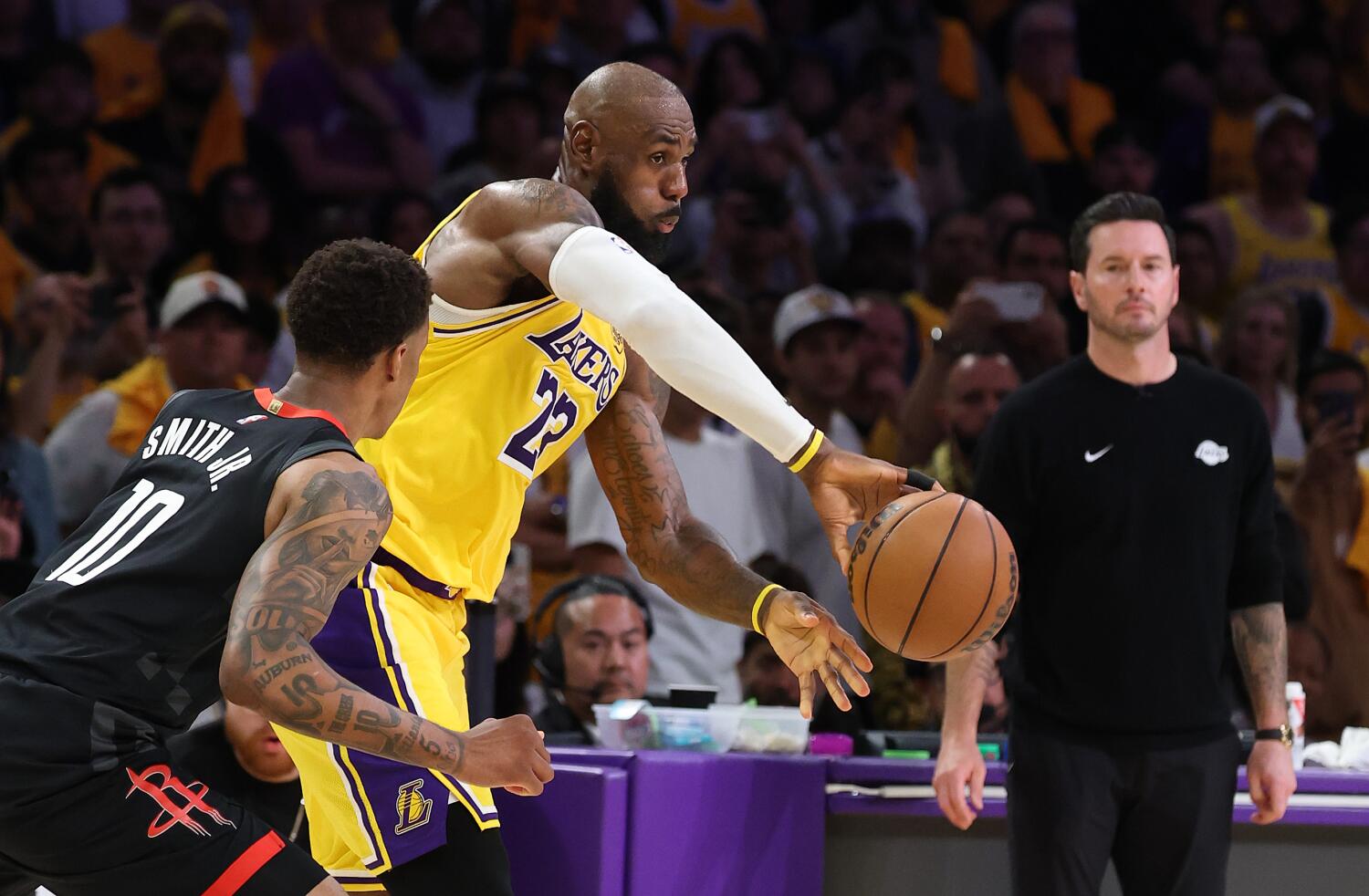
The air inside the FedExForum didn’t just feel heavy; it felt hostile. It was the kind of humidity that sticks to the back of your throat, thick with the scent of floor wax, overpriced popcorn, and the desperation of a city that had spent years waiting for its moment to dismantle a dynasty. For the Memphis Grizzlies, this wasn't just a playoff game. It was a scheduled execution. They were younger, faster, and possessed the kind of twitchy athleticism that usually makes aging superstars look like they’re running through waist-deep molasses.
Then the ball went up.
By the time the final buzzer echoed through the rafters, the silence was deafening. The Los Angeles Lakers hadn’t just won; they had committed a heist in broad daylight. A 128-112 victory isn't a fluke. It's a statement of intent. But if you look at the box score, you’re only seeing the skeletal remains of what actually happened on that hardwood. To understand if the Lakers can actually "steal" this series, you have to look at the scars, the heavy breathing on the bench, and the moment the bravado died in the eyes of the home crowd.
The Weight of the Crown
LeBron James doesn't move like a freight train anymore. He moves like a chess master who occasionally remembers he can still knock over the table. At thirty-eight, every leap is a withdrawal from a bank account that has been overdrawn for a decade. You could see it in the way he paced himself in the first half—the deliberate walks up the court, the pointed fingers, the conservation of energy that younger fans often mistake for laziness.
It isn't laziness. It’s math.
He finished with 21 points and 11 rebounds, numbers that would be a career night for most, but for him, they were merely the foundation. The real story was the defensive end. Imagine being a twenty-something guard like Ja Morant, possessing the explosive power of a literal firework, only to find a wall of human granite waiting for you at the rim. LeBron wasn't just playing basketball; he was patrolling a border.
When the Lakers traded away their chaotic early-season roster for a collection of shooters and defenders, they didn't just improve their depth. They gave the king his breath back. For the first time in years, the Lakers didn't need LeBron to be a god for forty-eight minutes. They just needed him to be a general.
The Shadow in the Paint
If LeBron is the general, Anthony Davis is the monster under the bed. There is a specific kind of terror that settles into an opposing player when they realize the sky is suddenly occupied. Davis recorded seven blocks. Seven. In a professional basketball game, that is an act of psychological warfare.
Consider the "phantom contest." By the third quarter, Memphis players were looking over their shoulders before they even gathered the ball. They were missing layups because they thought Davis was behind them. They were short-arming floaters because the memory of his wingspan was etched into their retinas. This is the invisible stake of the series: the Grizzlies are no longer playing against the Lakers; they are playing against their own hesitation.
Davis played with a fractured rib-cage intensity that seemed to defy his own history of fragility. When he went down clutching his arm in the second quarter, the collective heartbeat of Los Angeles stopped. You could almost hear the "here we go again" sighs across the West Coast. But he came back. He didn't just return; he dominated. That resilience is the variable the critics ignored. A healthy, engaged Anthony Davis is a problem for which there is no tactical solution.
The Unlikely Architect of Ruin
Every great heist movie has a character who shouldn't be there—the underdog who ends up holding the keys to the vault. In this narrative, that man is Austin Reaves.
There is something inherently jarring about watching an undrafted kid from Arkansas out-maneuver All-Stars. In the closing minutes, when the pressure turned the air into a vacuum, Reaves didn't just handle the ball. He owned it. He scored nine consecutive points in the fourth quarter, shouting "I'm him!" to a crowd that had spent the afternoon Googling his name.
This is where the Grizzlies’ plan fell apart. You can double-team LeBron. You can collapse on Davis. But when the "other guys" start playing with the cold-blooded efficiency of elite assassins, the math breaks. Rui Hachimura came off the bench to drop 29 points, hitting five three-pointers as if he were throwing pebbles into the Pacific Ocean.
The Grizzlies expected a duel with legends. They found themselves in a street fight with an entire neighborhood.
The Fragility of the Moment
History is a cruel teacher, and she whispers that one game does not a series make. The Grizzlies are wounded, literally. Ja Morant’s hand injury is the dark cloud hanging over the Mississippi River. Without his North Star gravity, the Memphis offense risks becoming a collection of disjointed parts.
But don't mistake a Game 1 victory for a coronation. The Lakers have a habit of letting their guard down once they smell their own pheromones. They are a team built on the precarious balance of health and momentum. One rolled ankle, one cold shooting night from the supporting cast, and the narrative flips back to "The Lakers are too old."
The real battle isn't physical. It's the battle against the ego of the underdog. The Lakers entered the playoffs through the back door of the play-in tournament. They have the hunger of a team that was counted out in November. Memphis, meanwhile, has the swagger of a team that thinks they’ve already arrived.
The Lakers didn't just win a game in Memphis. They broke a spell. They proved that the Grizzlies' "grit and grind" identity is vulnerable to a more sophisticated kind of brutality—the kind that comes from players who have won rings and have nothing left to prove but everything to protect.
The Invisible Stakes
Why does this matter beyond the box score? Because we are witnessing the final act of an era. We are watching a group of veterans try to hold back the tide of time for one more month. Every possession feels like a legacy on the line.
If the Lakers win this series, it isn't just an upset. It’s a refutation of the idea that "young and fast" always beats "old and wise." It’s a testament to the mid-season pivot, a move by the front office that was mocked and is now being heralded as a masterstroke.
The Grizzlies will come back. They will be louder, more aggressive, and likely more desperate. They have to be. Because they realized something terrifying in Game 1: the Lakers aren't just a team. They are an inevitability when the lights get bright enough.
The quietest moment of the night wasn't when the buzzer sounded. It was five minutes earlier, when the Memphis fans started heading for the exits. They didn't leave because they were bored. They left because they saw the writing on the wall, written in purple and gold ink, bold and unapologetic.
The Lakers didn't just steal a game. They stole the Grizzlies' confidence. And in the playoffs, that’s the only currency that actually matters.
The lights in the arena eventually dimmed, leaving the floor in a ghostly glow. The ghosts of past championships seemed to linger in the rafters, watching, waiting to see if this iteration of the Lakers is worthy of the banners they represent. For one night, the answer was a resounding, punishing yes.
One down. Eleven to go. The journey through the fire has only just begun.