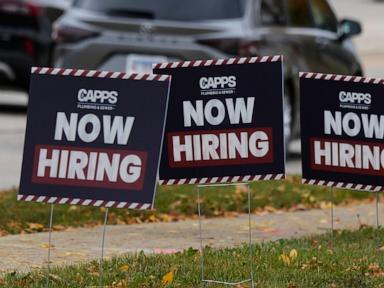
The blue light from a laptop screen at 11:45 PM hits differently when you have been unemployed for four months.
Ask anyone who has spent a late autumn evening refreshing a job board, watching the cursor blink inside an empty cover letter box while the rest of the house sleeps. You start to memorize the corporate boilerplate. You learn to spot the subtle difference between a company that desperately needs a human being by Monday and a company that is merely keeping a digital fishing line in the water just in case a unicorn swims by. Building on this topic, you can also read: The Quiet War Over Who Gets to See the House Next Door.
So when the headlines flash across financial news tickers—celebrating a massive, unexpected September surge in U.S. job openings right ahead of the monthly payrolls report—it is entirely normal to feel a flash of cognitive dissonance. Wall Street cheers. Bond yields twitch. Economists on television nod approvingly at charts showing millions of unfilled desks. Meanwhile, you are staring at forty-seven unanswered applications in your sent folder, wondering if you and the Bureau of Labor Statistics are even living in the same country.
I remember that exact hollow feeling from my own stretch of unemployment years ago, sitting at a scarred oak kitchen table with a cold mug of coffee and a spreadsheet of rejections. Back then, every positive labor market headline felt like a personal indictment. If the economy was creating all these opportunities, why wasn't anyone calling me back? Experts at CNBC have provided expertise on this matter.
The answer lies in the widening gap between what an "opening" means to a spreadsheet in Washington and what a "paycheck" means to a family trying to pay rent. To understand what is really happening right now—and what Friday’s looming payrolls report will actually reveal about the health of the American worker—we have to look past the celebratory surface of the Job Openings and Labor Turnover Survey, known on trading floors as JOLTS.
The Anatomy of a September Surge
Let us look at the cold mechanics first, because truth requires precision. Every month, the Labor Department surveys roughly 21,000 nonfarm business and government establishments to count how many jobs are sitting vacant on the last business day of the month. When September’s numbers drop with a surprisingly large jump in openings—climbing back well above the seven-to-eight-million mark that economists use as a baseline for a tight market—the immediate reaction on Wall Street is predictable.
Traders see resilience. A big September gain suggests that despite higher borrowing costs, sluggish global growth, and months of cautious corporate budgeting, American employers are still hungry for talent. Specifically, these surges tend to cluster in sectors that cannot be automated away overnight: healthcare systems scrambling for nurses and technicians, hospitality venues gearing up for holiday travel, construction firms working through backlogs, and professional services trying to staff up for fourth-quarter deadlines.
From thirty thousand feet, this looks like an engine refusing to stall. Economists call it a "soft landing" indicator. When job openings rise without triggering a sudden wave of layoffs, it implies businesses are confident enough in future demand to expand their payrolls rather than slash them.
That is the macro story. It is neat, comforting, and backed by federal data.
Now let us walk down to street level, where the math gets messy.
Meet Elena and Marcus
Consider a hypothetical scenario—a composite built from hundreds of real conversations with hiring managers and job seekers navigating this exact market.
Imagine Elena, a 34-year-old operations manager in Chicago whose logistics firm downsized in late spring. Elena is the exact kind of worker the September JOLTS report supposedly favors. She has a decade of experience, glowing references, and a willingness to work hybrid hours. In September, she sees a sudden spike in postings across her industry. Three different companies list roles that match her resume down to the software certifications.
Now shift your gaze across the table to Marcus, the Vice President of Operations at one of those three companies. Marcus posted that job opening on September 12. By September 30—the exact day the federal survey captures its snapshot—that job is still listed as open. It counts as a "plus one" in the big September gain.
Why hasn't Marcus hired Elena yet?
Because Marcus’s chief financial officer put an informal freeze on final offer letters until the third-quarter earnings numbers are finalized. Marcus is allowed to interview. He is allowed to keep the requisition active so his department doesn't lose the budget allocation for next year. He is allowed to build a "talent pipeline." What he cannot do, until at least November, is actually put Elena on the payroll.
Multiply Marcus by fifty thousand hiring managers across the country, and you begin to see the optical illusion baked into the September job openings data.
A job opening is an intention. A payroll addition is a commitment. And in an uncertain economy, corporate intentions are cheap while commitments are terrifying.
Why Wall Street Obsesses Over the Wrong Number
To understand why the financial world reacts so violently to a September uptick in openings, you have to understand the Federal Reserve’s dual mandate and the strange, inverted logic of modern markets.
For the past several years, central bankers have been walking a tightrope between taming inflation and breaking the labor market. When job openings soar, policymakers worry about wage inflation—the idea that if there are too many open chairs and not enough workers to fill them, companies will have to bid up salaries, which in turn forces them to raise prices on groceries, cars, and haircuts.
Think of the labor market like a pressure cooker. Job openings are the heat under the pot. The monthly payrolls report—the Nonfarm Payrolls number that lands on the first Friday of the month—is the steam actually escaping the valve.
When September’s JOLTS report shows a big jump in openings, bond traders immediately start recalculating the odds of future interest rate cuts. If the heat under the pot is still rising, the Fed has less reason to rush in with cheaper money. Stock prices wobble because investors love low rates, even as they claim to love a strong economy.
Notice who gets lost in that equation. The algorithms trading Treasury futures at the speed of light do not care whether Marcus’s job posting in Chicago is a real seat with a steady salary or a placeholder requisition gathering digital dust. They only care about the aggregate ratio of open jobs to unemployed workers.
For the person sitting at the kitchen table, however, that distinction is everything.
The Hidden Signals Inside the Turnover Data
If you want to know whether the September surge is genuine economic muscle or mere corporate window dressing, you have to look past the headline openings number and examine the quietest metric in the entire government release: the quits rate.
Economists treat the quits rate as the ultimate lie detector for the American workforce. People rarely quit a job unless they already have a better one lined up or feel overwhelmingly confident they can find one within weeks. During the frenzy of the post-pandemic hiring boom, workers were quitting in historic numbers, jumping from retail to tech, from warehouses to logistics, chasing twenty-percent raises.
Since then, that river has slowed to a steady creek. Even when September job openings spike, if the quits rate remains flat or subdued, it tells a much more nuanced story. It tells us that workers currently holding jobs are gripping their chairs tightly. They see the headlines about rising openings, yes, but they also hear the whispers about departmental restructuring and watch their friends endure six-round interview marathons that end in silence.
There is another telling clue buried in the data: the hiring rate itself.
When job openings surge in September while actual hires remain flat, the gap between desire and execution widens. It means companies are posting more jobs, taking longer to fill them, and demanding more from every candidate who steps through the door. Recruiters call this "flight to quality." Instead of hiring two junior analysts and training them, a firm posts one senior role with a wish list of skills that would normally belong to an entire department, leaving the posting open for months until someone desperate enough—or qualified enough—finally walks in.
The Ghost Job Phenomenon and the Exhausted Applicant
We cannot talk honestly about a September surge in job openings without naming the elephant in the room: ghost jobs.
Ask any corporate recruiter off the record, and they will admit that a significant percentage of online job postings at any given moment are not attached to an immediate hire. Some are evergreen listings meant to keep a company looking vibrant and growing to competitors and investors. Others are data-harvesting nets to see what salary expectations look like in a given city. Still others are compliance formalities for roles that have already been promised to an internal candidate.
Does the federal survey filter these out? Technically, the Bureau of Labor Statistics only counts a job as "open" if a specific position exists, work could start within thirty days, and the employer is actively recruiting from outside the firm. In practice, a stressed HR coordinator filling out a government form checks the box for every active requisition in their applicant tracking system.
This creates a profound psychological toll that never shows up in an economic footnote.
When millions of openings appear on paper while real-world hiring moves at a glacial pace, job seekers internalize the friction as personal failure. I remember rewriting my resume eleven times in a single autumn, convinced that a single missing buzzword was the only thing standing between me and an interview. I blamed my formatting. I blamed my age. I blamed my industry. It never occurred to me that half the doors I was knocking on were painted onto brick walls.
Understanding the mechanics of the September JOLTS report does not magically put an offer letter in your inbox, yet it performs a vital service: it restores your sanity. It reminds you that a slow response in a booming headline environment is often a symptom of corporate caution, not a verdict on your worth.
What Friday’s Payrolls Report Will Actually Reveal
This brings us to the main event that always follows the September openings release: the monthly payrolls report.
If the JOLTS report is a photograph of corporate wishful thinking, the payrolls report is the receipt. It measures actual human beings who clocked in, worked hours, and received paychecks during the survey week.
Watch closely how these two reports interact, because the tension between them defines the entire economy right now.
If Friday’s payrolls number comes in strong alongside September’s big gain in openings, it confirms that the autumn hiring push was real. It means companies like Marcus’s actually unlocked the budget, signed the offer letters, and brought people like Elena onto the floor before the fourth-quarter rush. It signals that consumer spending—which accounts for roughly seventy percent of the U.S. economy—still has fuel in the tank, because people with new paychecks buy groceries, fix their cars, and book holiday flights.
Conversely, if payroll growth disappoints despite the September jump in openings, the illusion shatters. Wall Street will immediately recognize that the openings surge was mostly friction—positions lingering unfilled because employers couldn't find the exact skills they wanted, or because financial uncertainty caused them to hesitate at the finish line.
And then there is the third possibility, the one that keeps central bankers awake at night: a scenario where openings rise, payrolls stay steady, and average hourly earnings tick upward faster than expected. That combination signals that the labor market has found a stubborn equilibrium—tight enough to keep wages climbing, resilient enough to shrug off higher borrowing costs, and complicated enough to defy every tidy prediction made on cable news.
How to Navigate a Market Built on Mixed Signals
If you are trying to build a career, negotiate a raise, or simply keep your footing in this environment, reading the headlines like a day trader will only paralyze you. You do not need to predict what the Federal Reserve will do at its next meeting. You need to understand how hiring managers behave when they are caught between growth targets and budget anxiety.
First, treat public job boards as lagging indicators rather than primary battlegrounds. By the time a job opening is counted in a September federal survey and indexed across major aggregators, hundreds of automated applications have already buried the recruiter’s inbox. The surge in openings means budgets exist, but the caution in hiring means decision-makers are terrified of making a bad bet. A warm introduction from a former colleague bypasses that fear entirely.
Second, pay attention to where the September gains are concentrated. Broad national numbers mask dramatic regional and sectoral divides. An explosion of openings in outpatient healthcare, specialized manufacturing, or municipal infrastructure does nothing for a mid-level software marketer in Austin. Looking closely at the industry breakdown tells you whether the wind is at your back or in your face—and whether it is time to pivot toward adjacent sectors where demand is structural rather than seasonal.
Third, recognize your leverage if you are already employed. A strong September openings report is quiet proof that replacing an experienced worker remains expensive, slow, and miserable for employers. Even if companies are hesitant to expand wildly, they are equally terrified of losing the institutional knowledge sitting right in front of them.
The numbers coming out of Washington will always be flattened into neat percentages and bold headlines. They have to be; you cannot fit three hundred million lives onto a single chart. Yet behind every fraction of a percentage point in a September labor report sits a real room, a real budget meeting, and a real person wondering whether tomorrow will be the day the phone finally rings.
Somewhere in Chicago tonight, a light is still glowing on a kitchen table, illuminating a freshly printed resume sitting beside a cooling cup of coffee—waiting for a number on a government spreadsheet to turn into a human voice on the other end of the line.