Water remembers. Sometimes, it lets go of things it should have kept down below.
Imagine standing on the shore of a quiet Canadian reservoir on an ordinary Tuesday. The air smells like pine resin and cold mud. The water is a flat, dark sheet of slate reflecting an indifferent sky. You look away for a moment—maybe to zip up your jacket, maybe to swat at a late-summer blackfly—and when you look back, the water is no longer empty.
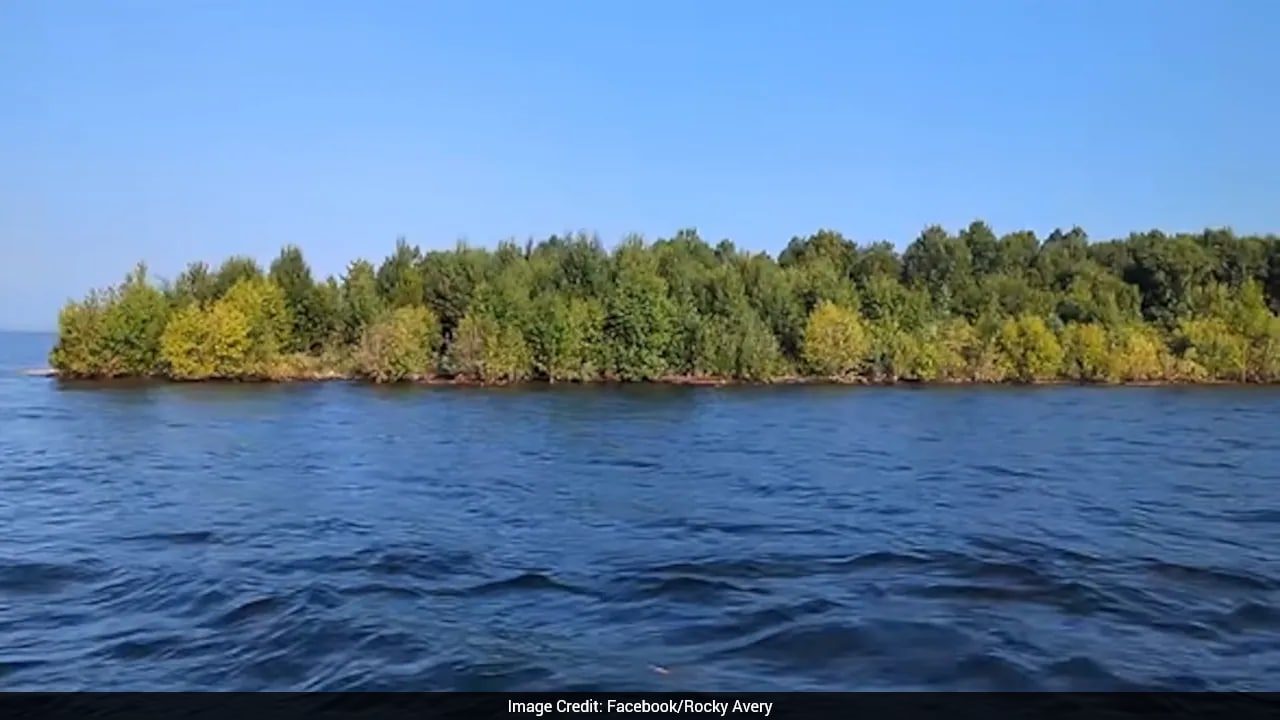
There is a patch of earth sitting out there. Not a rock. Not a floating log. A proper island, complete with mature trees, green brush, and solid ground, drifting across the surface of the water like a phantom ship with no crew.
Then, just as quickly as it arrived, it vanishes.
This is not the setup for a ghost story told around a dying campfire. It is a documented geological phenomenon that has baffled locals and scientists alike in places like Ontario and British Columbia. To understand why a chunk of the earth can simply pack up and move across a man-made lake, you have to look past the spooky headlines and dive into the quiet, violent mechanics of how we shape the natural world.
The Weight of a Drowned Valley
Reservoirs do not happen by accident. They are engineered scars. Engineers throw concrete dams across rushing rivers, choking valleys that have spent millennia carving their own paths. Behind the wall, the water rises. It crawls up hillsides, drowns ancient meadows, and swallows forests whole.
We tend to think of a reservoir as a giant bathtub. But nature does not cooperate with concrete.
Beneath the surface of those deep, artificial lakes, a slow-motion war is happening. The trees that were left behind when the valley flooded did not simply vanish. Their root systems, tangled deep within the peat and alluvial soil, began to rot. But wood and peat are stubborn. Under the right conditions, trapped gases—methane and carbon dioxide born from decaying organic matter—begin to accumulate in the dense, spongy matrix of the submerged soil.
Physics is simple, even when it is terrifying. Gas is lighter than water.
As the pressure builds, a subterranean lung inflates beneath the lakebed. Eventually, the buoyant force overcomes the friction holding the earth to the bottom. The anchor snaps. A chunk of turf, sometimes hundreds of feet wide, tears away from the floor, breaks the surface, and becomes a floating island.
It is a bizarre spectacle. But it is also a warning.
What Happens When the Earth Drifts
When these phantom islands appear, they are more than a curiosity for local newspapers. They are navigation hazards. A moving mass of trees and dense root balls can drift into a hydroelectric intake valve, clog a spillway, or smash against a bridge pier with the force of a freight train.
Consider what happens next. Authorities are forced to act. Boats are dispatched. Heavy cables are secured to the drifting mass of dirt and birch trees. Tugboats or winch systems haul the rogue island back toward the shore, where it is tethered, broken apart, or anchored down so it stops playing hide-and-seek with boaters.
The first time I saw footage of one of these Canadian floating islands, my skin prickled. It looked so solid. You could imagine stepping onto it, feeling the give of the peat beneath your boots, looking back at the receding shore. And that is the danger. These islands are notoriously unstable. Their weight distribution shifts constantly as the trapped gases vent into the atmosphere and water sloshes over the edges. Step onto one, and you might find yourself passengers on a slow-motion ferry ride into the middle of a freezing reservoir, with no paddle and no way home.
Nature does not like being rearranged. When we flood a valley, we create a temporary truce between the land and the water. The floating island is what happens when that truce breaks down. It is the earth attempting to reclaim its freedom, floating away from the grave we dug for it.
The next time you stand beside a quiet body of water, look closely at the horizon. Pay attention to the shadows on the surface. The world is older and stranger than our maps suggest, and sometimes, the ground beneath our feet is only waiting for an excuse to leave.