Dust settles differently on red sandstone.
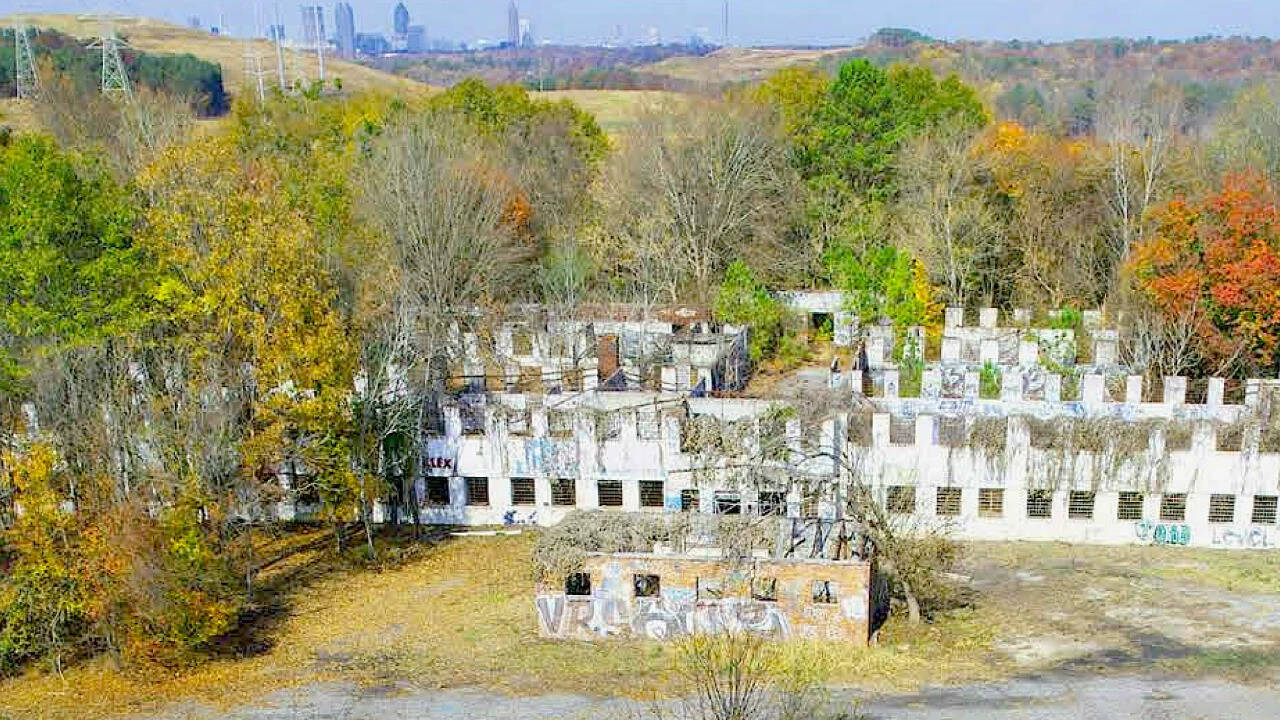
Stand inside the Purana Qila in New Delhi just before dusk, and the air smells faintly of baked earth, crushed marigolds, and diesel exhaust drifting over the walls from Mathura Road. If you crouch near the excavation trenches—the ones sliced open by the Archaeological Survey of India—you can see history stacked like pages in a water-damaged book. Kushan terracotta at the bottom. Gupta seals above that. Mughal masonry higher still. And buried beneath the whole stratigraphic pile, according to both local legend and serious archaeological inquiry, lies Indraprastha: the mythical capital of the Pandavas from the Mahabharata.
Most people walk past those trenches looking at their phones. They miss the point entirely.
Because right now, the name of that half-buried city has been pulled out of the dirt and stamped onto one of the most ambitious—and quietly consequential—diplomatic blueprints in modern Eurasian politics. When India’s Culture Secretary recently announced that the Indraprastha Communiqué will outline the consensus and future roadmap of the Shanghai Cooperation Organisation (SCO) Civilisational Dialogue, the headlines read like pure bureaucratic anesthesia. You could practically hear readers clicking away before reaching the third paragraph.
That is a mistake. A massive one.
When diplomats start naming policy roadmaps after ancient civilizational capitals, they aren’t indulging in poetry. They are redrawing the psychological map of half the planet.
The Architecture of Memory
To understand why a communiqué named after Indraprastha matters, you have to step out of the conference rooms and look at the map the way a merchant in the second century BCE would have seen it.
Forget modern borders for a moment. Picture a hypothetical traveler—let’s call him Devadatta—leaving the bustling markets of ancient Indraprastha, heading northwest through Taxila, crossing the snow-choked passes of the Hindu Kush, and stepping down into the oasis cities of Samarkand and Bukhara before pushing toward the edges of the Tarim Basin. In Devadatta’s saddlebags, there are bolts of fine Indian cotton, peppercorns, and perhaps a rolled birch-bark manuscript containing Buddhist sutras or astronomical calculations. In his head, there are stories, architectural motifs, and musical scales.
He didn’t need a passport. He didn't care about security pacts or customs tariffs. He was moving along a nervous system of shared memory that connected the Gangetic plain to the Central Asian steppes, the Persian plateau, and the Yellow River.
I spent three weeks traveling along fragments of that old corridor a few years ago, bouncing between museum archives in Tashkent and crumbling caravanserais outside Bukhara. The thing that hits you—physically, almost like a drop in barometric pressure—isn't how exotic those places feel to an Indian visitor. It’s how eerily familiar they are. You look at the lotus motifs carved into a wooden pillar in Uzbekistan, or listen to the rhythmic cadence of a traditional maqam singer, and your brain does a double take. You have seen that flower on a temple wall in Madhya Pradesh. You have heard that exact melodic turn in a Hindustani raga.
We spent the twentieth century building walls through that nervous system.
Cold War alliances, colonial cartography, bitter border disputes, and the sheer gravitational pull of Western globalization trained an entire generation across Asia to look outward—toward London, New York, or Moscow—rather than at the neighbor sitting across the mountain range. We turned living cultural arteries into dead ends.
What Happens When Hard Power Hits a Wall
Look at the Shanghai Cooperation Organisation today. On paper, it is a titan. Representing roughly forty percent of the world’s population and nearly a third of global GDP, the SCO brings together India, China, Russia, Pakistan, Iran, and the Central Asian republics of Kazakhstan, Kyrgyzstan, Tajikistan, and Uzbekistan, alongside dialogue partners stretching across the Middle East and Southeast Asia.
Usually, when the SCO makes the news, the vocabulary is hard, metallic, and anxious: counter-terrorism, border security, energy pipelines, trade corridors, multipolarity. These are the gears of geopolitics. They grind loudly, and they frequently jam.
When nations sit across a table negotiating troop withdrawals or transit tariffs, every gain for one side feels like a loss for the other. Trust evaporates quickly in rooms full of defense ministers. You cannot sign a treaty that forces two suspicious neighbors to genuinely like each other.
But cultural diplomacy works on a completely different frequency. Think of hard power—military treaties and trade deals—as the steel frame of a skyscraper. Without it, nothing stands. Yet nobody wants to live inside bare steel girders. Culture is the mortar, the wiring, and the light coming through the windows. Without it, the structure remains cold, rigid, and prone to snapping under stress.
This is the quiet logic driving the SCO Civilisational Dialogue, hosted and championed by India. By anchoring the dialogue in New Delhi and naming its culminating document the Indraprastha Communiqué, Indian policymakers are making a deliberate, calculated bet. They are arguing that before Eurasia can build resilient supply chains or stable security architectures, it has to remember why it was connected in the first place.
Inside the Communiqué
So what is actually inside this roadmap? Strip away the diplomatic phrasing from the Culture Secretary’s briefing, and the Indraprastha Communiqué comes down to turning nostalgic sentiment into hard institutional machinery.
First, it establishes shared heritage conservation and museum networks. Across Central Asia and South Asia, thousands of manuscripts, stupas, mosques, and manuscripts are eroding under climate stress and underfunded local budgets. Instead of treating archaeological restoration as a solo national burden, the roadmap pushes for joint technical missions—Indian conservators working alongside Uzbek archaeologists and Russian digital archivists to catalog and preserve shared Buddhist, Islamic, and pre-Islamic sites.
Second, it tackles the digital repatriation of memory. Most young people in Almaty, Lahore, Varanasi, or Tehran will never step foot inside each other’s national museums. The communiqué outlines frameworks for shared digital repositories, high-resolution 3D scans of artifacts, and multilingual archives. Imagine a graduate student in Bishkek pulling up a high-definition scan of a Gandharan sculpture housed in New Delhi, cross-referencing its drapery folds with a statue found twenty miles from her own university.
Third, it creates structured human mobility for artists, scholars, and youth. Bureaucracy is the sworn enemy of cultural exchange. Getting a visa, securing funding, or translating an academic paper across Russian, Mandarin, Hindi, Persian, and Uzbek can take years. The consensus document aims to standardize cultural fellowships, film festivals, literary translation grants, and university exchange chairs across member states.
Fourth, it addresses the protection of intangible heritage. Languages, oral epics, folk medicine, artisanal weaving techniques, and classical music traditions are disappearing faster than ancient buildings. The roadmap builds collaborative registries and joint workshops so master craftspeople from Bukhara, Jaipur, and Kashgar can pass techniques directly to younger apprentices before the knowledge dies out.
The Skeptic’s Question
Let’s pause here and be completely honest. If you feel a flicker of cynicism reading about diplomatic communiqués, you aren’t alone.
I have sat in enough policy summits to know how easily lofty declarations turn into expensive paperweights. Delegates fly in, nod solemnly over translation headsets, applaud a well-crafted communique, pose for a group photograph against a backdrop of flags, and fly home—while border tensions simmer the very next morning.
The skeptics have plenty of ammunition. Can a cultural roadmap really bridge the deep strategic chasm between New Delhi and Beijing? Does a shared appreciation for ancient poetry soften the hard realities of India-Pakistan relations? What happens when one nation’s "civilizational narrative" collides with another’s historical grievance?
History doesn't offer easy comfort here. Culture has been weaponized just as often as it has been used to heal. Archaeological sites get claimed as exclusive nationalist trophies; ancient trade routes get rebranded to serve modern territorial ambitions. Even the name Indraprastha carries immense symbolic weight within India’s own domestic cultural debates—a reminder that history is never entirely neutral terrain.
To pretend that a cultural dialogue erases geopolitical rivalry would be naive. Nobody in New Delhi’s Ministry of Culture or Ministry of External Affairs is under that illusion.
Yet dismissing the effort as empty theater misses how slow, generational shifts actually happen. Geopolitics isn't just decided by presidents and generals; it is shaped by the mental furniture of the bureaucrats, journalists, business owners, and citizens who come of age over the next thirty years. If a twenty-two-year-old software engineer in Bengaluru grows up viewing Tashkent, Samarkand, and Tehran not as distant, opaque blanks on a map, but as familiar cousins with shared stories, the political calculus changes subtly over time. Friction drops. Curiosity replaces suspicion.
The Invisible Stakes
There is another layer to this story that rarely makes it into official press releases: the quiet struggle over who gets to define modernity.
For the past two centuries, the global cultural conversation has operated largely as a one-way broadcast. Stories, aesthetic standards, academic frameworks, and definitions of "civilization" flowed outward from Western capitals to the rest of the world. Even when Asian nations wanted to study their own past, they frequently had to read European translations of their own texts or visit museums in London, Paris, and Berlin to see their finest sculptures.
The SCO Civilisational Dialogue is an attempt to switch on a multi-directional circuit.
When Indian, Central Asian, Iranian, Russian, and Chinese scholars sit in New Delhi without a Western intermediary moderating the room, the dynamic shifts. They are comparing notes directly. They are tracing the journey of the zero, the spread of paper-making, the evolution of dome architecture, and the migration of folk tales from the Panchatantra into Kalila wa Dimna—stories that traveled from Sanskrit into Pahlavi, Arabic, Persian, and eventually across the entire Eurasian landmass.
Consider what happens when a civilization reclaims its own connective tissue. It stops seeing itself solely through the lens of colonial disruption or Cold War division. It begins to operate with a longer time horizon.
Back to the Red Sandstone
Late in the afternoon at Purana Qila, the light turns the color of steeped tea.
A group of schoolchildren in crisp blue uniforms is usually gathered near the edge of the excavation pit, listening to a guide point out the layers of earth. To the kids, the trench looks like a messy hole in the ground—broken pottery shards, crumbling bricks, weeds pushing through ancient mortar.
It takes an act of imagination to look at those fragments and see a living city. It takes even more imagination to look at a fractured continent—divided by mountain ranges, nuclear arsenals, competing currencies, and centuries of mistrust—and see a coherent cultural neighborhood.
That is the real gamble tucked inside the Indraprastha Communiqué. It isn't a magic wand for Eurasian peace, and it won't untangle hard border disputes overnight. It is something quieter, slower, and far more stubborn: an insistence that the invisible threads connecting billions of people across Asia are older—and potentially stronger—than the borders drawn between them.
The dust at Indraprastha has been settling for three thousand years. For the first time in centuries, the neighbors are gathering around the trench to read what is written in the dirt.