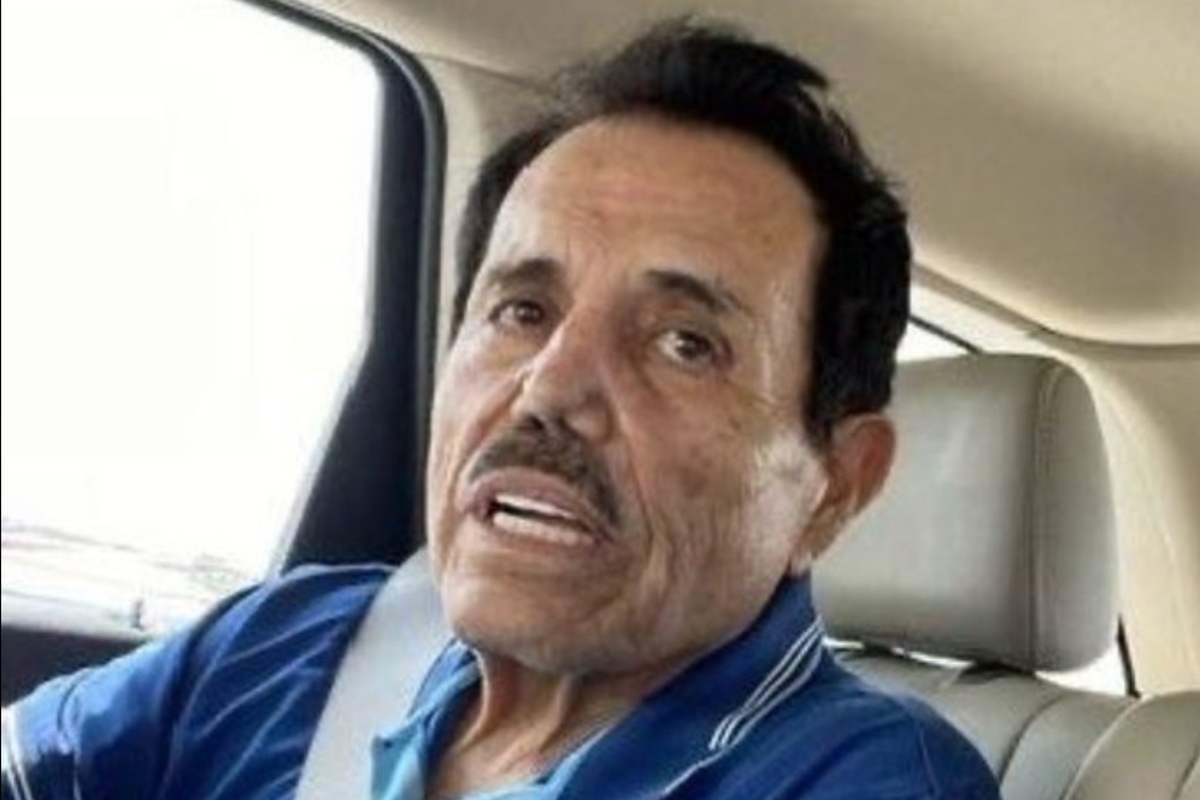
The air inside a 1970s Beechcraft King Air 200 smells like old vinyl, sweat, and cheap aviation fuel. If you are trapped inside it, thousands of feet above the Chihuahuan Desert, the twin turboprop engines do not roar so much as they whine. A high, metallic scream that drills straight into your teeth.
For thirty-eight years, Ismael “El Mayo” Zambada García avoided that sound. He avoided the inside of prisons, police cruisers, and courtrooms. While his contemporary, Joaquín “El Chapo” Guzmán, chased the cinematic myth of the narco-kingpin—escaping through laundry carts and tunnels only to end up in a concrete box in Colorado—El Mayo remained a phantom. He lived in the shadows of the Sierra Madre, operating the Sinaloa Cartel not like a gang, but like a multi-billion-dollar logistics conglomerate. He was the old school. He paid his bribes, kept his head down, and maintained a fragile peace.
Then, a boy he had known since childhood offered him a ride to look at some real estate.
What happened next on July 25, 2024, is not just a story about a drug bust. It is a clinical study in the anatomy of betrayal, the terrifying reach of invisible intelligence agencies, and the quiet, brutal end of an era.
The Weight of a Handshake
Consider what happens when the ground beneath a seventy-six-year-old man disappears.
El Mayo believed he was going to a meeting with local politicians, a standard piece of administrative maintenance for a man who budgeted up to a million dollars a month for official cooperation. He trusted Joaquín Guzmán López. Joaquín was El Chapo’s son—a kid who grew up under the heavy, protective umbrella of the Sinaloa alliance.
But trust in this world is a highly liquid asset.
Instead of a boardroom or a secluded ranch house, El Mayo was met with violence. He was ambushed, tied up, and forced into the back of that twin-engine Beechcraft. Imagine the realization settling in as the tires left the tarmac. The young man he had protected was now his captor, sitting across from him in the narrow cabin as the plane climbed toward the American border.
The motive was simple: survival. Joaquín’s brother, Ovidio, was already in U.S. custody. The Guzmán brothers needed a bargaining chip big enough to buy back their lives. In the calculus of the modern drug trade, an aging legend is worth exactly one federal plea deal.
But the blood feud triggered by that flight didn't stop in the sky. Back in Sinaloa, the factions known as La Mayiza and Los Chapitos turned on each other with a savagery that tore through the state, shattering the long-standing "pax narca" that El Mayo had spent decades cultivating.
The Mystery in the Cockpit
For nearly two years, the official narrative surrounding the landing in Santa Teresa, New Mexico, was treated like a magic trick. U.S. diplomats smiled and raised their hands in innocence. It wasn’t our plane. It wasn’t our pilot. We just happened to be there when it touched down.
It was a beautiful story. It was also completely hollow.
The reality began to unravel when a small museum in New Mexico put the plane on display. Alongside the aircraft sat a plaque detailing "Operation Air Kings"—a highly classified, deeply sensitive FBI operation executed right under the nose of the Mexican government.
The mechanics of the flight reveal a level of sophistication that no rogue cartel faction could pull off alone. The Beechcraft didn’t just fly north; it moved like a ghost. The aircraft had been meticulously modified to evade radar. Its registration numbers were cloned. The transponders and communication equipment were systematically deactivated mid-flight to blind Mexican military air traffic control.
And then there is the pilot, Mauro Alberto Núñez Ojeda, known in the underworld as "El Jando".
El Jando was the trusted flyer for the Guzmán clan, a man who regularly pulled down $200,000 a flight to move tons of white powder across borders using false passports. On the day El Mayo was stolen, El Jando was at the controls. But what happened after he landed is where the bureaucratic theater becomes surreal.
According to U.S. documents, as soon as the plane touched down and the FBI swarmed the runway, El Jando made a bizarre request: he asked to be deported immediately back to Mexico. And Washington complied. They handed a key material witness to a historic kidnapping right back over the border, where he was briefly detained, released, offended again, and eventually sent back north in a legal loop that looks less like law enforcement and more like a carefully choreographed shell game.
The Fractured Alliance
This isn't just an embarrassment for international diplomacy; it is a profound violation of sovereign trust.
President Claudia Sheinbaum’s administration has spent weeks demanding answers, furious that American operatives appear to be running unilateral extraction operations on Mexican soil without a whisper of coordination. It exposes a terrifying truth for any government: the border is a line drawn in ink, but power is written in radar-evading aluminum and backroom plea agreements.
The legal fallout has settled into a grim, predictable rhythm. El Mayo, now seventy-eight, sat in a Brooklyn courtroom and pleaded guilty to racketeering and running a continuing criminal enterprise. His lawyers secured a deal that ensures he will spend his remaining days behind bars, though spared from the absolute isolation of a maximum-security supermax facility. He traded his mountain kingdom for a sterile cell.
Meanwhile, Joaquín Guzmán López sits in his own cell, his death penalty taken off the table by prosecutors, waiting for the bureaucracy of cooperation to grind out his reward.
We often want these stories to have clear heroes, to feel like justice is a clean blade cutting through corruption. But there is no justice here. There is only a shifting of weight. The old guard is gone, replaced by a younger, more volatile generation that doesn't care about the old rules of engagement or the quiet maintenance of peace.
The Beechcraft King Air 200 now sits quietly under the fluorescent lights of an aviation museum, its twin engines cold, its modified radar-evading skin on display for tourists. It is a monument to a moment when the sky opened up, a lifetime of caution evaporated, and a man who ruled an empire realized—too late—that the boy sitting across from him had already sold the air beneath their wings.