The coffee in Budapest always tastes like history. It is thick, dark, and carries the weight of a century’s worth of whispered conversations in wood-paneled cafes. On the morning of the election, the steam rising from a cup in a small shop near Liberty Square feels like a curtain being pulled back. Outside, the Danube flows as it always has, indifferent to the posters plastered on every available inch of concrete.
Those posters tell two entirely different stories about what it means to be Hungarian.
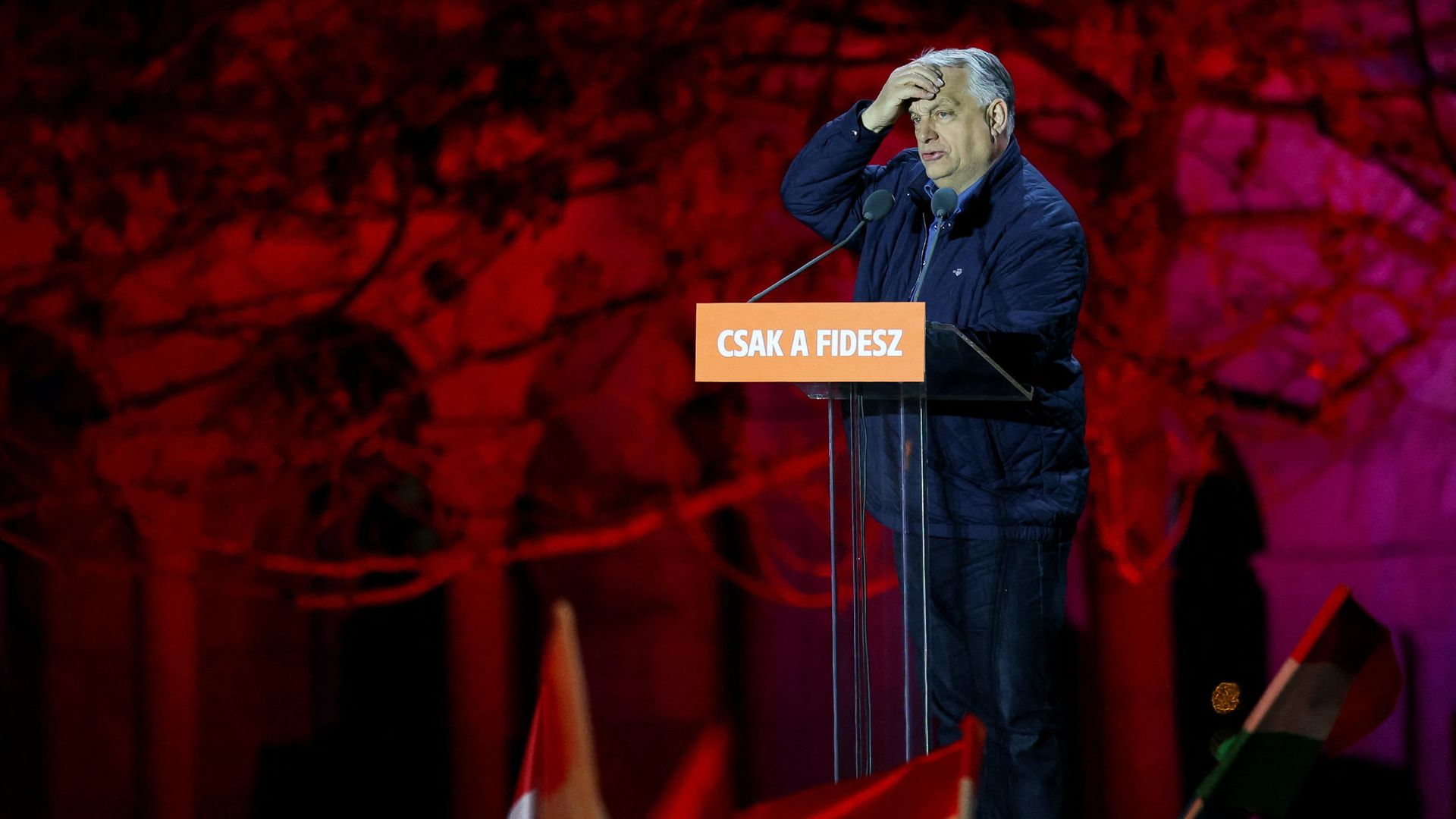
One side features the man who has defined the nation’s pulse for sixteen years. Viktor Orbán. He doesn’t look like a politician in these images; he looks like a shield. The father of the nation. The guardian of the border. On the other side is a face that represents a desperate, frantic hope: Péter Márki-Zay. He is the leader of a coalition that shouldn’t exist, a fragile alliance of six parties ranging from the far-right to the green-left, held together by a single, jagged thread. They aren’t united by a policy. They are united by a desire to breathe.
To understand why this vote feels like a heart arrhythmia for the European Union, you have to look past the polling percentages. You have to look at the kitchen tables in cities like Debrecen and the dusty roads of small villages in the Great Plain.
The Architecture of a Long Reign
Sixteen years is a lifetime in politics. In that time, the very geometry of Hungarian democracy has been reshaped. It wasn't done with a coup or tanks in the street. It was done with a pen.
Consider the "system of national cooperation." It sounds benign. In practice, it has been a methodical tightening of the screws. Over nearly two decades, the ruling Fidesz party has rewritten the constitution, overhauled the electoral laws, and seen its allies purchase the vast majority of regional newspapers and television stations.
If you are a farmer in a rural county, your world is defined by what you see on the state-funded news. And what you see is a world under siege. You are told that Brussels wants to dictate how you raise your children. You are told that George Soros is orchestrating a wave of migration to erase your culture. You are told that the opposition is a puppet of foreign interests.
This isn't just "fake news." It is a manufactured reality that feels more real than the rising price of bread. It is a feedback loop that turns every election into an existential battle for survival.
The stakes aren't just about tax rates or healthcare. They are about the soul of a middle-sized European country that has become the laboratory for "illiberal democracy."
The United Front of the Unlikely
Imagine six people who hate each other forced to share a life raft.
That is the opposition coalition. For years, Orbán’s greatest strength was a fractured opposition. He didn’t need a majority of the people to love him; he just needed his enemies to stay divided. This time, the math changed. The unthinkable happened. The socialists shook hands with the nationalists. The liberals sat down with the greens.
Péter Márki-Zay, a conservative Catholic father of seven, became their unlikely champion. He was supposed to be the bridge. He was the man who could talk to the pious villagers without frightening the cosmopolitan elites of Budapest.
But a bridge is only as strong as its foundation.
Throughout the campaign, the "united" opposition struggled to find a voice that wasn't just a scream of "Not Orbán." While they talked about corruption and the rule of law, the government talked about peace.
Then came the war in Ukraine.
Hungary shares a border with Ukraine. Suddenly, the election wasn't just about internal politics; it was about the tanks rolling through the mud a few hundred miles away. Orbán, a man who has spent years cultivating a "strategic calmness" with Vladimir Putin, pivoted instantly. He positioned himself as the only leader who could keep Hungary out of the conflict. He told the voters that the opposition would send their sons to die in a foreign war.
It was a lie. But in the heat of a campaign, a well-timed lie is often more effective than a nuanced truth.
The Invisible Hand of the State
The mechanics of the vote are where the abstract concepts of "democratic backsliding" become concrete.
Hungary’s electoral map has been carved into shapes that would make a jigsaw puzzle look simple. This is gerrymandering on a grand scale. In 2014, Fidesz won a two-thirds "supermajority" in parliament with only 44% of the popular vote. The rules are designed so that the winner takes almost everything.
Then there is the matter of the media.
During the entire campaign, the opposition leader was reportedly given exactly five minutes of airtime on public television. Five minutes. In sixteen years. The rest of the time, the airwaves were a 24-hour loop of government messaging.
In a small town like Felcsút, the Prime Minister’s childhood home, the presence of the state is everywhere. There is a massive, ornate football stadium that seats more people than the town has residents. There is a narrow-gauge railway that goes nowhere in particular. These are monuments to a specific kind of power—the power of patronage. If you are a mayor, you know that if your town votes the "wrong" way, the funding for your new road might just disappear.
Fear isn't always about violence. Sometimes, fear is just about the quiet knowledge of who signs the checks.
The Weight of the Morning
The air in Budapest on election day is electric, but it is a heavy electricity.
You see it in the eyes of the young people queuing at the polling stations in the VII District. They are the generation that has known almost no other leader. They are the ones who move to London, Berlin, and Vienna, not because they hate their country, but because they feel they are suffocating inside it. For them, this isn't just an election; it’s a referendum on whether they can stay.
But drive two hours east.
In the villages where the church is the center of the world and the state is the only employer, the perspective shifts. There, Orbán is the man who increased the minimum wage. He is the man who protects the "traditional family." He is the man who stands up to the bureaucrats in Brussels who seem to look down on people who work with their hands.
This is the Great Divide. It isn't just political. It’s a canyon between the future and the past, between the city and the soil.
The Mirror for the World
Why should someone in Ohio or Osaka care about a vote in a country of ten million people?
Because Hungary is the canary in the coal mine. It is the blueprint.
Across the globe, we are seeing the rise of leaders who use the tools of democracy to dismantle democracy from within. They don't cancel elections; they just make them impossible to lose. They don't ban the press; they just buy it. They don't arrest their opponents; they just drown them out in a sea of state-sponsored noise.
If the "hardman" of Europe wins again, it provides a masterclass for every other aspiring autocrat. It proves that you can be a member of the EU, take their subsidies, and still thumb your nose at their values. It proves that "illiberalism" isn't a fluke—it’s a viable, durable model.
The polls will close. The paper ballots will be counted by hand in small schoolrooms and community centers. The results will be announced on the same television screens that have spent months broadcasting fear.
Victory.
But victory in a system tilted so heavily toward one side feels less like a triumph and more like an inevitability. As the sun sets over the Parliament building—a Gothic revival masterpiece that looks like a cathedral of democracy—the question remains.
What happens to a nation when half of its people feel like guests in their own home?
The Danube continues to flow, dark and silent. It has seen empires rise and fall. It has seen kings and commissars. It knows that power, no matter how carefully guarded, is always a temporary thing. But for the people walking across the Chain Bridge tonight, "temporary" feels like an eternity.
The ghost in the ballot box isn't a person. It is the memory of what a fair fight used to look like. And as the tallies come in, that memory feels more like a haunting than a hope.