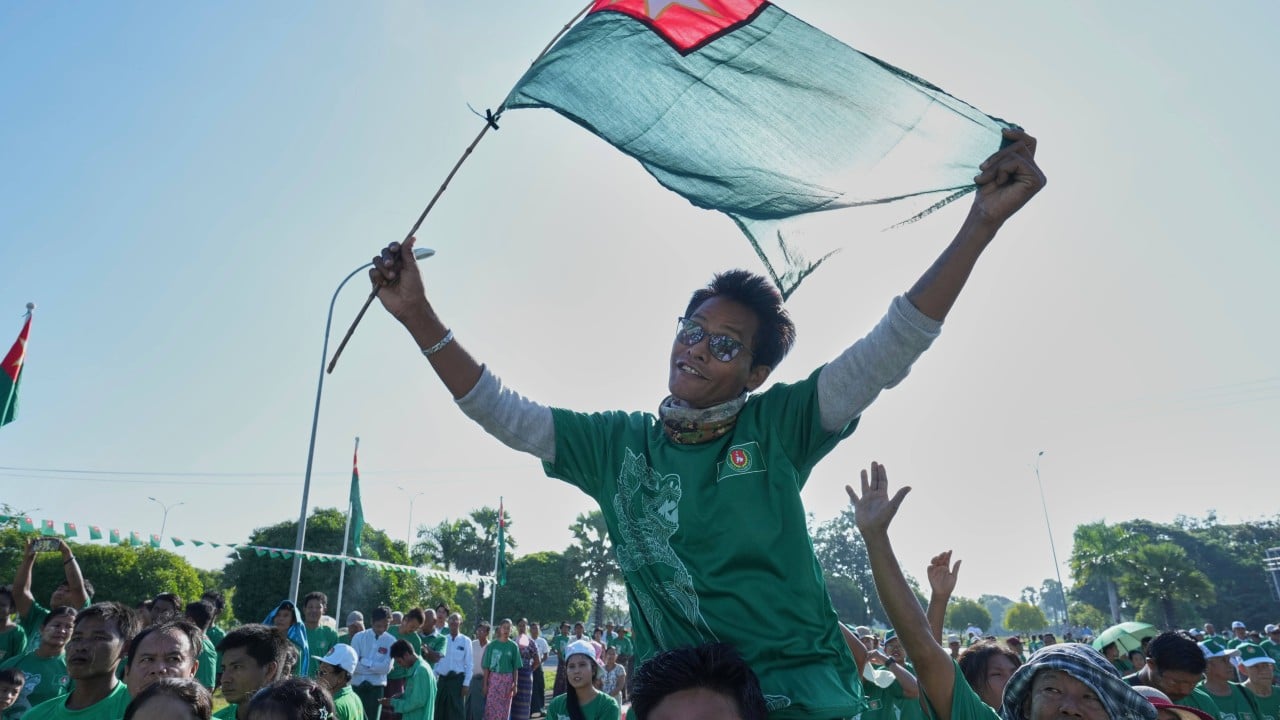
The ink on a voter’s pinky finger is supposed to be a badge of honor. It is a stain that says, "I exists." It says that for one brief moment, the machinery of a nation paused to listen to a single heartbeat. But in the sweltering streets of Naypyidaw and the hushed corridors of Yangon, that purple mark has been transformed into something far more sinister. It has become a brand.
A census worker knocks on a door in a quiet neighborhood. They aren't there to ask about household income or the number of children living under the roof. They are there to build a map of compliance. This is the prelude to an election that isn't an election. It is a performance. It is a massive, multi-million-dollar stage play where the ending was written years ago in a bunker, and the audience is being forced at gunpoint to clap until their hands bleed. You might also find this related coverage insightful: The $2 Billion Pause and the High Stakes of Silence.
The Architecture of a Lie
When a military junta decides to hold a vote, they aren't looking for a mandate. They are looking for a mask. Since the coup in February 2021, the generals in Myanmar have watched their grip on the country's throat slowly slip. Resistance isn't just a political movement anymore; it is a geographic reality. Huge swaths of the country are "black zones," places where the military’s authority ends at the range of their artillery.
To hold an election under these conditions is a feat of pure imagination. As discussed in detailed articles by The Washington Post, the implications are significant.
Consider the logistics of a ghost. To create the illusion of a functioning democracy, you need data. You need names. This is why the junta launched a nationwide census, sending teams protected by armed soldiers to doorsteps across the country. In many villages, the arrival of these teams was met with silence. People fled into the jungle rather than be counted. They knew that to be on the list was to be drafted into a lie. To be counted is to be told where to stand when the cameras start rolling on election day.
The facts are cold and jagged. The Union Election Commission, now an arm of the military, has dissolved the National League for Democracy—the party that won in a landslide before the generals tore up the results. They have jailed its leaders. They have rewritten the rules so that only "approved" voices can speak. It is like inviting someone to a boxing match after you have already tied their hands, shattered their knees, and bribed the referee.
The Price of a Signature
Imagine a shopkeeper in Mandalay named Ko Naing. This is a man who remembers the 2015 elections, the feeling of standing in line with a sense of genuine, terrifying hope. He remembers the sun hitting the pavement and the quiet murmur of people who finally felt they were taking their country back.
Today, Ko Naing looks at the census forms with a different kind of terror. If he signs, he acknowledges the legitimacy of the men who burned his cousin's village. If he refuses, he becomes a target. The "election" isn't about who leads the country; it’s about forcing Ko Naing to choose between his conscience and his safety.
This is the invisible stake of the Myanmar crisis. It isn't just about who sits in the capital. It is about the systematic destruction of the concept of truth. When a government forces its citizens to participate in a sham, it is attempting to break their spirit. It is an act of psychological warfare designed to make the population feel complicit in their own oppression. If you vote in a rigged election, the junta can tell the world, "Look, they chose this."
The International Audience
The generals aren't just performing for the people inside the borders. They are performing for the neighbors. There is a specific kind of diplomatic theater that happens in Southeast Asia, a desperate craving for "stability" that often outweighs the craving for justice.
By holding a vote—any vote—the junta provides a hook for international actors who are tired of the conflict. It gives a reason for regional powers to say, "The process is moving forward. We can start doing business again." It is a bureaucratic exit ramp. They want to turn a bloody coup into a "transition to civilian rule," even if the "civilians" in question are just generals who changed into suits five minutes before the press conference.
But the world isn't as blind as it used to be. The resistance in Myanmar is digital, decentralized, and deeply stubborn. While the junta builds its polling stations, the People’s Defense Forces and ethnic armed organizations are building an alternative reality. They are providing healthcare, education, and security in areas the military can no longer reach.
The conflict is no longer a simple protest. It is a civil war where the front lines move through kitchens and Telegram chats.
The Vacuum of Power
What happens when the polls close? In a real democracy, there is a release of tension. The losers go home, the winners start to work, and the country exhales.
In Myanmar, the election will only tighten the spring.
A vote without legitimacy is a vacuum. It sucks in more violence, more desperation, and more resentment. If the junta moves forward with this charade, they aren't solving the crisis. They are codifying it. They are telling the millions of people who have spent three years risking their lives for a different future that their voices don't just count for nothing—they are being used against them.
Statistics tell us that the economy has shriveled, that the kyat is in freefall, and that displacement is at an all-time high. But statistics don't capture the sound of a door being kicked in during a census check. They don't capture the look on a father’s face when he realizes he has to tell his daughter to lie about her age so she isn't put on a list.
The tragedy of the "staged election" is that it wastes the one thing Myanmar cannot afford to lose: time. Every day spent planning this farce is a day where the humanitarian crisis deepens. Every dollar spent on ballot boxes is a dollar stolen from a starving population.
The Ink That Won't Wash Off
We often think of legitimacy as something granted by a piece of paper or a ceremony. It’s not. Legitimacy is a social contract. It is the quiet agreement between the governed and the governors that the rules apply to everyone.
When that contract is shredded, you can’t tape it back together with a fake vote.
The generals can buy the paper. They can build the booths. They can even force people to stand in line. But they cannot manufacture the belief that they belong there. The true election in Myanmar has already happened, and it continues to happen every single day. It happens when a teacher refuses to work for the state. It happens when a soldier deserts. It happens every time a citizen chooses silence over a forced cheer.
The purple ink on the finger will eventually fade. But the memory of being forced to dip that finger into the jar of a thief stays forever.
As the sun sets over the Irrawaddy, the shadows of the polling stations grow long and distorted. They look like bars. The generals are building a prison and calling it a parliament, hoping the world is too tired to notice the difference.
But the people of Myanmar are not tired. They are waiting. And they know that a ghost, no matter how well-dressed, can never truly rule the living.