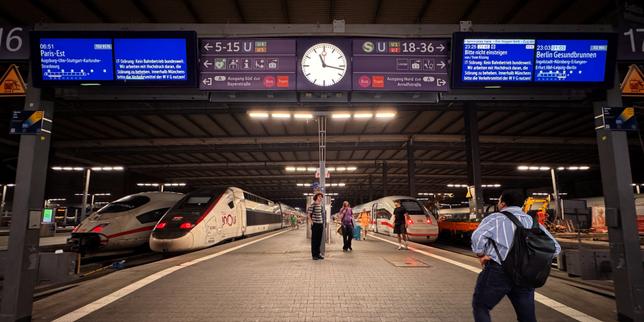
Imagine standing on a crowded platform in Frankfurt or Berlin. The departures board suddenly goes completely blank. Then, an announcement blares over the speakers stating all trains nationwide are suspended indefinitely. This is not a hypothetical scenario. A massive Germany rail communication failure paralyzed the entire country's transport system, leaving hundreds of thousands of commuters stranded and exposing deep vulnerabilities in Europe's most critical transit hub.
When Deutsche Bahn grinds to a halt, it impacts everything. European freight distribution stops. Business travelers miss meetings. Families end up stuck in stations for hours. Most news outlets report these events as freak accidents or isolated technical glitches. They are wrong. This is a systemic issue born from decades of neglect, aging technology, and a complete failure to secure critical backup systems. You deserve to know why the German rail network is so fragile and exactly what to do when the grid goes dark.
The Fragile Tech Behind the Total Shutdown
The entire German rail network relies on a radio communication system called GSM-R. It stands for Global System for Mobile Communications-Railway. This technology allows train drivers to talk to control centers, transmits automated safety data, and ensures trains do not collide. If GSM-R goes down, the trains legally and physically cannot move. It is a safety rule that cannot be bypassed.
The real shocker is how easily this network can fail. In past incidents, critical fiber-optic cables were cut in two completely separate locations simultaneously. One cut happened in Berlin, and the other occurred hundreds of miles away in North Rhine-Westphalia. Because the main system and its supposed backup line ran through these specific hubs, the entire dual-network collapsed.
Think about that for a second. A multi-billion dollar transit system that carries millions of passengers daily was taken down completely by damaging just two physical cables. It shows that the backup systems are not actually independent. They run along the same geographic corridors. When a single incident or a coordinated attack hits those specific points, the whole country suffers a total blackout.
Decades of Underfunding Catching Up at Once
For years, Germany prided itself on engineering excellence. The reality on the ground tells a very different story. The German rail network is exhausted. It is over-capacity and desperately underfunded.
Experts from groups like the German Aerospace Center and independent transport watchdogs have pointed out that Germany spends far less per capita on its rail infrastructure than neighboring countries like Switzerland or Austria. While Switzerland invests hundreds of euros per citizen annually into its tracks and digital systems, Germany has historically spent a mere fraction of that amount.
The results of this frugality are now glaringly obvious.
- Signal boxes dating back to the early twentieth century are still in active use.
- Digital radio systems lack modern encryption and routing security.
- Maintenance backlogs take years to resolve due to bureaucratic red tape.
When you underfund a network for thirty years, you cannot expect it to handle modern traffic demands. The communication failure is just a symptom of a much larger disease. Deutsche Bahn attempted to expand globally by buying logistics companies instead of fixing the tracks and cables at home. Now, the everyday commuter pays the price.
Real Security Vulnerabilities Nobody Wants to Face
We need to talk about the physical vulnerability of these systems. Rail lines stretch across thousands of miles of open, unmonitored countryside. It is impossible to guard every inch of track or every concrete trough containing vital fiber-optic links.
Security experts frequently warn that critical infrastructure is a soft target. When communication systems fail due to technical glitches, it is bad enough. But when a breakdown happens because of intentional interference or sabotage, it reveals a massive national security blind spot.
If someone knows exactly which cables to cut to disable the northern or southern half of the network, they possess highly specific insider knowledge. This means blueprints and network maps are not as secure as they should be. Deutsche Bahn faces an uphill battle to secure its physical assets while simultaneously upgrading its digital defense mechanisms against cyber threats.
How to Handle a National Rail Gridlock
If you find yourself caught in the middle of a massive Germany rail communication failure, sitting on a bench hoping for a quick fix will not help. You must be proactive. The system takes hours or even days to recover fully even after the technical issue is resolved because trains and crews end up completely out of position.
Know Your Passenger Rights Instantly
The European Union has strict rules regarding rail passenger rights, known as Regulation EC No 1371/2007. If your train is delayed by more than sixty minutes, you have options.
- You can demand a full refund of your ticket price if you decide not to travel.
- The railway company must provide free meals and refreshments if the delay extends significantly.
- They must provide hotel accommodation and transport to that hotel if you are stranded overnight.
Do not let station staff tell you otherwise. Keep your physical ticket or digital QR code secure. Take screenshots of the delay announcements on the official DB Navigator app because that data can disappear or change once the system reboots.
Alternative Routing Survival Tactics
When the trains stop, everyone rushes to the rental car counters and taxi stands. Prices skyrocket within minutes. Instead of following the crowd, look for regional bus networks or long-distance coach services like FlixBus. These networks run on entirely separate road infrastructure and usually keep operating during a rail communications blackout.
If you are traveling between major hubs like Munich, Frankfurt, or Hamburg, check domestic flight availability immediately. It might cost more upfront, but it beats sleeping on a concrete station floor in the middle of winter.
Moving Past the Chaos
Fixing this mess requires more than just replacing a few severed wires or upgrading a handful of radio towers. Deutsche Bahn needs a complete overhaul of how it views network redundancy. True redundancy means that if a communication hub in Berlin goes down, a backup hub in Munich should instantly take over the load without any interruption in service.
It means laying separate cable routes that do not run parallel to the tracks where they can be easily accessed or sabotaged. Until the government prioritizes this level of infrastructure security, these massive shutdowns will remain a recurring nightmare for travelers.
Pack an external phone battery every time you travel through Germany. Keep cash on hand because station shops often experience card payment failures when the broader network goes unstable. Stay informed by checking independent transit blogs alongside official channels, and always have a secondary transport plan ready to go.