The current diplomatic impasse between the United States and Iran has reached a state of terminal friction where the "best and final offer" is no longer a negotiating tactic but a structural necessity. When the executive branch signals that the ceiling of concessions has been reached, it is an admission that the political capital required to sustain further dialogue has decoupled from the strategic utility of the potential deal. This shift transforms the conflict from a fluid negotiation into a binary risk-management problem.
The failure to reach a consensus under current conditions is the result of three distinct misalignments: the temporal decay of sanctions efficacy, the diverging domestic survival mandates of both administrations, and the physical reality of Iranian nuclear breakout timelines. These variables form a closed loop where every delay by one party increases the existential risk to the other, making a "middle ground" mathematically impossible.
The Mechanics of Diplomatic Saturation
Diplomatic saturation occurs when the marginal cost of a new concession exceeds the marginal benefit of avoiding escalation. The United States’ "final offer" functions as a hard stop on a cost-benefit curve that has trended toward diminishing returns for twenty-four months.
The Asymmetry of Leverage
The primary error in conventional analysis is the assumption that leverage remains static. In reality, leverage is a perishable commodity.
- Economic Atrophy: Sanctions operate on a bell curve. Initially, they cause systemic shock. Over time, the target economy develops "sanctions immunity" through black-market diversification, localizing supply chains, and strengthening bilateral ties with non-aligned powers like China and Russia.
- Nuclear Latency: While the U.S. uses economic pressure as a dial, Iran uses enrichment as a clock. The physical accumulation of 60% enriched uranium creates a "fait accompli" where the technical knowledge gained cannot be reversed by a signature on a page.
- Political Hardening: As negotiations drag on, the domestic opposition in both Washington and Tehran gains more ammunition to frame any compromise as a capitulation. This narrows the "Zone of Possible Agreement" (ZOPA) until it vanishes entirely.
The Tri-Node Conflict Framework
To understand why the current offer is being framed as final, one must evaluate the three nodes that dictate the current Iranian-American friction.
Node 1: The Breakout Constraint
The technical threshold for nuclear breakout is the most rigid variable in the equation. Unlike diplomatic rhetoric, the physics of centrifuge cascades and uranium hexafluoride stocks are quantifiable. The "best offer" from the U.S. perspective is designed to freeze these variables at a point that allows for a "one-year breakout" window.
Iran’s refusal suggests their strategic goal has shifted from "relief for restraint" to "security through advanced latency." If the breakout window shrinks to weeks rather than months, the U.S. military's conventional deterrence loses its preventative function, leaving only a kinetic response as a viable countermeasure.
Node 2: The Credibility Gap
The 2018 withdrawal from the Joint Comprehensive Plan of Action (JCPOA) created a permanent "compliance risk" premium. Tehran views any U.S. offer as a temporary reprieve that expires with the next election cycle.
This leads to a demand for "inherent guarantees"—mechanisms that would automatically trigger penalties for the U.S. if it withdraws again. Because the U.S. executive branch cannot constitutionally bind a future administration to a non-treaty agreement, this creates a structural deadlock. The U.S. offers the maximum possible under its legal framework; Iran requires more than that framework allows.
Node 3: Regional Proxies and the Shadow War
The negotiation is not occurring in a vacuum. It is tethered to the "Gray Zone" conflicts in Lebanon, Yemen, and Iraq. The U.S. offer likely excludes regional behavior to keep the deal focused and "clean." However, the lack of a regional security architecture means that even if a nuclear deal is signed, kinetic friction in the Levant or the Red Sea can trigger an escalatory spiral that renders the nuclear agreement moot.
The Cost Function of Non-Agreement
If the "best and final offer" is rejected, the parties enter a "Phase of Managed Escalation." This phase is defined by three specific operational shifts.
Increased Kinetic Interdiction
Without a diplomatic ceiling, the U.S. and its allies will likely pivot from economic containment to active interdiction. This includes:
- Cyber-operations targeting the industrial controllers of enrichment facilities.
- Increased maritime seizures of sanctioned petroleum exports to drain the Iranian treasury.
- Targeted pressure on the logistical hubs of the "Axis of Resistance."
The "Opaque" Nuclear Posture
Iran’s response to a failed final offer is predictably asymmetric. Rather than declaring a weapon, they are likely to move toward "threshold status"—having all the components and material ready but stopping just short of a test. This forces the U.S. into a permanent state of high-alert intelligence gathering, which is resource-intensive and prone to "false positive" triggers for war.
The Erosion of International Consensus
The finality of the U.S. offer is also a signal to the E3 (France, Germany, and the UK). By framing the offer as the maximum possible concession, the U.S. is positioning itself to trigger the "snapback" mechanism of UN sanctions. This is a move to force the international community out of its current state of strategic ambiguity and into a unified front against Tehran.
The Failure of Incrementalism
The "step-for-step" approach to diplomacy has failed because the steps are uneven. A 5% reduction in sanctions is not equivalent to a 5% reduction in centrifuge counts. The former is a policy change that can be reversed in 24 hours; the latter involves a degradation of physical infrastructure that takes months to rebuild.
The U.S. "final offer" attempts to solve this by demanding a front-loaded compliance schedule. Iran views this as a strategic trap. This divergence in "trust-risk" assessment is the primary reason why further talk is non-productive. When two parties cannot agree on the basic value of the items they are trading, the market—in this case, the diplomatic market—collapses.
The Strategic Pivot Toward Containment
The transition from "No Deal Reached" to "No Deal Possible" necessitates an immediate shift in strategic posture. The U.S. is currently moving from an engagement-first model to a sophisticated containment model that relies on three pillars.
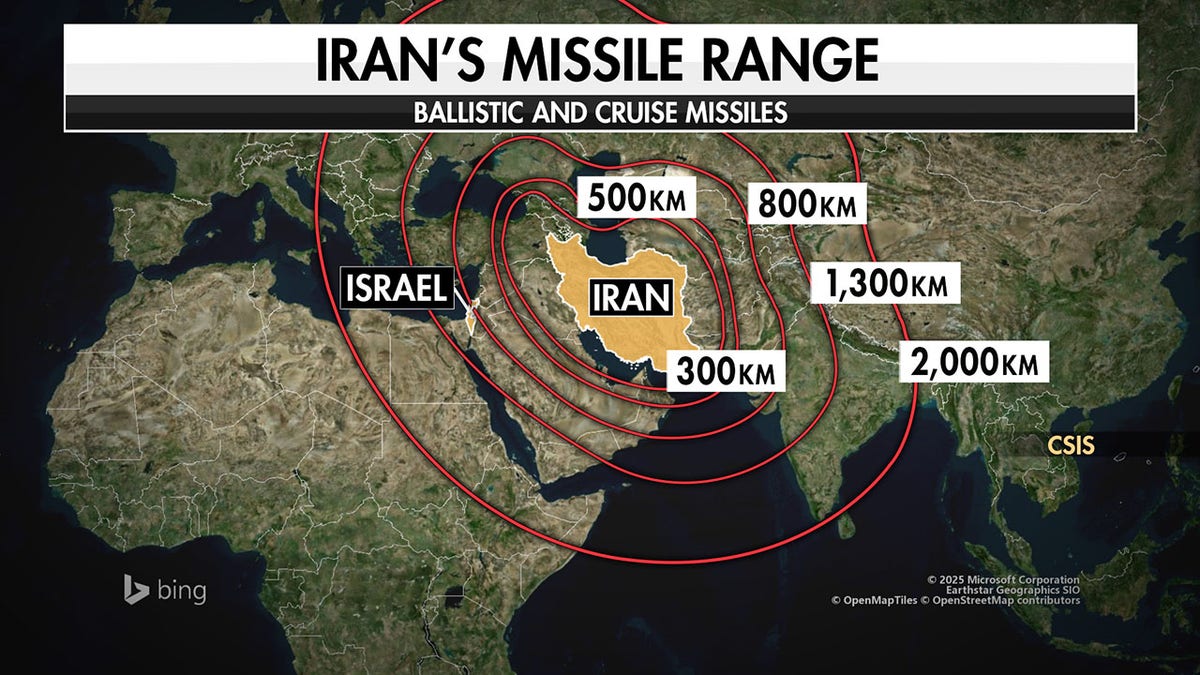
- Integrated Air and Missile Defense (IAMD): Strengthening the "Middle East Air Defense" alliance to negate Iran’s drone and missile leverage.
- Economic Balkanization: Permanently severing the Iranian financial system from the SWIFT network and pressuring secondary markets in Asia to finalize the "de-oiling" of the global economy.
- Strategic Patience vs. Tactical Agility: Acknowledging that regime behavior will not change through treaty, the U.S. must prepare for a decades-long containment strategy similar to the Cold War, where the goal is to wait out the internal contradictions of the opposing state rather than forcing a diplomatic breakthrough.
The "best and final offer" is the closing of the chapter on the post-2015 era. The rejection of this offer signifies that both nations have accepted the inevitability of a high-friction, low-trust environment. Policy must now be calibrated not for the hope of a grand bargain, but for the management of a permanent adversarial state. The focus shifts from the negotiating table to the logistics of the Gulf and the hardening of regional assets. Any further pursuit of "deals" under the current parameters is a misallocation of diplomatic resources. The reality of 2026 is a return to a bipolar regional struggle where the only "deal" is the maintenance of a tense, armed peace.