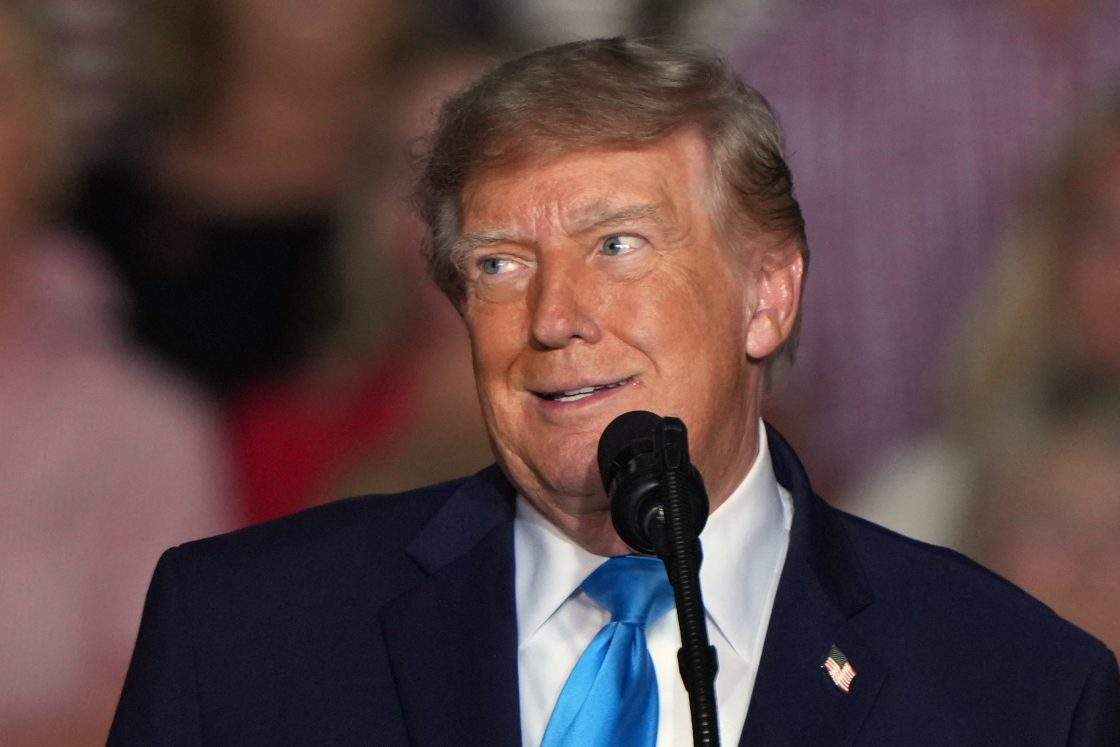
Five words. Spoken casually at a podium, amplified through millions of screens, and absorbed over morning coffee from Venice Beach to La Jolla.
When Donald Trump remarked about Iran during a press appearance—"Let ’em take out" Los Angeles and San Diego—the political world reacted according to its usual choreography. Pundits dissected the phrasing. Critics called it reckless. Supporters argued it was rhetorical bravado aimed at highlighting domestic political grievances and deterrence failures.
Yet far from the television studios of Washington and New York, those words landed differently. They settled onto concrete, coastline, and the quiet routines of fourteen million people who call Southern California home.
To understand why a single offhand sentence about foreign adversaries and American cities reverberates so deeply, you have to step away from cable news transcripts and look at the human geography of the Pacific Rim.
The Architecture of Vulnerability
Consider a hypothetical morning in San Diego, just a few miles north of the Mexican border. Elena, a structural engineer who commutes across the Coronado Bridge every day, sits in bumper-to-bumper traffic watching a Nimitz-class aircraft carrier slip slowly through the fog of the bay.
For Elena, national security is not an abstract policy paper debated in Senate committee rooms. It is the hum of F/A-18 Hornets overhead during her daughter’s soccer practice. It is the Naval Base San Diego, the largest surface ship base on the West Coast, employing tens of thousands of her neighbors.
A hundred and twenty miles up the Interstate 5 corridor lies Los Angeles—an economic engine that, if it were a standalone nation, would rank among the twenty largest economies in the world. Its twin ports of Los Angeles and Long Beach handle roughly forty percent of all containerized imports entering the United States. Every smartphone, medical device, and winter coat stocked on shelves in Ohio or Georgia passes through those cranes first.
When political rhetoric treats these cities as rhetorical bargaining chips—or frames their destruction as a punchline in a domestic partisan argument—it strips away the dense, fragile reality of what actually lives there.
The Mechanics of Deterrence and Rhetoric
In international relations, words are not merely descriptions of reality; they are instruments that shape it. Historians of the Cold War often point to the concept of "strategic ambiguity" versus "credible commitment." The theory is simple. Think of deterrence like an invisible electric fence around a yard. The fence only works if both the homeowner and the intruder believe the current is actually turned on—and that the homeowner cares enough to maintain the wiring.
During the 1962 Cuban Missile Crisis, every public statement issued by the Kennedy administration and the Kremlin was weighed down to the syllable, because both sides understood that casual hyperbole could be misread by radar operators or military planners thousands of miles away.
Fast forward to the modern media ecosystem, where political communication operates by entirely different incentives. Today, statements are engineered for immediate domestic reaction, viral clips, and partisan point-scoring. In the context of Trump’s remarks, the underlying argument he was making centered on his long-standing critique of U.S. foreign policy toward Tehran—specifically, the assertion that American leadership had projected weakness, combined with his frequent attacks on California's Democratic leadership.
Supporters of the former president routinely note that his style relies on deliberate exaggeration to force attention onto issues he believes the establishment ignores, such as Iran’s ballistic missile program and regional proxy networks. From their perspective, blunt, unfiltered speech disrupts diplomatic complacency.
Critics, including former national security officials from both parties, counter that publicly suggesting an adversary could—or should—strike major U.S. population centers undermines the foundational premise of American defense: that an attack on any square inch of U.S. territory is unthinkable and met with overwhelming consequence. Even as sarcasm, they argue, it blurs the red lines that keep global conflicts contained.
What History Tells Us About Distance
There is a persistent psychological illusion in the continental United States that oceans still act as moats. For two centuries, geography was America’s greatest shield. While European and Asian capitals endured aerial bombardment in the twentieth century, the American mainland remained largely untouched, fostering a habit of viewing foreign wars as distant spectacles.
That illusion shattered on September 11, 2001, and technology has eroded it further every year since. Intercontinental ballistic missiles, cyber warfare targeting municipal power grids, and long-range drone capabilities have compressed geography.
In military war-gaming scenarios conducted by defense think tanks like the RAND Corporation, the West Coast is routinely modeled not as a safe rear-echelon zone, but as a critical logistics hub. If a major conflict were ever to erupt in the Pacific or escalate globally, the ports of Southern California and the shipyards of San Diego would be the vital arteries keeping supply lines open.
Yet knowing something intellectually is very different from feeling it viscerally. Most days, the threat remains invisible—buried beneath the mundane urgency of rent payments, school drop-offs, and drought warnings.
The Weight of Words in an Anxious Age
I remember standing on the Santa Monica Pier a few years ago during an emergency alert test that accidentally buzzed millions of phones across the region simultaneously. For thirty seconds, the carefree chatter of tourists and street performers vanished. People froze, staring down at their screens, waiting to see if the blue sky above the Pacific was about to change.
It was a false alarm, quickly forgotten once the Ferris wheel lights came back on. But that brief moment revealed how thin the veneer of normalcy really is.
Public trust in institutions—from the presidency to the Pentagon to the media—has declined steadily over the past two decades, according to longitudinal polling by the Pew Research Center. When citizens already feel uncertain about the stability of the world around them, political language carries extra weight. People listen not just for policy proposals, but for reassurance that those who seek power recognize the basic humanity of the governed.
To dismiss Los Angeles or San Diego—even in jest, even in the heat of a political rally—is to forget that cities are not monoliths defined by their electoral maps or their state governors. They are collections of taco stands in Boyle Heights, marine biology labs in La Jolla, aerospace machinists in El Segundo, and families trying to build quiet, ordinary lives against the backdrop of an unpredictable world.
Beyond the Soundbite
The debate over how the United States should confront Iran is serious, complex, and consequential. Reasonable people disagree sharply on whether maximum economic pressure, diplomatic engagement, or military deterrence is the most effective path to preventing nuclear proliferation and regional instability. Those debates deserve rigor, honesty, and sobriety.
What they do not deserve is the casual erasure of millions of citizens for the sake of an applause line.
As night falls over the Southern California coast, the lights of the container ships anchored outside San Pedro Bay blink steadily against the dark water, waiting for dawn to unload their cargo. Farther south, the beacon at Point Loma sweeps across the Pacific horizon, just as it has for more than a century—a quiet, steadfast reminder that the real work of keeping a nation safe happens far away from the microphone.



