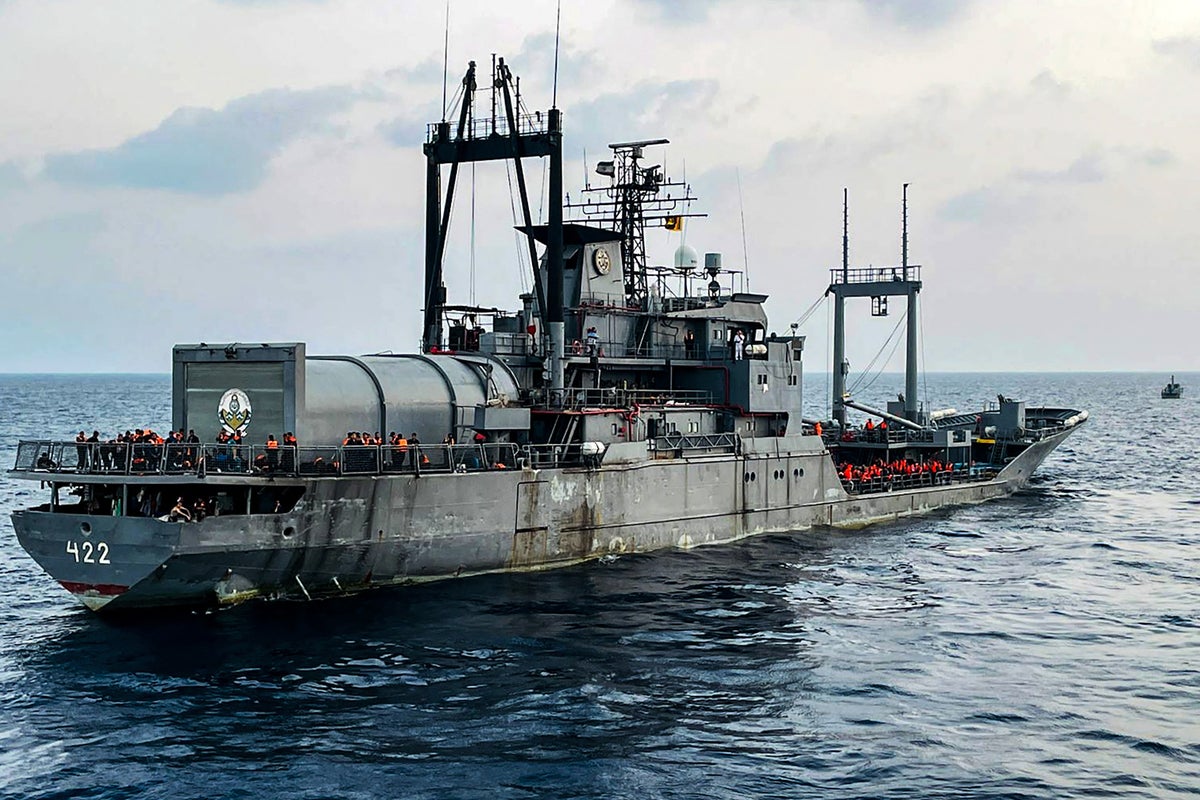
Sri Lanka just pulled off a diplomatic masterclass that most countries would find impossible. By quietly sending home the Iranian survivors of a US torpedo attack, Colombo managed to honor its humanitarian obligations without poking the American bear. It's a move that defines the island nation’s current "friend to all, enemy to none" stance. You won't find this kind of high-stakes maneuvering in a textbook. It’s happening in real-time in the Indian Ocean, where the water is getting crowded and the stakes are getting higher.
The incident started with a flare-up that many feared would spark a regional wildfire. A US vessel engaged an Iranian craft, leaving survivors stranded in a literal and metaphorical no-man's land. When Sri Lankan authorities picked them up, the clock started ticking. Every hour those men stayed on Sri Lankan soil was an hour of potential friction with Washington or Tehran. Sri Lanka chose the middle path. They provided medical care, kept the process transparent but low-key, and facilitated a quick exit. In related updates, we also covered: The Sri Lankan Resignation Myth Why Killing Coal Imports Won't Save the Grid.
Why the Indian Ocean is the New Front Line
The Indian Ocean isn't just a scenic backdrop for tourism anymore. It's the most contested body of water on the planet. Sri Lanka sits right in the middle of it. When a US torpedo hits an Iranian target, it's not just a military engagement. It’s a message. For Sri Lanka, being the one to fish out the survivors puts them in a spot where one wrong word ruins a decade of trade deals.
Sri Lanka relies heavily on US export markets for its garments and tea. At the same time, it has historical ties with Iran, particularly regarding energy security and tea-for-oil barter agreements. You can't just pick a side when your economy is held together by both. The decision to repatriate the Iranians wasn't about being "pro-Iran." It was about being "pro-sovereignty." They followed international maritime law to the letter. By doing so, they gave the US no room to complain about "harboring enemies" while giving Iran no reason to feel slighted. The Guardian has provided coverage on this important topic in great detail.
The Reality of Non-Alignment in 2026
We often hear about non-alignment like it's some relic of the Cold War. It isn't. In 2026, it's a survival strategy. Sri Lanka is currently navigating a debt restructuring process that involves a massive list of creditors, including the IMF, China, and India. They literally cannot afford to have a side. If they had handed those survivors over to US custody, they’d look like a puppet. If they had hailed them as heroes, they’d look like a threat.
Instead, the Ministry of Foreign Affairs treated the event as a standard search and rescue operation. They stripped the politics out of the room. They treated the Iranian crew as distressed mariners, not as combatants or political pawns. This is how a small nation maintains its dignity when giants are fighting in its backyard. It’s about sticking to the script of international law so tightly that nobody can find a crack to pry open.
Managing the Washington Pressure Cooker
Don't think for a second that Washington wasn't watching. The US Embassy in Colombo is one of the most active in the region. There’s always a quiet pressure to align with the "rules-based order," which is often code for "do what we want." However, the US also understands that a stable Sri Lanka is better than a Sri Lanka in chaos.
By focusing on the humanitarian aspect, Sri Lanka gave the US a graceful out. The Americans can't publicly argue against saving lives at sea. It would look bad on the global stage. By moving fast, Colombo prevented the story from becoming a week-long news cycle that would force the State Department to take a harder public stance. Speed was their best defense. They moved the survivors before the narrative could set in stone.
Lessons from the Tea for Oil Barter
To understand why Sri Lanka cares about Iran, look at the 2021 tea-for-oil deal. Sri Lanka owed Iran roughly $250 million for oil. Because of sanctions, they couldn't just wire the cash. They sent tea instead. This kind of creative problem-solving shows the depth of the relationship. Iran has been a steady partner for Sri Lanka when other doors were closed.
If Sri Lanka had botched this rescue, that relationship would have curdled. Iran isn't just a distant country; it's a regional power that has consistently supported Sri Lanka in international forums like the UN Human Rights Council. You don't throw away a friend like that over a single incident, even if the US is the one holding the torpedo tubes.
The Maritime Law Shield
Sri Lanka used the United Nations Convention on the Law of the Sea (UNCLOS) as its primary shield. Under UNCLOS, the duty to render assistance to those in distress at sea is clear. It doesn't matter if they are soldiers, civilians, or somewhere in between. If they are in the water, you pick them up.
By framing the entire event through this legal lens, Sri Lanka made the situation technical rather than political. This is a pro tip for any small state dealing with superpowers. If you make it about "values," you lose. If you make it about "protocols," you survive. They followed the protocol. They gave the men food, water, and medicine. Then they handed them over to the proper consular authorities. Case closed.
What This Means for Future Regional Stability
This incident sets a precedent. It tells the world that the Indian Ocean's hub isn't a playground for superpower whims. It signals that Sri Lanka will prioritize its own legal standing over the demands of any single foreign capital. That's a bold claim for a country that was facing an economic collapse just a few years ago.
It also highlights the maturity of the Sri Lankan coast guard and navy. They handled a high-tension recovery without any reported incidents or leaks. That kind of professional discipline is what builds trust with international shipping lanes. If you're a shipping company, you want to know that the local navy is professional enough to handle a military fallout without turning the whole zone into a war corridor.
Practical Takeaways for Geopolitical Observers
If you're watching this space, stop looking for "winners" and "losers." Look for the "middle." In the coming years, more countries will follow this blueprint. They will use international law to deflect superpower pressure.
- Watch the tone of the Sri Lankan Ministry of Foreign Affairs. If they stay boring and technical, they are winning.
- Monitor the "Integrated Country Strategy" the US has for Sri Lanka. See if the aid packages change.
- Keep an eye on Iranian naval presence in the Indian Ocean. They will likely feel emboldened by this "win" and might increase patrols.
Sri Lanka didn't just send some sailors home. They sent a message that they aren't for sale. They played the hand they were dealt with incredible precision. While the headlines focus on the torpedoes, the real story is the quiet, efficient diplomacy that happened in the aftermath. That’s where the real power lies in 2026. Keep your eyes on the ports, not just the politics. The next time a crisis hits these waters, expect the same level of calculated neutrality. It’s the only way they stay on the map.