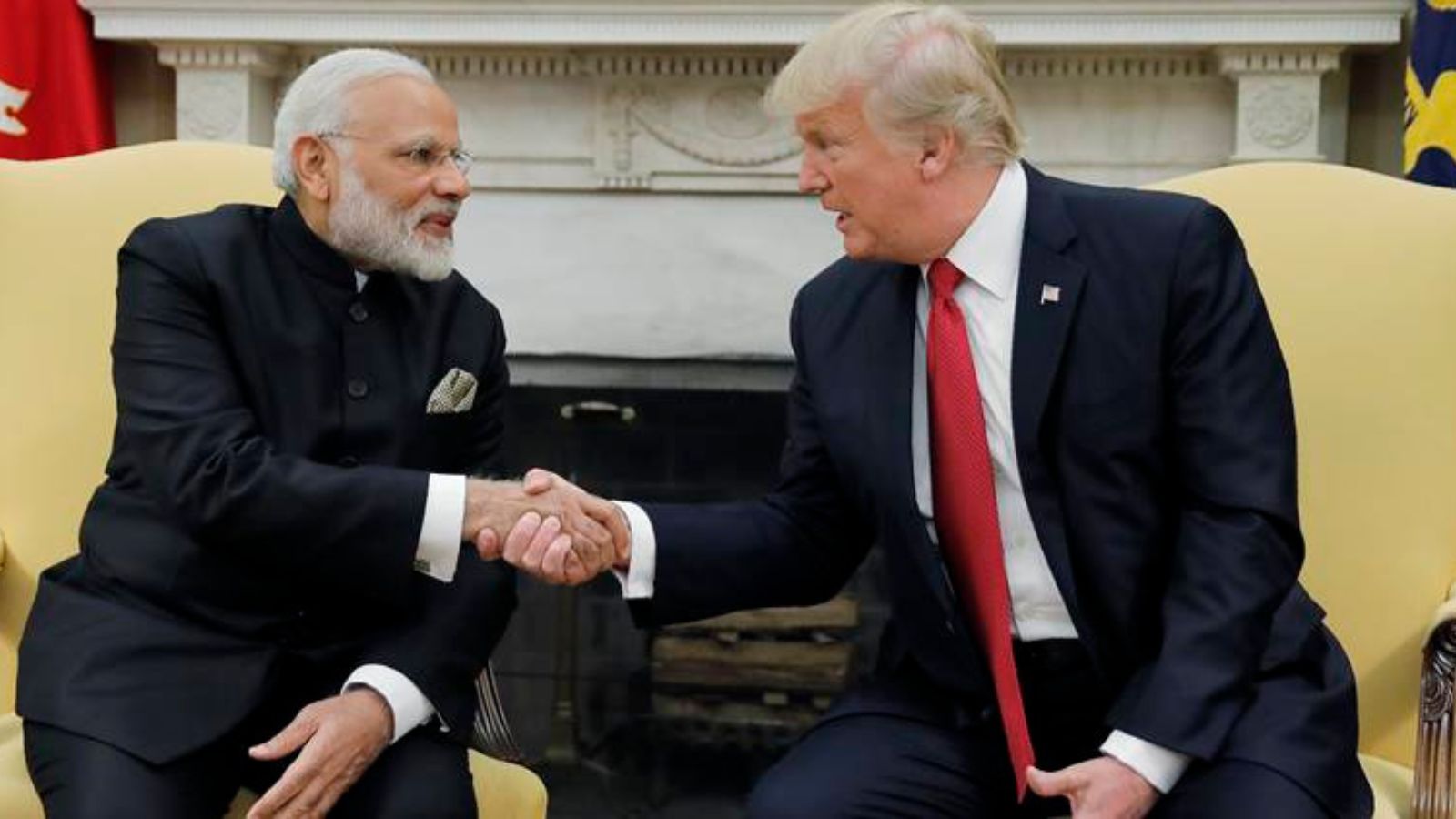
Mainstream media outlets are swooning over a speakerphone call. During a high-profile summit in New Delhi, Donald Trump dialed into Marco Rubio’s phone to declare his love for India and Prime Minister Narendra Modi. The crowd cheered. The pundits churned out thousands of words on the "unprecedented warmth" and the "unbreakable bond" of the US-India alliance.
It was great theater. It was also completely meaningless. Meanwhile, you can find similar events here: Why Building Safety Fails After Major Disasters and How to Fix It.
The lazy consensus dominating international relations reporting right now is that personal chemistry between populist leaders equals structural foreign policy alignment. We are told that a second Trump administration, flanked by a China-hawk like Rubio, means a golden era for Indian strategic interests.
This is a dangerous misreading of Washington's true intentions. It mistakes a transactional sales pitch for a deep-rooted alliance. I have spent years tracking how bilateral trade negotiations actually function behind closed doors, away from the flashing cameras of luxury Delhi hotels. The reality is brutal: Trump’s "America First" and Modi’s "Make in India" are on a direct collision course. A friendly phone call does not change the math on tariffs, immigration, or intellectual property. To explore the bigger picture, check out the excellent analysis by The Washington Post.
The Mirage of Shared Values
The prevailing narrative treats the US-India relationship as a monolith built on shared opposition to Beijing. This overlooks the fundamental divergence in how both nations view global power. Washington wants a junior partner to help contain China in the Indo-Pacific. New Delhi wants a multi-polar world where India is an independent pole, unbeholden to any Western bloc.
When Trump calls Rubio to flatter Modi, it isn't an endorsement of India's global rise. It is a tactical maneuver to keep India locked into purchasing American military hardware and maintaining a defensive posture against China, without the US having to offer any real concessions on trade or technology transfers.
Let us look at the actual economic friction that a speakerphone conversation conveniently glosses over. Trump has repeatedly labeled India the "tariff king." During his previous term, he stripped India of its preferential trade status under the Generalized System of Preferences (GSP). That decision impacted billions of dollars in Indian exports. The rhetoric might be warm today, but the policy architecture remains aggressively protectionist.
Imagine a scenario where India increases its domestic manufacturing duties on American medical devices or tech hardware to protect its local industries. The administration in Washington will not care about past professions of "love." They will retaliate with Section 301 tariff investigations. The personal relationship evaporates the moment the trade balance sheet dips into the red.
Dismantling the H-1B and Immigration Illusion
A common question asked by analysts is how this political alignment will benefit India’s massive tech workforce. The premise of the question is flawed. Political alignment at the executive level does not translate to immigration leniency.
The political base that elects populist leaders in the US demands strict labor protectionism. Marco Rubio, despite his hawkish stance on China which aligns on paper with New Delhi's security concerns, has historically supported tightening restrictions on high-skilled worker visas.
- The Reality of H-1B Visas: The processing fees, rejection rates, and compliance burdens for Indian IT firms operating in the US routinely spike during protectionist administrations.
- The Outsourcing Backlash: No amount of stage-managed affection changes the domestic political necessity in America to bring jobs back to the Rust Belt.
Indian tech firms that rely on labor arbitrage are investing millions trying to pivot their delivery models because they know the political rhetoric at summits is a sideshow. The structural trend is toward restricting foreign labor, not expanding it.
The Russia Contradiction Nobody Wants to Discuss
The biggest crack in this superficial narrative is Moscow. India’s strategic autonomy is anchored by its long-standing defense and energy relationship with Russia. India has consistently refused to condemn Russia’s actions in Ukraine and has instead become one of the largest buyers of discounted Russian crude oil.
The Washington establishment tolerates this because they need India as a counterweight to China. But that tolerance has a shelf life.
| Strategic Issue | US Position | India Position |
|---|---|---|
| Russia Sanctions | Strict compliance, economic isolation | Non-alignment, active energy trade |
| Defense Sourcing | Transition entirely to Western hardware | Maintain legacy Russian systems (S-400) |
| Technology Sharing | Restricted unless full strategic alignment | High demands for technology transfer |
When the geopolitical pressure mounts, a phone call from a president to his secretary of state at a Delhi event will not protect India from the Countering America's Adversaries Through Sanctions Act (CAATSA). The transactional nature of modern American foreign policy means that if New Delhi does not actively choose a side when a crisis hits, the penalties will be swift, regardless of how many times a US leader says they love India.
Stop Misinterpreting Transactional Politics as Strategic Alignment
The danger for Indian policymakers and businesses is buying into their own press. When you see a highly choreographed moment like a surprise phone call at a public event, ask yourself who benefits from the optics.
For the American politicians, it plays perfectly to a wealthy, influential Indian-American diaspora back home whose campaign contributions and votes are vital. It also projects strength on the world stage, showing that the US can command the attention of a packed room in a foreign capital with a single ringtone.
For India, celebrating these moments as major diplomatic victories is a symptom of strategic insecurity. True partners do not need to perform their friendship on speakerphone to prove it exists. They validate it through reciprocal trade agreements, lowered trade barriers, and genuine technology sharing that does not come with strings attached.
Stop looking at the stage. Look at the ledger.
The ledger shows that the US is seeking an asymmetric relationship where India takes the brunt of the geopolitical risk in Asia while offering market access to American corporations, with very little structural reciprocity in return.
If New Delhi continues to mistake flattering phone calls for genuine strategic alignment, it will find itself outmaneuvered when the real negotiations begin. Treat the spectacle as entertainment, because that is all it ever was.


