The traditional relationship between geopolitical instability and monetary policy is currently undergoing a structural shift as the risk of a direct Iran-Israel conflict intensifies. While conventional wisdom suggests that regional instability triggers a "flight to safety," the specific economic transmission mechanisms of a modern Middle East war create a direct conflict between price stability and growth mandates. Central banks, specifically the Federal Reserve, are now forced to weigh the inflationary pressure of an energy supply shock against the recessionary pressure of tightened financial conditions. This analysis deconstructs the specific variables that will compel central banks to pause interest rate adjustments, shifting from a data-dependent stance to a risk-mitigation hold.
The Inflationary Impulse of the Energy Supply Chain
The primary constraint on interest rate cuts during a period of Iranian involvement is the immediate repricing of the global energy complex. Iran’s role in the global oil market is not merely as a producer—contributing roughly 3% of global supply—but as a geographic gatekeeper.
The Strait of Hormuz Bottleneck
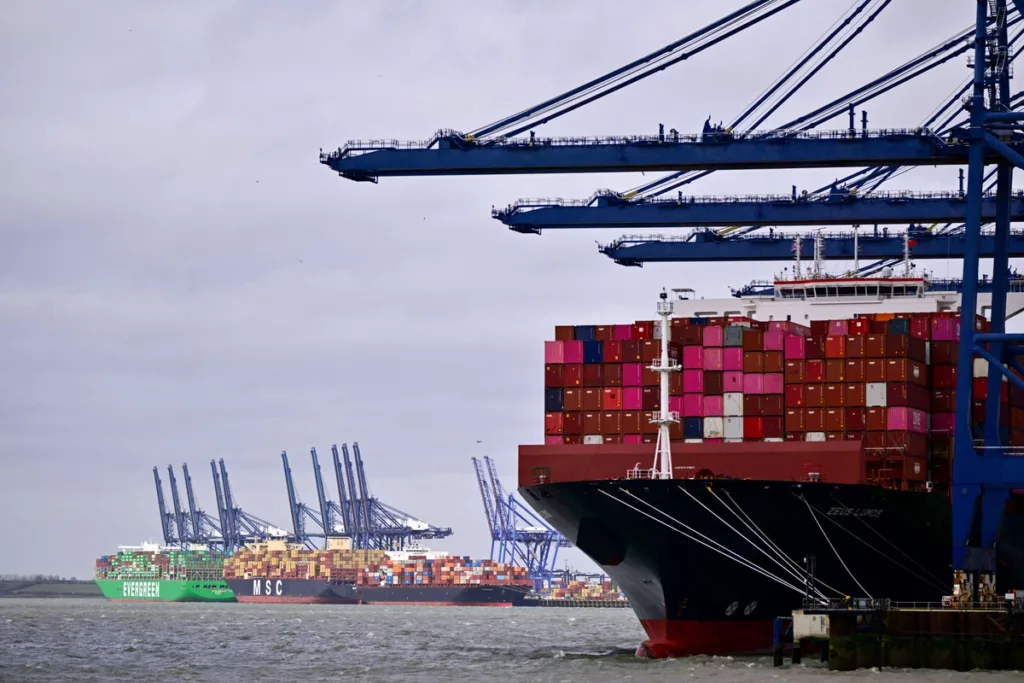
Approximately 20% of the world’s daily liquid petroleum consumption passes through the Strait of Hormuz. A kinetic conflict involving Iran puts this chokepoint at risk. The economic consequence is not a linear increase in price but a nonlinear volatility spike. When the market prices in a "blockade premium," the cost of Brent Crude ignores traditional supply-demand fundamentals. For central banks, this represents a "cost-push" inflation scenario. Unlike "demand-pull" inflation, which high interest rates can effectively dampen by cooling consumer spending, cost-push inflation driven by energy shocks is largely immune to domestic interest rate levels.
Secondary Derivative Effects
Energy costs act as a universal input. An escalation leads to:
- Refining Margins: Increased insurance premiums for tankers in the Persian Gulf raise the "landed cost" of crude, independent of the spot price.
- Fertilizer and Food: Natural gas is a primary feedstock for nitrogen-based fertilizers. Iranian regional influence extends to gas fields that power global agricultural inputs.
- Logistics Surcharges: Shipping lanes are rerouted, increasing transit times and fuel burn, which manifests as higher "Goods and Services" inflation months after the initial kinetic event.
The Financial Conditions Tightening Effect
A war involving Iran functions as a synthetic interest rate hike. As geopolitical risk rises, private markets demand a higher risk premium for lending. This "organic tightening" does the work of the central bank, often with more brutality than a planned 25-basis-point increase.
Credit Spread Widening
In times of high-intensity conflict, the spread between Treasury yields and corporate bonds widens. Investors flee "risk-on" assets. This increases the cost of capital for corporations regardless of where the federal funds rate is set. If the Federal Reserve were to raise rates during this period, they would risk over-tightening and triggering a systemic credit freeze. Conversely, cutting rates might be viewed as premature if the inflationary impact of the war hasn't yet peaked.
The USD Strength Paradox
Geopolitical instability typically strengthens the U.S. Dollar as a reserve currency. A stronger dollar is inherently deflationary for the U.S. because it lowers the cost of imports, but it is hyper-inflationary for the rest of the world, which must buy energy priced in USD. This divergence creates a global "liquidity vacuum." The Federal Reserve must remain on hold to observe if the dollar’s strength provides enough of a natural brake on inflation to offset the rising energy costs.
The Three Pillars of Central Bank Paralysis
To understand why a hold is the only logical outcome, we must categorize the decision-making constraints into three distinct pillars.
1. The Uncertainty Bound
Monetary policy relies on "forward guidance"—the ability of the bank to signal future moves to stabilize markets. Kinetic warfare introduces "Knightian Uncertainty," a state where the risks are not just unknown, but unmeasurable. You cannot model a path for CPI when the availability of 17 million barrels of oil per day is a binary variable (open or closed). In this environment, the "Optionality Value" of doing nothing increases. Every day a central bank waits is a day it gains more data on whether the conflict is localized or systemic.
2. The Fiscal-Monetary Conflict
War requires fiscal expansion. Governments involved or supporting allies must increase defense spending, often financed by debt. If a central bank continues to raise rates while the government is issuing massive amounts of new debt to fund a conflict, the "Interest Expense" on that national debt becomes a systemic risk. Central banks often enter a period of "Financial Repression" or yield curve control during wartime, effectively holding rates below the rate of inflation to allow the government to finance the war effort.
3. The Employment Buffer
Current labor markets in the West are tight but softening. A Middle East conflict threatens to break the "soft landing" narrative. If energy prices spike, consumer discretionary spending collapses as "gasoline taxes" (higher prices at the pump) eat into household budgets. Central banks cannot risk raising rates into a consumer-led recession caused by an external shock.
Structural Breaks in the Phillips Curve
The Phillips Curve, which maps the inverse relationship between unemployment and inflation, breaks down during geopolitical supply shocks. We enter a "Stagflationary" quadrant. In this scenario:
- Inflation rises due to energy and supply chain disruptions.
- Unemployment rises as businesses face higher input costs and lower consumer demand.
Traditional monetary theory suggests raising rates to fight the inflation, but doing so accelerates the unemployment. Conversely, cutting rates to save jobs accelerates the inflation. The only viable strategic path is the "Wait and See" hold. This is not indecision; it is a calculated move to avoid a policy error that could turn a cyclical downturn into a structural depression.
Operational Constraints on the Fed and ECB
The Federal Reserve and the European Central Bank (ECB) face different pressure points in an Iran-war scenario. The U.S. is a net energy exporter, providing some insulation. However, the ECB is a net importer and is far more sensitive to Middle Eastern energy flows.
If Iran closes the Strait of Hormuz, the ECB is forced into an immediate "Crisis Management" mode. They would likely hold rates while simultaneously re-activating liquidity facilities to prevent European banks from seizing up. The Fed, meanwhile, would likely hold rates to maintain the "Carry Trade" and prevent a total collapse in global liquidity.
Modeling the "Hold" Duration
The duration of the interest rate hold is directly correlated to the "De-escalation Half-Life." Historically, geopolitical spikes in oil last between 3 and 9 months before new supply routes are established or demand destruction kicks in.
- Phase 1 (The Spike): 0-2 months. Rates are held. Market volatility is at its peak.
- Phase 2 (The Adaptation): 3-6 months. Inflation data starts showing the "passthrough" of energy costs. The central bank remains on hold to see if inflation expectations become "unanchored."
- Phase 3 (The New Normal): 6+ months. If the conflict persists, the central bank must finally choose between fighting the now-embedded inflation or supporting the recessed economy.
Strategic Realignment of Portfolio Duration
The shift to a "Higher for Longer" or "Hold for Longer" stance necessitates a re-evaluation of asset allocation. The assumption that rate cuts were "just around the corner" is invalidated by the introduction of an Iranian conflict variable.
Institutional strategy must pivot toward:
- Real Assets: Commodities and energy infrastructure that benefit from the supply-side shock.
- Short-Duration Fixed Income: Avoiding the "duration risk" of long-term bonds which will be crushed if inflation proves stickier than anticipated.
- Volatility as an Asset Class: Positioning for a regime where "Delta" (price movement) is secondary to "Vega" (volatility movement).
The core of the issue is that an Iran war is a "Supply Shock" event. Monetary policy is a "Demand Side" tool. Using a demand-side tool to fix a supply-side problem is like trying to put out a fire with a hammer. Central banks recognize this limitation. They will hold rates to avoid the "Volcker Trap"—raising rates so high to fight energy inflation that they destroy the underlying industrial base of the economy.
The strategic play is to front-run the "Hold" by exiting positions that rely on cheap credit and moving into positions that provide a hedge against "Input Cost Inflation." The era of "Transparent Volatility" is over; we are entering an era of "Geopolitical Opacity" where the central bank is no longer the primary driver of the market—the Strait of Hormuz is.
Monitor the spread between 2-year and 10-year Treasuries. If the curve remains inverted while oil crosses $110 per barrel, the probability of a 12-month rate hold reaches near-certainty. Move capital into "Defensive Alpha"—sectors like defense, cyber-security, and domestic energy production—which decouple from the broader interest-rate-sensitive indices. This is the only path to capital preservation as the "Geopolitical Premium" is permanently integrated into the global discount rate.