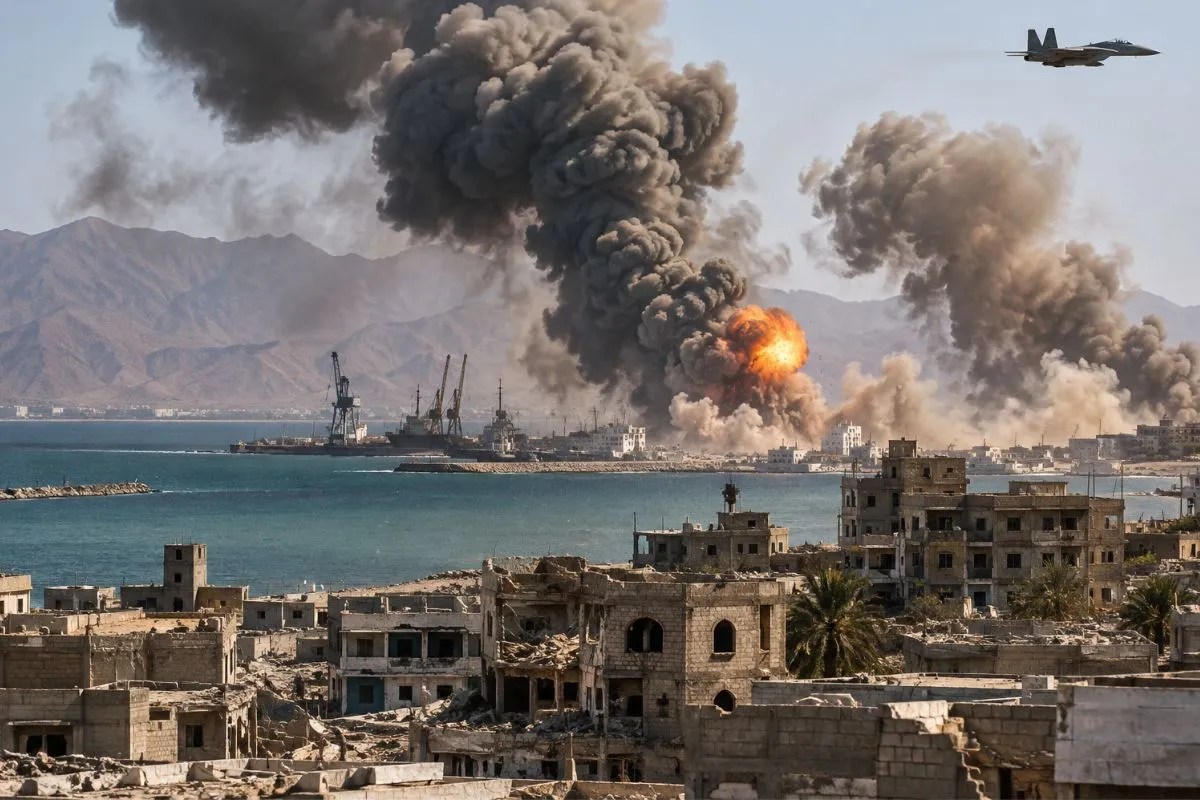
The operational control of Yemen's Red Sea littoral rests on structural geography rather than fleeting battlefield victories. When coalition airstrikes targeted infrastructure in the strategic port city of Mokha, resulting in documented civilian fatalities including two children and a woman, the event was evaluated by regional desks primarily through a humanitarian lens. However, a structural analysis reveals a deeper tactical logic: the kinetic contest for maritime chokepoints.
The Strategic Function of Maritime Bottlenecks
Mokha occupies a vital geographic position along the Bab el-Mandeb strait, through which a significant percentage of global commercial shipping passes. Control over this coastal strip determines the logistics supply chain for opposing factions in the broader Yemeni conflict.
The military value of Mokha is defined by three primary variables:
- Proximity to Sea Lanes: Artillery and missile deployments within coastal range can directly threaten commercial tanker routes.
- Logistical Ingress: Control of the port allows for the maritime importation of matériel, bypassing overland supply lines vulnerable to interdiction.
- Defensive Depth: Coastal terrain provides natural barriers that shape armor and infantry maneuvers moving north toward Taiz or south toward the strait.
Air Campaign Mechanics and Collateral Geometry
The execution of tactical airstrikes in densely populated urban-port environments creates predictable friction between military objectives and civilian security. Precision munitions rely on target acquisition data, environmental visibility, and inertial guidance systems. In asymmetric conflicts where opposing forces blend civil-military infrastructure, the margin for targeting error narrows significantly.
The kinetic mechanism operates through a harsh calculus:
- Target Identification: Coalition intelligence identifies a suspected command node, logistical cache, or troop concentration within the port perimeter.
- Payload Delivery: Munitions are deployed to neutralize the asset, assuming structural containment of the blast radius.
- Environmental Variance: Urban density, structural fragility, and proximity to residential quarters transform localized military targets into widespread structural damage zones.
The Cost Function of Protracted Urban Warfare
The human cost documented in Mokha reflects the systemic hazards of urban combat in prolonged civil conflicts. When strategic infrastructure overlaps with civilian habitation, the friction of war inevitably translates into non-combatant casualties. The strategic utility of capturing or defending a port city must be weighed against the logistical drag of managing a ruined urban center and the diplomatic fallout of high civilian casualty counts.
To alter the trajectory of similar engagements, military planners and regional actors must transition from immediate kinetic interdiction to a framework that secures maritime corridors without destabilizing urban population centers. Prioritize targeted electronic countermeasures and naval quarantine protocols to enforce maritime blockades, substituting high-explosive aerial campaigns in densely populated ports with precision naval interdiction at sea.


