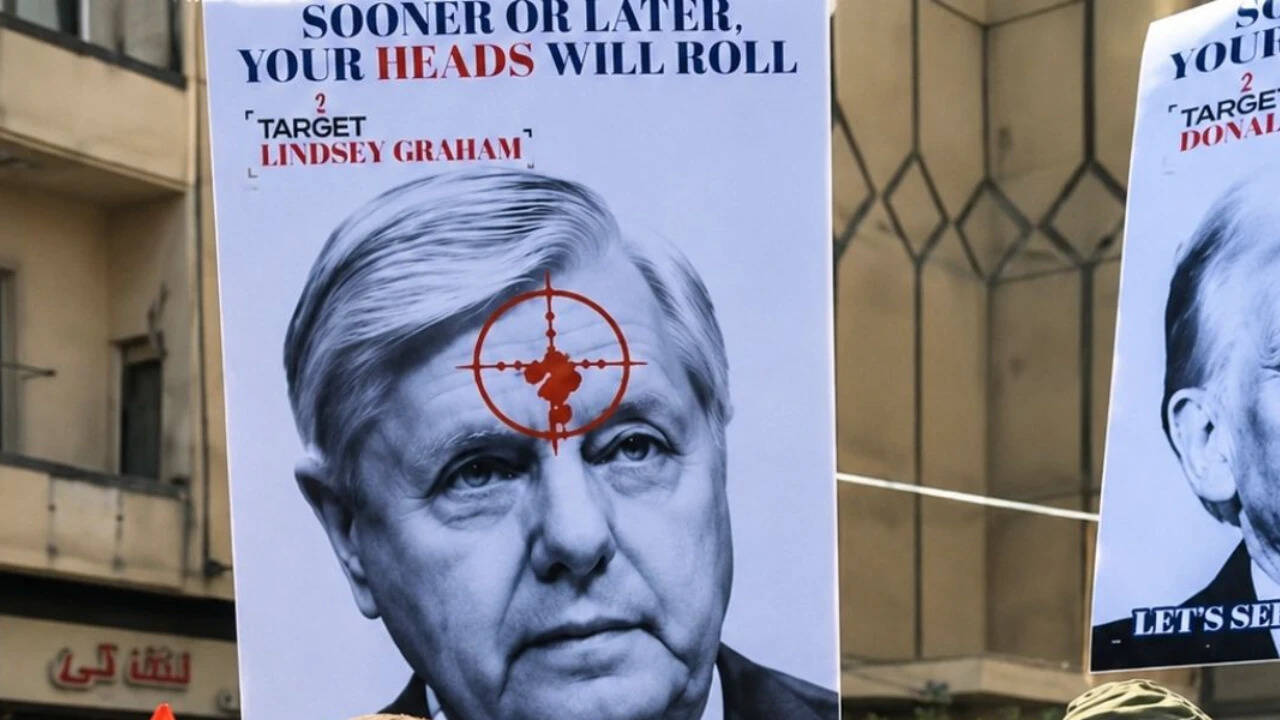
The sudden passing of Senator Lindsey Graham has instantly recalibrated the geopolitical calculus of the Middle East, triggering starkly polarized reactions that expose the deep-seated animosities defining modern diplomacy. While Donald Trump and Israeli Prime Minister Benjamin Netanyahu lamented the loss of a fierce American hawk, state-sanctioned celebrations erupted across Iran. The stark contrast highlights more than just a division in emotional responses; it underscores Graham's decades-long legacy as a central architect of Washington’s maximum-pressure campaign against Tehran. His absence leaves a profound power vacuum in the Senate Foreign Relations machinery.
For a generation of foreign policy watchers, Graham was a predictable, immutable force. He did not merely support intervention; he championed it with a zeal that made him a primary target of foreign adversaries.
The View from Tehran
In the streets of Tehran and across state-run media channels, the reaction to Graham’s death was unvarnished. High-ranking officials and state-backed commentators openly cheered, utilizing state television to frame his passing as a victory for the Islamic Republic. To understand this reaction, one must look at the specific grievances Iran harbored against the South Carolina senator.
Graham was not just another vote in Congress. He was an aggressive proponent of the economic sanctions that crippled the Iranian currency and restricted its oil exports. He frequently advocated for direct military strikes against Iranian infrastructure, particularly after regional escalations involving proxy networks. For the clerical regime, Graham symbolized the relentless, uncompromising wing of American power that sought nothing short of regime collapse.
By celebrating his death, Tehran is attempting to project strength to its domestic audience. The Iranian economy has suffered under the weight of international restrictions, and the regime routinely capitalizes on the death of Western hardliners to signal divine vindication or geopolitical resilience. It is a calculated distraction from internal economic pressures.
Grief and Strategic Anxiety in Mar-a-Lago and Jerusalem
Conversely, the mood in West Palm Beach and Jerusalem was somber, marked by a sense of acute political loss. Donald Trump lost a crucial confidant who bridged the gap between the populist "America First" movement and the traditional Republican defense establishment.
Graham’s relationship with Trump was complex, evolving from bitter rivalry during the 2016 primaries to deep strategic alignment. On Middle Eastern policy, Graham was often the whisperer who nudged Trump toward more hawkish positions, including the termination of the Joint Comprehensive Plan of Action (JCPOA) and the targeted strike on Qasem Soleimani. Without Graham’s counsel, Trump’s inner circle loses a vocal advocate for maintaining an aggressive, forward-deployed posture in the region.
In Israel, Benjamin Netanyahu mourned a lawmaker he viewed as an irreplaceable asset on Capitol Hill. Graham consistently navigated the halls of Congress to secure emergency defense appropriations, most notably for the Iron Dome and ongoing military operations.
U.S. Foreign Aid to Key Middle Eastern Allies (Key Areas of Graham's Legislative Focus):
+--------------------+-------------------------------------------+
| Allocation Sector  | Strategic Purpose                         |
+--------------------+-------------------------------------------+
| Missile Defense    | Iron Dome, David's Sling replenishment    |
| Counter-Terrorism  | Joint intelligence sharing via CENTCOM    |
| Maritime Security  | Red Sea deterrence operations             |
+--------------------+-------------------------------------------+
Netanyahu’s government faces an increasingly volatile multi-front conflict. The loss of a dependable, high-ranking ally in the Senate means Israel must now work harder to cultivate bipartisan defense commitments during a period of deepening polarization in Washington.
The Vacuum inside the Senate Foreign Relations Committee
Beyond the immediate rhetoric, the true impact of Graham’s death will manifest in the legislative battles over defense spending and foreign oversight. Graham wielded immense influence over the appropriations process, ensuring that cutting-edge military hardware and intelligence support flowed seamlessly to regional allies.
His legislative style combined old-school hawk internationalism with modern political maneuvering. He knew how to leverage defense bills to force the executive branch into tougher postures against adversaries.
"The true measure of a senator's influence is not the speeches they give on the floor, but the fine print they insert into foreign appropriations bills in the dead of night."
With Graham gone, a younger generation of lawmakers will vie for dominance over the conservative foreign policy agenda. Some lean toward an isolationist approach, questioning the utility of protracted foreign entanglements and massive aid packages. This internal ideological friction could slow down the approval of future security packages, creating strategic ambiguity that adversaries like Iran are eager to exploit.
Regional Repercussions and the Deterrence Gap
Tehran’s overt celebration is a clear indicator that they perceive Graham’s absence as an opportunity. Iran’s security apparatus operates on a calculus of deterrence; they measure American resolve by the rhetoric and actions of its most vocal leaders.
With a key architect of the maximum-pressure strategy gone, Iran may test the boundaries of American resolve. This could manifest in several ways:
- Increased funding and arms transfers to proxy networks in Lebanon, Yemen, and Iraq.
- A more aggressive stance in the Persian Gulf shipping lanes, challenging Western naval presence.
- Acceleration of uranium enrichment activities, banking on a fragmented legislative response from Washington.
Western intelligence agencies are already monitoring these variables closely. The challenge for the current administration and its allies is to project a unified stance that disabuses Tehran of the notion that American policy shifts with the loss of a single senator.
A Legacy Written in Sanctions and Steel
Lindsey Graham understood the stakes of the global chess game, and he played his hand with a bluntness that left no room for ambiguity. He was comfortable being hated by America's adversaries if it meant securing what he believed were the vital interests of the United States and its closest partners.
The celebrations in the streets of Tehran and the quiet strategy sessions in Jerusalem are mirror images of the same reality: Graham was a titan of foreign policy whose influence stretched far beyond the borders of South Carolina. As Washington prepares for a grueling political transition to fill his legislative shoes, the Middle East remains locked in the volatile equilibrium he spent his entire career trying to shape. The rhetoric will eventually fade, but the structural realities of the U.S.-Iran confrontation remain as rigid and dangerous as ever.