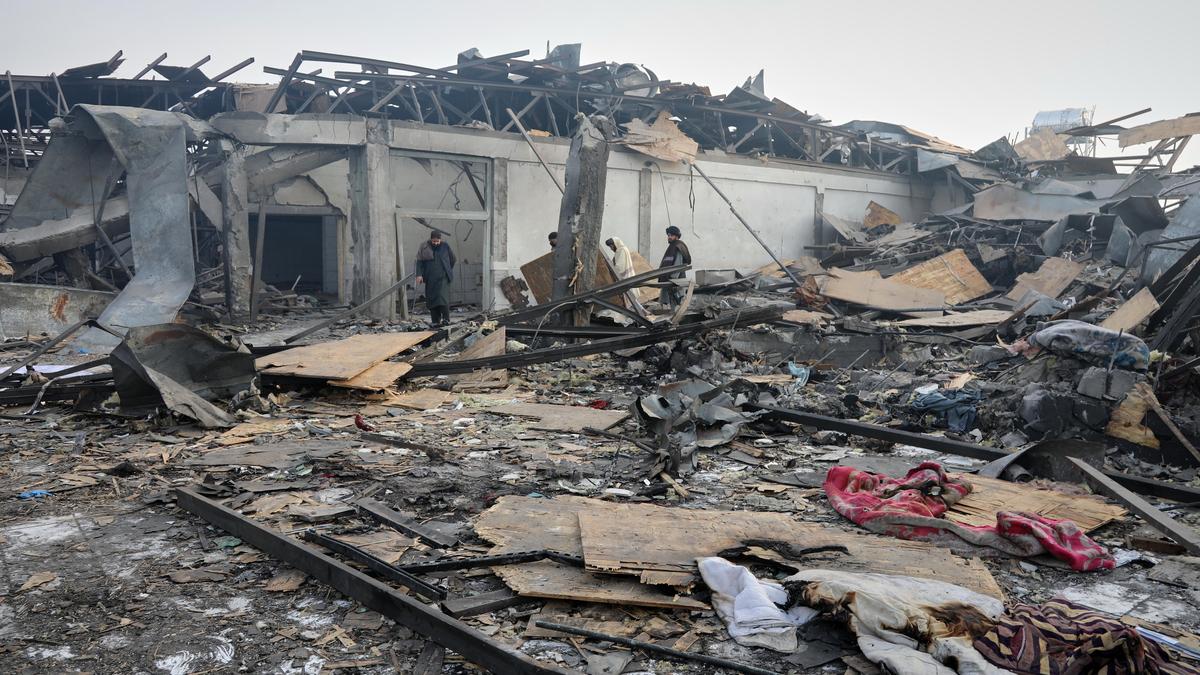
New Delhi has formally condemned a series of precision airstrikes targeting medical infrastructure in Kabul, identifying the source of the hardware and intelligence as Pakistani military assets. The strike on a high-capacity hospital in the Afghan capital has ignited a diplomatic firestorm, threatening to destabilize an already brittle regional security framework. While initial reports focused on the immediate casualties, the deeper story lies in the calculated message sent by Islamabad and the sharp, unyielding response from the Indian Ministry of External Affairs. This is not merely a border skirmish or a localized error; it is a profound escalation in the proxy wars that have defined Central Asian security for decades.
India’s reaction was swift and uncharacteristically blunt. By naming Pakistan directly in its condemnation of the hospital strike, New Delhi has signaled that the era of "strategic restraint" and vague diplomatic "concern" is over. This move forces the international community to confront a grim reality: the line between counter-terrorism operations and state-sponsored strikes on civilian infrastructure has been blurred beyond recognition.
The Mechanics of a Precision Strike
The hardware recovered from the debris of the Kabul medical facility tells a specific story. Military analysts have identified fragments consistent with drone-launched munitions that are not standard issue for any domestic Afghan force. These are sophisticated, GPS-guided projectiles that require a level of technical support and high-altitude surveillance that only a handful of regional players possess.
When a hospital becomes a target, the "human error" defense carries little weight in the age of satellite-guided warfare. Modern tactical drones offer operators high-definition, real-time feeds of their targets. Choosing to release a payload onto a building clearly marked with international medical symbols suggests either a catastrophic failure of intelligence or a deliberate choice to remove a facility that was being used—or suspected of being used—by political dissidents.
Pakistan has historically maintained that its operations in the region are focused on neutralizing militant groups that threaten its own internal security. However, the proximity of this strike to civilian centers in Kabul suggests a shift in doctrine. By hitting targets in the heart of the city, the aggressor demonstrates that no sanctuary is absolute. This creates a vacuum of trust that local populations fill with resentment, further fueling the cycle of insurgency.
India’s Strategic Calculus
Why is New Delhi taking such a vocal stand on an incident outside its own borders? The answer is rooted in the "Double Squeeze" theory of regional dominance. India views any expansion of Pakistani military influence in Afghanistan as a direct threat to its western flank. For years, India has invested billions in Afghan infrastructure, including dams, schools, and indeed, hospitals. When these facilities are leveled, it is not just Afghan lives that are lost; it is Indian soft power being systematically dismantled.
The Investment at Risk
- Infrastructure: India has funded major projects like the Salma Dam and the Zaranj-Delaram Highway.
- Medical Diplomacy: Thousands of Afghan citizens travel to India annually for medical treatment, a bond that is strengthened when India supports local Afghan healthcare.
- Regional Stability: A stable Kabul is the only thing standing between Indian borders and a chaotic corridor of uncontrolled radicalism.
By condemning the strikes, India is positioning itself as the primary defender of Afghan sovereignty. It is a gamble. If New Delhi speaks out but fails to provide the material support needed to defend these facilities, it risks appearing toothless. However, if it remains silent, it concedes the region to Islamabad’s tactical whims.
The Intelligence Gap and the Proxy Problem
The narrative provided by Pakistani officials often centers on the presence of "hostile elements" within civilian structures. In this specific instance, the claim was that the hospital was sheltering high-ranking members of the Tehrik-i-Taliban Pakistan (TTP). Even if this were factually accurate, international law is clear: the presence of combatants does not strip a medical facility of its protected status under the Geneva Conventions.
The real issue is the intelligence gap. In the chaotic intelligence environment of Kabul, disinformation is a primary export. It is entirely possible that regional intelligence agencies fed "hot" data to Pakistani drone operators, knowing that a strike on a hospital would cause the exact diplomatic nightmare we are currently witnessing. In this theater of shadows, the entity that pulls the trigger is often just as much a pawn as the people on the ground.
Economic Aftershocks
The destruction of the Kabul hospital has ramifications far beyond the operating room. Afghanistan’s economy is currently a house of cards, held together by dwindling international aid and informal trade. When major infrastructure is destroyed, the cost of insurance for trade convoys skyrockets. Foreign investors—already a rare breed in Kabul—see the smoke rising from a hospital and realize that their factories or warehouses could be next.
This creates a "security tax" on all Afghan operations. Every dollar spent on rebuilding a destroyed wing of a hospital is a dollar that isn't being spent on education or industrial development. This stagnation serves the interests of those who prefer a weak, dependent Afghanistan. A prosperous Kabul would be harder to influence; a broken Kabul is a playground for regional power brokers.
The Role of Global Watchdogs
The United Nations and various human rights organizations have been criticized for their perceived lethality of response. While statements of "deep concern" are issued within hours, the actual mechanism for holding state actors accountable for such strikes is non-existent. Without a formal investigative body that has the power to inspect strike data and drone logs, the world is left with a "he said, she said" scenario between New Delhi and Islamabad.
Evidence collection in Kabul is notoriously difficult. Sites are often cleared quickly, and forensic data is lost. However, the emergence of private satellite imagery and open-source intelligence (OSINT) groups has changed the game. It is no longer possible to hide a military convoy or a drone launch site from the prying eyes of the internet. The data exists. The question is whether there is the political will to use it.
The Ground-Level Reality
In the wards that remained standing, the situation is dire. Surgeons are operating by flashlight. The strike didn't just kill people; it killed the facility's power grid and its oxygen supply. This is a recurring theme in modern conflict where the "tail" of the strike—the secondary deaths caused by lack of care—far exceeds the initial body count.
Families who once viewed the hospital as a neutral zone now avoid it. This "fear-based vacuum" is the most dangerous consequence of the airstrike. When people are too afraid to seek medical help, the social contract between a government and its citizens dissolves. The state can no longer provide the most basic level of safety, leaving the door wide open for radical groups to step in and provide those services, thereby winning the hearts and minds of a desperate populace.
Moving Beyond Rhetoric
India's condemnation is a necessary first step, but it is insufficient. To truly address the instability, there must be a regional agreement on the use of unmanned aerial vehicles (UAVs). Currently, the "Wild West" atmosphere of the skies above Afghanistan allows for plausible deniability.
A formal "No-Strike Zone" for medical and educational facilities, backed by the threat of immediate economic sanctions, is the only way to prevent a recurrence. This would require China, Russia, and the United States to align their interests—a tall order, but the only alternative is a continuous slide into state-sponsored chaos.
The strikes on the Kabul hospital have stripped away the facade of "targeted" warfare. They have revealed a landscape where the vulnerable are used as leverage in a high-stakes game of regional chess. New Delhi has made its move. Now, the rest of the world must decide if it is willing to let the board be flipped entirely.
Demand a full, independent forensic audit of the munition fragments to confirm the origin of the strike.