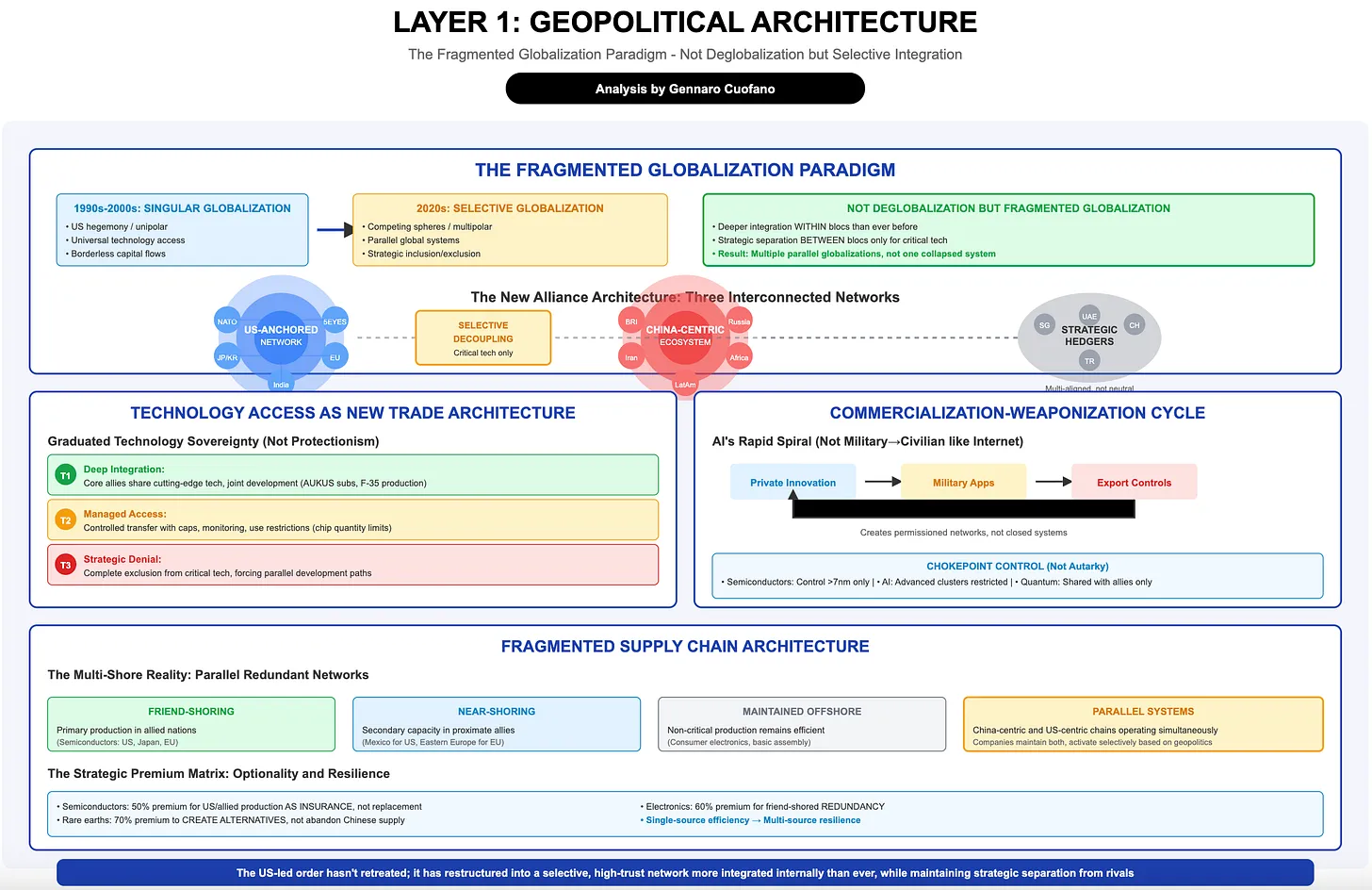
The survival of a 5,000-year-old civilization is rarely a matter of physical preservation; it is a function of institutional continuity and the maintenance of a predictable international order. When political rhetoric shifts toward the total disruption of established diplomatic norms, the primary casualty is the "trust infrastructure" that prevents regional friction from escalating into systemic collapse. The threat of erasing or fundamentally destabilizing a civilizational entity—such as the Iranian plateau or the broader Middle Eastern corridor—operates on three distinct levels of degradation: the destruction of physical capital, the severance of global trade integration, and the erosion of the Westphalian sovereignty model.
The Triad of Civilizational Stability
Civilizations endure because they manage to balance internal cohesion with external utility. The current geopolitical discourse suggests a shift toward a "scorched earth" diplomatic policy that ignores these stabilizing variables. To understand the risk of civilizational erasure, one must quantify the pillars that hold these ancient entities within the modern framework. Meanwhile, you can read other developments here: The Longest Three Minutes in the Dark.
- Sovereign Integrity: The recognition of a state's right to exist within defined borders. If this is treated as a negotiable variable rather than a fixed constant, the incentive for non-proliferation and diplomatic engagement disappears.
- Economic Interdependence: The degree to which a nation’s resources—energy, transit routes, or human capital—are integrated into the global supply chain. This acts as a "peace tax," where the cost of conflict exceeds the gains of aggression.
- Cultural Continuity: The intangible heritage that provides social glue. While rhetoric often targets regimes, the second-order effects of total war inevitably dismantle the social fabric required for post-conflict reconstruction.
The Cost Function of Disruption
The rhetoric surrounding the destruction of historical or cultural sites, or the total economic isolation of an ancient state, carries a specific cost function that is often miscalculated in populist discourse. This cost is not merely moral; it is operational.
The first cost is Intelligence Blindness. When a state is pushed toward total collapse, the centralized nodes of power fragment. This fragmentation creates a vacuum where non-state actors—often more radical and less predictable than the original regime—gain control over localized resources. The result is a shift from a "contained adversary" to an "untrackable threat matrix." To see the bigger picture, check out the detailed analysis by TIME.
The second cost involves Migratory Pressure. Civilizational collapse on the scale of a major Middle Eastern power would trigger a demographic shift that current European and Asian border infrastructures are not equipped to process. The displacement of millions does not just affect the target nation; it imposes a permanent tax on the social services and political stability of neighboring regions.
The Mechanics of Maximum Pressure
Maximum pressure as a strategy relies on the assumption that a civilization’s leadership will prioritize survival over ideological purity. However, this logic breaks down when the threat is perceived as existential rather than transactional.
The Elasticity of Regime Survival
A regime’s willingness to negotiate is inversely proportional to the perceived finality of the threat. If the stated goal is "erasure," the regime enters a state of total mobilization. This creates a bottleneck where diplomacy becomes impossible because the counterparty sees no path to a "survivable peace." In this scenario, the civilization’s resources are diverted entirely from maintenance and growth to defense and preservation, leading to a slow-motion collapse of infrastructure that can take decades to repair.
The Breakdown of Non-Proliferation
The most dangerous byproduct of civilizational-threat rhetoric is the destruction of the nuclear non-proliferation framework. When a state perceives that its 5,000-year history is at risk of being ended by a foreign power, the acquisition of a "deterrence of last resort" becomes the only logical move. This is a survival mechanism that overrides economic sanctions or diplomatic isolation. The shift from a "breakout time" of months to days is a direct response to the escalation of rhetorical threats.
Identifying the Strategic Bottlenecks
The current geopolitical landscape is defined by several chokepoints where civilizational friction meets hard economic reality.
- The Energy Nexus: Any attempt to "erase" or totally destabilize a major regional power in the Middle East immediately threatens the Strait of Hormuz. This is a physical bottleneck through which roughly 20% of the world's liquid petroleum passes. The cost of oil is not just a consumer metric; it is the fundamental input for global industrial productivity.
- The Digital Silk Road: Modern civilizations are no longer just defined by soil and stone; they are defined by fiber optics and data centers. Disrupting the regional stability of the Iranian plateau or the Levant disrupts the land-based data corridors that connect Europe to Asia, forcing a reliance on more expensive and vulnerable undersea cables.
The Fallacy of the Zero-Sum Outcome
The competitor's analysis suggests that the threat of erasure is a binary outcome—either the civilization survives or it is destroyed. A more rigorous analysis shows that the outcome is a spectrum of Degraded Sovereignty.
A state does not need to be physically wiped off the map to be "erased." It can be rendered functionally extinct through:
- Hyper-Inflationary Isolation: Removing a nation from the SWIFT system and freezing its central bank assets effectively erases its ability to participate in the 21st-century economy.
- Intellectual Brain Drain: When the educated elite of an ancient civilization flee due to the threat of conflict, the "5,000-year-old" entity loses its ability to self-govern and innovate. The shell remains, but the engine is gone.
- Proxy Fragmentation: Supporting internal factions to the point of civil war ensures that the central authority can no longer protect its borders or its heritage sites.
Quantifying the Threshold of Irreversibility
There is a point in the escalation of conflict where the damage to a civilization becomes irreversible within a human lifespan. This threshold is reached when the "Institutional Memory" of a nation is destroyed. This includes the loss of judicial records, land titles, banking ledgers, and educational curricula.
The rhetoric of "erasing" a civilization fails to account for the fact that these systems are interconnected. You cannot destroy a regime without damaging the civil service; you cannot damage the civil service without ending the provision of water, electricity, and law enforcement to tens of millions of people. The "collateral damage" in this instance is the very foundation of human settlement in the region.
The Strategic Pivot: Containment vs. Erasure
Effective strategy prioritizes containment over erasure because containment allows for the preservation of the international order while limiting the adversary’s ability to project power. Erasure, by contrast, is a high-entropy move that increases chaos across the entire system.
The primary limitation of the "Maximum Pressure/Erasure" model is its inability to define a "Day After" scenario. If the objective is the removal of a 5,000-year-old entity from the geopolitical board, the resulting power vacuum will be filled by forces that are inherently hostile to the very power that created the vacuum.
Stability in the 21st century requires a shift from "Total Victory" paradigms to "Managed Friction" models. This involves:
- Red-Line Transparency: Clearly defining the actions that will trigger a kinetic response, rather than using broad, civilizational-scale threats.
- Economic Off-Ramps: Providing a verifiable path for a state to reintegrate into the global economy in exchange for specific, measurable behavioral changes.
- Cultural Shielding: Explicitly decoupling the regime from the civilization in both rhetoric and targeted sanctions to prevent the radicalization of the broader population.
The long-term forecast suggests that any attempt to "erase" a foundational civilization will result in a "Systemic Backfire." The global economy is too tightly coupled to absorb the total removal of a major regional player without a catastrophic correction. The strategic imperative is not the destruction of ancient entities, but the forced evolution of their current political structures into ones that are compatible with global stability. The focus must remain on the surgical application of pressure on leadership nodes while protecting the civilizational base, ensuring that the "trust infrastructure" of the world remains intact for the next century of trade and diplomacy.