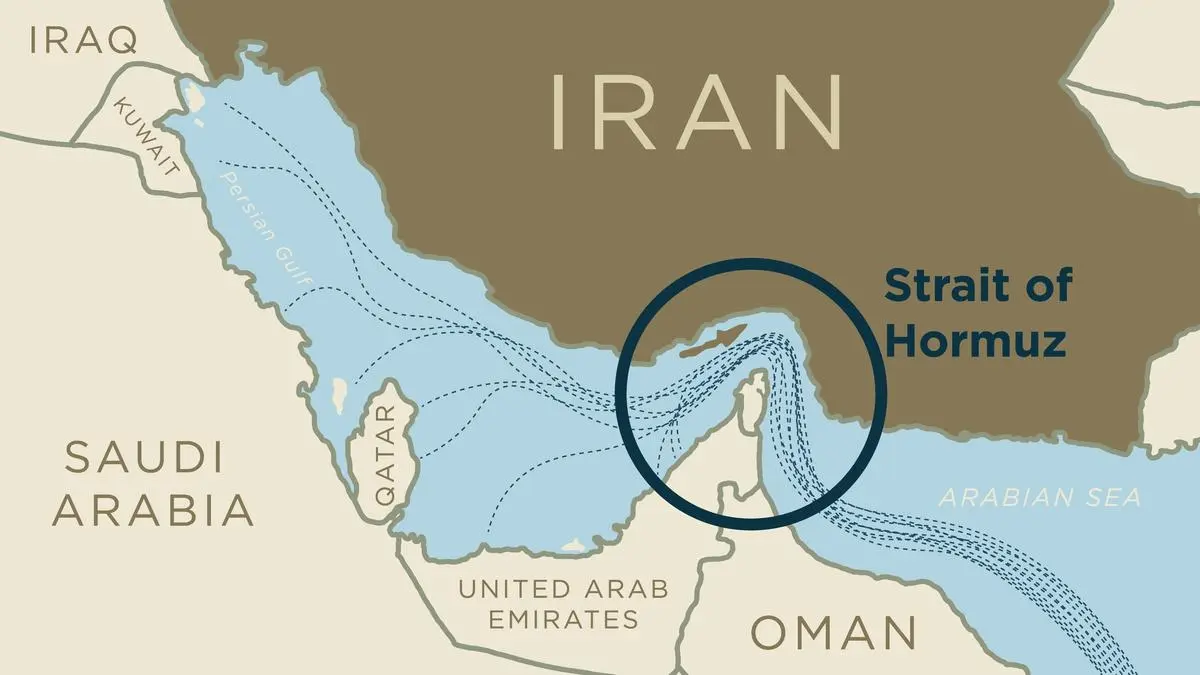
The escalating friction between Iran and the United States over the Strait of Hormuz is not a cycle of diplomatic friction; it is a calculated exercise in asymmetric escalation where the primary variable is the global tolerance for an energy supply shock. While traditional analysis focuses on the rhetoric of "hardened positions," a rigorous deconstruction reveals a complex architecture of maritime denial and economic leverage. To understand the current impasse, one must analyze the strategic bottleneck through three specific lenses: the mechanics of the "Shadow Blockade," the decoupling of regional and global deterrents, and the shifting calculus of maritime insurance.
The Triad of Iranian Asymmetric Leverage
Tehran’s control over the Strait of Hormuz does not require a formal blockade—which would likely trigger an overwhelming kinetic response from the U.S. Fifth Fleet. Instead, Iran employs a strategy of "Incremental Friction" designed to increase the operational costs for international shipping while remaining below the threshold of open warfare.
1. The Variable Friction Model
Iran modulates the risk environment through a combination of fast-attack craft harassment, drone surveillance, and the occasional seizure of commercial vessels under legalistic pretexts. This creates a "Risk Premium" that manifests in:
- Wartime Risk Surcharges: Insurers adjust premiums based on the frequency of proximity incidents, not just actual kinetic strikes.
- Operational Latency: Ships often reroute or alter speed to minimize exposure windows, disrupting Just-In-Time (JIT) delivery schedules for crude oil and Liquefied Natural Gas (LNG).
2. Geographic Inevitability
The Strait is 21 miles wide at its narrowest point, but the shipping lanes—consisting of two-mile-wide channels for inbound and outbound traffic—are narrower and deeper within Omani and Iranian territorial waters. This geographic constraint creates a physical bottleneck where electronic warfare (GPS spoofing) and naval mines can achieve total area denial with minimal resource expenditure.
3. The Proxy Integration Layer
By synchronizing tensions in the Strait with actions by the Houthis in the Red Sea, Iran forces the U.S. Navy to distribute its assets across two disparate maritime theaters. This overextension reduces the density of "Freedom of Navigation" (FON) patrols, allowing Tehran to exert higher pressure with fewer domestic assets.
US Deterrence Failure and the Credibility Gap
The hardening of the U.S. position reflects a fundamental misalignment between military capability and political will. The U.S. maintains a qualitative military edge, yet its deterrence has degraded because the "Punishment Mechanism" is no longer viewed as credible by the Iranian leadership.
The failure of deterrence is rooted in the Reaction Threshold Paradox. If the U.S. responds to a minor tanker seizure with a major missile strike, it risks a regional war that spikes oil prices—the exact outcome it seeks to avoid. Iran understands this constraint. Consequently, Tehran operates within the "Grey Zone," where its actions are aggressive enough to exert leverage but subtle enough to make a massive U.S. military response seem disproportionate to the international community.
The Breakdown of Economic Sanctions
The U.S. strategy relies heavily on the "Maximum Pressure" legacy, yet the efficacy of these sanctions has hit a point of diminishing returns.
- China as a Liquidity Sink: As long as China continues to purchase "Tehran’s discounted barrels" through clandestine ship-to-ship transfers, the economic floor for the Iranian regime remains intact.
- Domestic Resiliency: The Iranian economy has bifurcated into a formal sector and a resilient, military-managed shadow economy that thrives on the very volatility the Strait creates.
The Insurance Calculus: The Hidden Driver of Maritime Power
While the media focuses on naval destroyers, the true arbiter of power in the Strait of Hormuz is the London insurance market. The hardening of positions has direct implications for the Joint War Committee (JWC) of the Lloyd’s Market Association.
When the Strait is designated a high-risk area, the cost of "Kidnap and Ransom" (K&R) insurance and "Hull and Machinery" (H&M) war risk premiums escalates. If these costs exceed the profit margin of a cargo, the Strait is effectively closed, even if not a single shot is fired.
Iran leverages this by targeting specific flags or ownership structures. By selectively harassing ships linked to U.S. or UK interests while allowing others—specifically those carrying Chinese or Russian cargo—to pass unhindered, Iran effectively "weaponizes" the insurance market. This creates a schism among international stakeholders, as different nations face different cost functions for using the same waterway.
Energy Transition and the Shift in Strategic Gravity
A critical error in contemporary analysis is the assumption that the Strait of Hormuz retains the same strategic weight it held in 1980. The global energy map is undergoing a structural shift that alters the U.S. intervention calculus.
- U.S. Net Export Status: The United States is now a net exporter of petroleum products. While global price spikes still impact the U.S. economy, the direct physical dependence on Middle Eastern crude has plummeted.
- East Asian Dependency: Approximately 80% of the oil passing through the Strait is destined for Asian markets (China, India, Japan, South Korea).
This creates a Strategic Asymmetry. The U.S. provides the security for a waterway that primarily benefits its economic competitors in Asia. The "hardening" of the U.S. position is increasingly viewed through the lens of domestic political pressure rather than vital national security interests, a fact that Tehran exploits by signaling that the cost of security should be borne by the primary consumers.
Escalation Dominance and the Next Kinetic Phase
We are entering a phase where "Signal-to-Noise" ratios in the Gulf are at historic lows. The risk of a "Type II Error"—failing to respond to a real threat—is being replaced by the risk of a "Type I Error"—responding to a perceived threat that was actually a calculated feint.
The Iranian strategy has shifted toward Escalation Dominance. This is the ability to control every rung of the escalation ladder. If the U.S. increases sanctions, Iran increases drone activity. If the U.S. deploys an aircraft carrier, Iran conducts "swarm" exercises. Because Iran's assets (small boats, mobile missile launchers) are cheaper and more numerous than U.S. assets (billion-dollar destroyers), the cost of maintenance for the U.S. is orders of magnitude higher.
The Role of Advanced Interdiction Technology
Iran has transitioned from simple naval mines to:
- Loitering Munitions (Kamikaze Drones): Capable of targeting specific bridge wings or engine rooms of tankers to disable without sinking.
- Semi-Submersible Craft: Difficult to detect via standard surface radar, used for placing limpet mines or conducting reconnaissance.
- Electronic Warfare Suites: Designed to jam AIS (Automatic Identification System) signals, making it difficult for the U.S. to maintain a clear Common Operational Picture (COP).
The Strategic Play
The current trajectory indicates that the Strait of Hormuz will transition from a "Global Commons" to a "Contested Toll Zone." To mitigate this, a shift in strategy is required, moving away from reactive naval deployments toward a Distributed Maritime Security Architecture.
The U.S. must formalize a cost-sharing mechanism with East Asian consumers, forcing a "Security Levy" on transit. This would transition the burden of deterrence from the U.S. taxpayer to the end-users of the energy. Simultaneously, the focus must shift from defending the entire 90-mile length of the Strait to protecting specific "High-Value Transit Windows."
Failure to adapt to this "Variable Friction" model will result in a permanent erosion of U.S. influence in the region. The hardening of positions is not a stalemate; it is a slow-motion pivot where the side with the lower overhead and higher tolerance for economic pain—Tehran—is currently winning the war of attrition. The next strategic move is not a bigger fleet, but a more sophisticated economic and electronic counter-maneuver that devalues the Strait as a tool of Iranian statecraft.