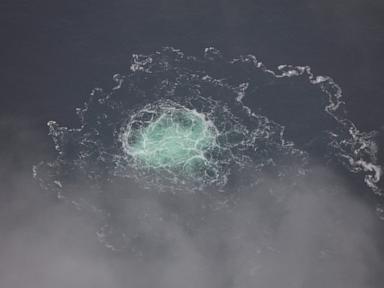
The destruction of the Nord Stream 1 and 2 pipelines on September 26, 2022, was not merely an act of kinetic infrastructure disruption; it was a calculated manipulation of Europe’s macroeconomic architecture. Germany’s Federal Prosecutor official indictment of Serhii Kuznietsov, a Ukrainian national and former military officer, shifts this event from a realm of speculative intelligence to a formalized legal and forensic model. The prosecution’s case builds a direct causal chain linking state-backed military personnel, asymmetric maritime sabotage tactics, and an explicit strategic objective: the systemic deprivation of Russian state revenue.
By deconstructing the legal, technical, and kinetic mechanics of this indictment, we can map the operational realities of modern grey-zone warfare and evaluate the severe diplomatic friction points now introduced into the Berlin-Kyiv security axis. Discover more on a similar subject: this related article.
The Operational Model: Asymmetric Deep-Sea Interdiction
The indictment strips away the myth of a state-level naval armada executing the attack, substituting it with a highly optimized, low-footprint cost function. The prosecution outlines a lean, six-person sabotage team utilizing commercial, off-the-shelf logistics to achieve a catastrophic strategic outcome.
The kinetic operation relied on three distinct technical variables: Further analysis by The Washington Post delves into comparable views on the subject.
- Logistical Obfuscation: The deployment team utilized a forged Ukrainian passport to enter Germany in September 2022, subsequently chartering the 50-foot sailing yacht Andromeda through a front company using fabricated identification. This low-signature insertion bypassed traditional military intelligence indicators.
- Deep-Sea Combat Engineering: Operating from international waters near the Danish island of Bornholm, the team deployed a specialized diving contingent and an explosives expert. The physical environment required diving to depths of approximately 70 to 80 meters. This necessitated closed-circuit rebreathers, specialized trimix gas blending (helium-oxygen-nitrogen) to prevent nitrogen narcosis, and precise decompression protocols.
- Kinetic Yield Optimization: The team transported and placed high-performance, military-grade explosives directly onto the concrete-coated steel pipes. The subsequent detonations ruptured three out of the four conduits comprising Nord Stream 1 and 2. The sheer structural displacement indicates the use of hundreds of kilograms of high-velocity explosives, likely shaped to direct the overpressure wave inward to breach the 4.1-centimeter-thick steel hulls.
The objective function of this maritime operation was entirely macroeconomic. According to German prosecutors, the explicit intent of Kuznietsov and his accomplices—acting on behalf of Ukrainian government entities—was to permanently terminate natural gas transit via these corridors. By dismantling the physical infrastructure, the operation aimed to systematically eliminate Russia’s primary energy leverage over Western Europe and structurally impair the Kremlin's capacity to finance its military campaigns through state-backed hydrocarbon exports.
Jurisdictional Friction and Legal Asymmetry
The indictment of Kuznietsov, who was apprehended in Italy in August 2025 and extradited to Germany in November, highlights a profound legal schism within the European Union regarding the classification of the sabotage. German federal prosecutors have charged the defendant under standard domestic and international criminal statutes: being an accomplice to a war crime, disruption of public services, causing an explosive detonation, and the destruction of critical structures.
Germany asserts jurisdiction because the subsea pipelines terminate at Lubmin, in the state of Mecklenburg-Vorpommern. The physical destruction of the line directly compromised Germany’s internal security, industrial stability, and energy architecture.
However, the transnational execution of German European Arrest Warrants (EAWs) has exposed deep jurisprudential fault lines, notably between Berlin and Warsaw. This legal friction is best understood by analyzing the contrasting treatment of a co-suspect, Volodymyr Zhuravlov.
                  [Nord Stream Sabotage (Sept 2022)]
                                   │
         ┌─────────────────────────┴─────────────────────────┐
         ▼                                                   ▼
[Suspect: Serhii Kuznietsov]                       [Suspect: Volodymyr Zhuravlov]
         │                                                   │
  (Arrested in Italy)                                 (Arrested in Poland)
         │                                                   │
         ▼                                                   ▼
[Extradited to Germany]                             [Extradition Blocked by Poland]
         │                                                   │
         ▼                                                   ▼
German Federal Court:                               Warsaw District Court:
- Rejects "combatant privilege"                    - Rules action a "just war" defense
- Affirms domestic jurisdiction                      - Rejects German legal jurisdiction
- Moves to criminal trial                           - Extradition denied; case closed
The Warsaw District Court blocked Zhuravlov’s extradition to Germany, lifting his pre-trial detention based on two distinct structural arguments. First, the Polish judiciary ruled that the destruction of the pipeline constituted a legitimate military action within the framework of a defensive, "just war" waged by Ukraine against Russian aggression. Consequently, the act did not satisfy the principle of double criminality under Polish domestic law. Second, Poland challenged Germany’s unilateral assertion of jurisdiction over an incident occurring within international waters, suggesting that such matters belong exclusively under the purview of an international maritime or UN-appointed ad hoc tribunal.
This legal bifurcation demonstrates that while Berlin views the sabotage through the prism of criminal law, domestic infrastructure protection, and the preservation of the rule of law, Warsaw views the event through a framework of total geopolitical realism. This structural divergence is underscored by Polish Prime Minister Donald Tusk’s public assertion that the strategic error lay not in the destruction of Nord Stream, but in its initial construction, effectively declaring the legal matter closed from Poland’s perspective.
The Berlin-Kyiv Security Paradox
The formal indictment introduces an acute destabilizing element into the diplomatic calculus between Germany and Ukraine. Germany remains one of Kyiv’s primary financial and military benefactors in its conventional conflict against Russia. Yet, the German judiciary is structurally insulated from executive political interference; the Federal Prosecutor's Office is bound by law to prosecute verified criminal offenses regardless of foreign policy fallout.
This creates a systemic paradox characterized by two competing structural pressures:
- The Domestic Accountability Constraint: Chancellor Olaf Scholz's administration faces a domestic political environment where energy security costs and industrial inflation remain highly sensitive liabilities. Allowing a state-backed act of infrastructure sabotage against German economic interests to pass without a rigorous judicial response would erode institutional credibility and feed domestic populist narratives.
- The Coalition Security Commitment: Conversely, executing a highly public criminal trial that explicitly ties Ukrainian state organs to the destruction of Europe's energy infrastructure threatens to complicate the political consensus required to sustain long-term military aid to Ukraine.
The defense strategy, already previewed in preliminary hearings before Germany's Federal Court of Justice, will heavily leverage concepts of functional immunity and combatant privilege. The defense argues that if the acts were executed by active military personnel during an ongoing armed conflict, individual criminal liability under domestic statutes is superseded by international humanitarian law.
The Federal Court of Justice has rejected these arguments in the pre-trial phase, maintaining that standard criminal statutes apply due to the nature of the target and its location in international waters. As the case moves toward a full trial, the proceedings will test the limits of domestic judicial authority over covert, trans-border operations executed during a time of systemic European geopolitical realignment.
The technical video report below analyzes the immediate political ramifications of these charges on the Berlin-Kyiv diplomatic alliance.
This broadcast details the specific legal mechanisms invoked by German prosecutors and assesses how the formal charges intersect with Germany's ongoing strategic support for Ukraine's defense infrastructure.